

You should never remove cement residue from natural stone using a traditional (acid-based) cement residue remover: it also dissolves the limestone itself and leaves permanent dull spots. Use a film remover that is specifically designed for limestone-based natural stone, such as blue stone and Maas limestone, or prevent the problem by removing grout residue immediately after installation. That’s the right way to handle it.
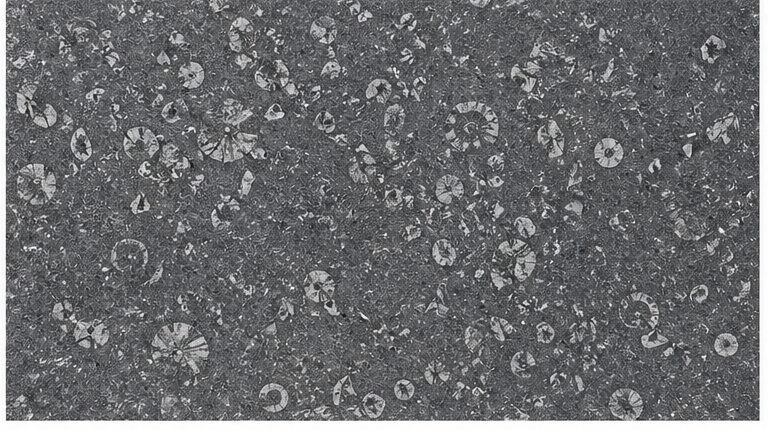
Cement residue is a thin layer of lime from grout or adhesive. Traditional removers dissolve it with acid, which works perfectly on ceramic tiles. But blue stone, Maas limestone, and marble are themselves composed of calcium carbonate—the same material as the film. The acid makes no distinction and etches the stone’s surface, leaving it dull and irreparably damaged unless it is resanded.
Choose a cement residue or post-construction cleaner that explicitly states it is suitable for calcareous natural stone, and always test it first on an inconspicuous area. Work in small areas, follow the application time specified on the label, and rinse thoroughly. If you’re unsure which product to use, send a photo to our Technical Department; you can find the right products in the category clean.
Cement residue mainly forms during grouting. Remove grout residue immediately with a damp sponge before it hardens; work diagonally across the joints and change the rinse water frequently. Hardened residue is ten times more work to remove than fresh residue. The complete installation instructions can be found in our Installation FAQ.

How do you remove cement residue from blue stone? Use a film remover that is specifically designed for calcareous natural stone. Never use a traditional acidic cement film remover—it will etch the stone itself.
Why can't you use acid on blue stone? The stone is composed of calcium carbonate, which dissolves in acid. Vinegar, descaling agents, and acidic lint removers leave behind dull, etched spots that can only be repaired by sanding again.
My stone has already lost its luster because of the wrong product—what should I do now? Mild etching marks can sometimes be professionally sanded or polished. Send a photo to our technical support team for advice before you try anything else on your own.