
At Renier Natural Stone, we are strongly committed to sustainability. With local quarrying, renewable energy and environmentally friendly production methods, we minimize our carbon footprint.
Our Belgian bluestone is one of the most durable materials on earth. Formed over millions of years, this ancient stone is extracted locally in an environmentally friendly manner. Combined with limited transportation distances, this significantly reduces the ecological footprint.
For processing, too, we consciously choose to minimize our ecological impact at the Aarschot production site:
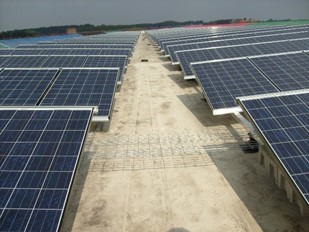
We produce 65% of our energy needs with our impressive solar array on the roof of our shed in Aarschot.
This park is among the largest solar installations in the region and underscores our commitment to renewable energy and environmentally friendly production.
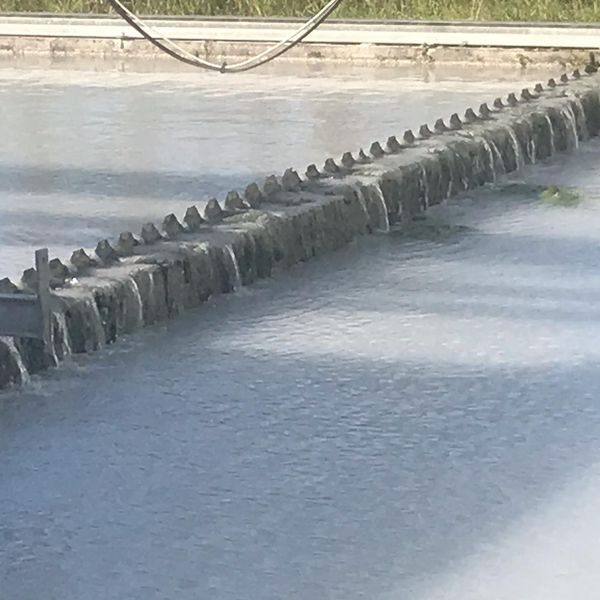
Renier collects rainwater completely separately and buffers it for reuse, virtually eliminating our use of city water. All process water is discharged separately to our settling basin, where it is treated by sedimentation.
Then the water is pure enough to be reused in our production process.
This eliminates the need to discharge process water and significantly reduces our use of groundwater.
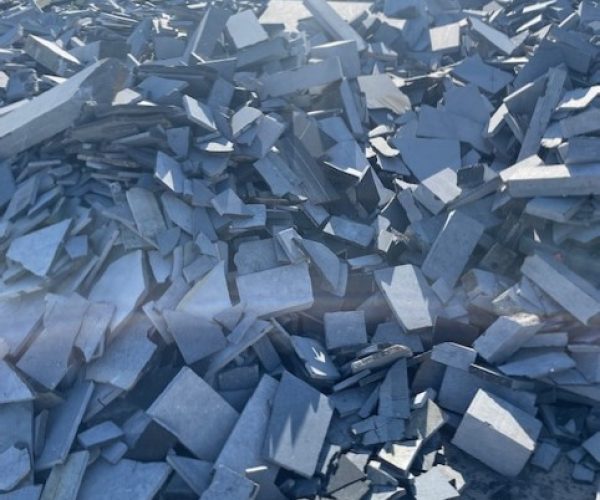
All surplus natural stone is stockpiled and crushed separately for recycling in water or road construction.
So they are never deposited.
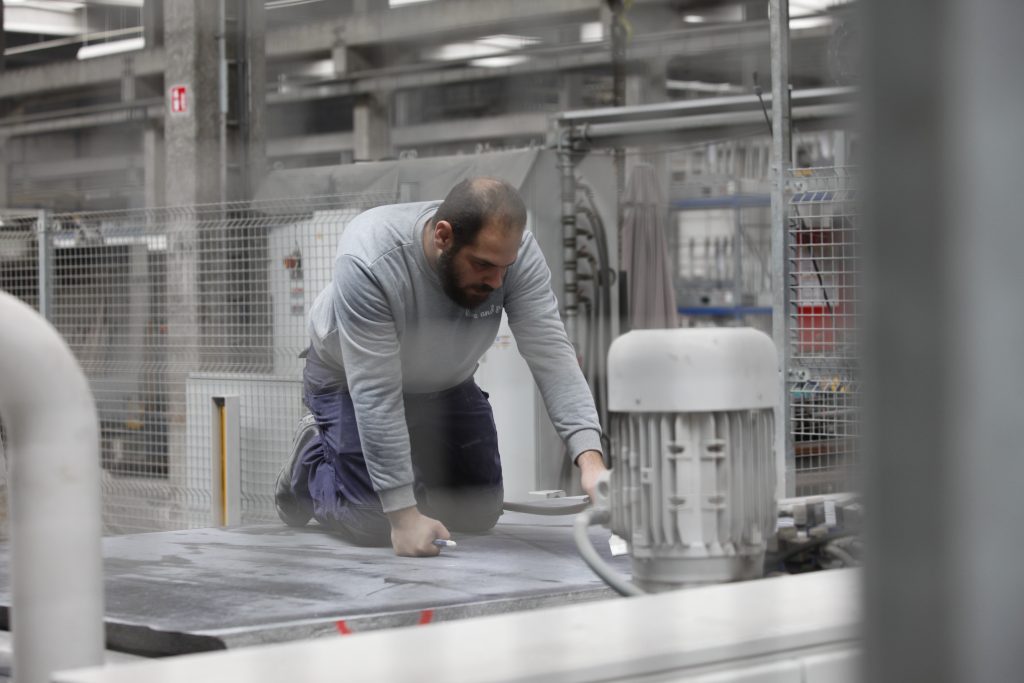
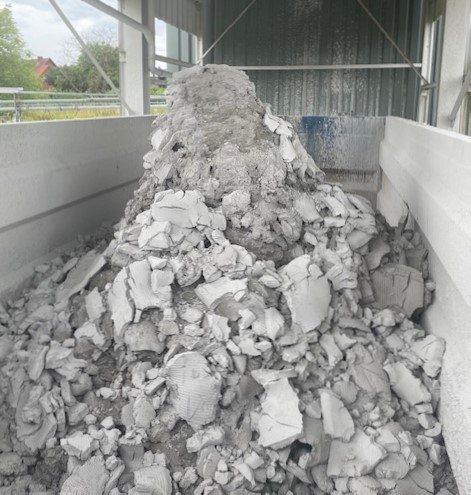
The limestone dust that has sunk to the bottom of the settling basin is further dewatered in a filter press and collected separately.
The sludge is then used as a soil conditioner in agriculture. Thus, the sludge is also never landfilled.
By working with local quarries, Renier reduces transport. At the site in Aarschot, a large solar panel park generates more than 60% of the energy, and rainwater is collected and recycled in the production process.
Process water is purified and reused, crushed stone and sawing residues are processed in road construction, and sludge is converted into soil improver for agriculture. This means that nothing is lost and raw materials are used to their full potential.
Residual stones are recycled as foundation material for road surfaces and driveways. The sludge released during sawing and polishing is pressed and processed into agricultural fertilizer.
Blue stone is a natural product with an extremely long lifespan. Because the stone is quarried locally, transport distances are short. The material is low-maintenance, resistant to frost and wear, and can be reused after decades.