Renier's story doesn't begin in a factory, but with a stonemason, a restoration project at the Church of Our Lady in Aarschot, and an unexpected love.
François Renier was born in Gilly, near Charleroi, to a farming family. When the family lost their land to expanding industry, François had to look for other work. He became a stonecutter at the Gobertange quarry, near Jodoigne.
Gobertange stone was, and still is today, quarried at this site: a sand-limestone that was used, among other things, for the Leuven City Hall and the Church of Our Lady in Aarschot.
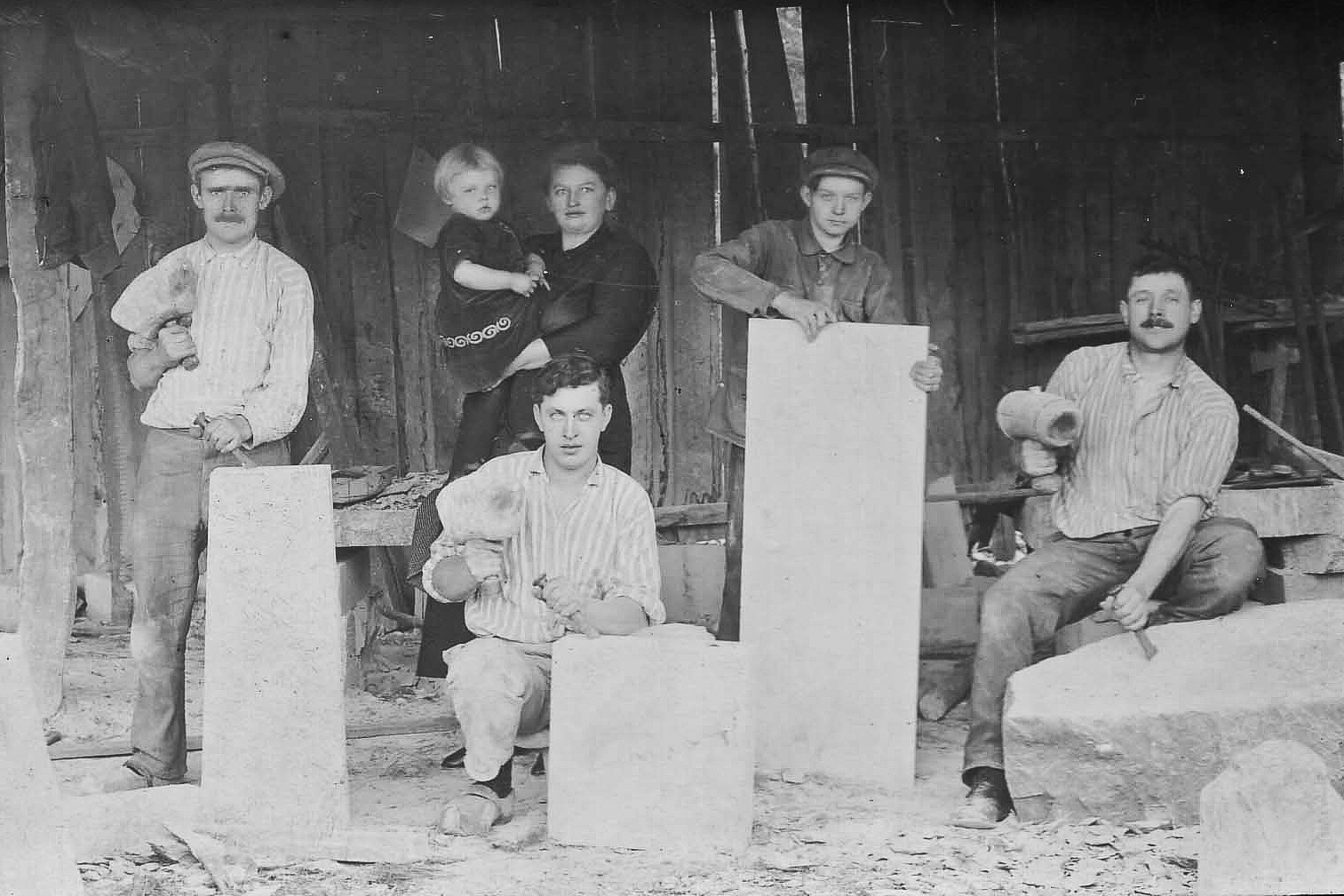
Around 1910, François was sent by the quarry to Aarschot to restore the Church of Our Lady. He arrived with a cartload of Gobertange stone blocks, measured the stones that needed to be replaced, cut them to size, and reinstalled them in the church.
It was impossible to return home every evening. The distance was too great, and the trip was too expensive and too time-consuming. François therefore stayed at an inn in Aarschot.
Three daughters lived at that inn. François fell in love with one of them. During the day, he proudly cut his stones; in the evening, he was with his beloved.
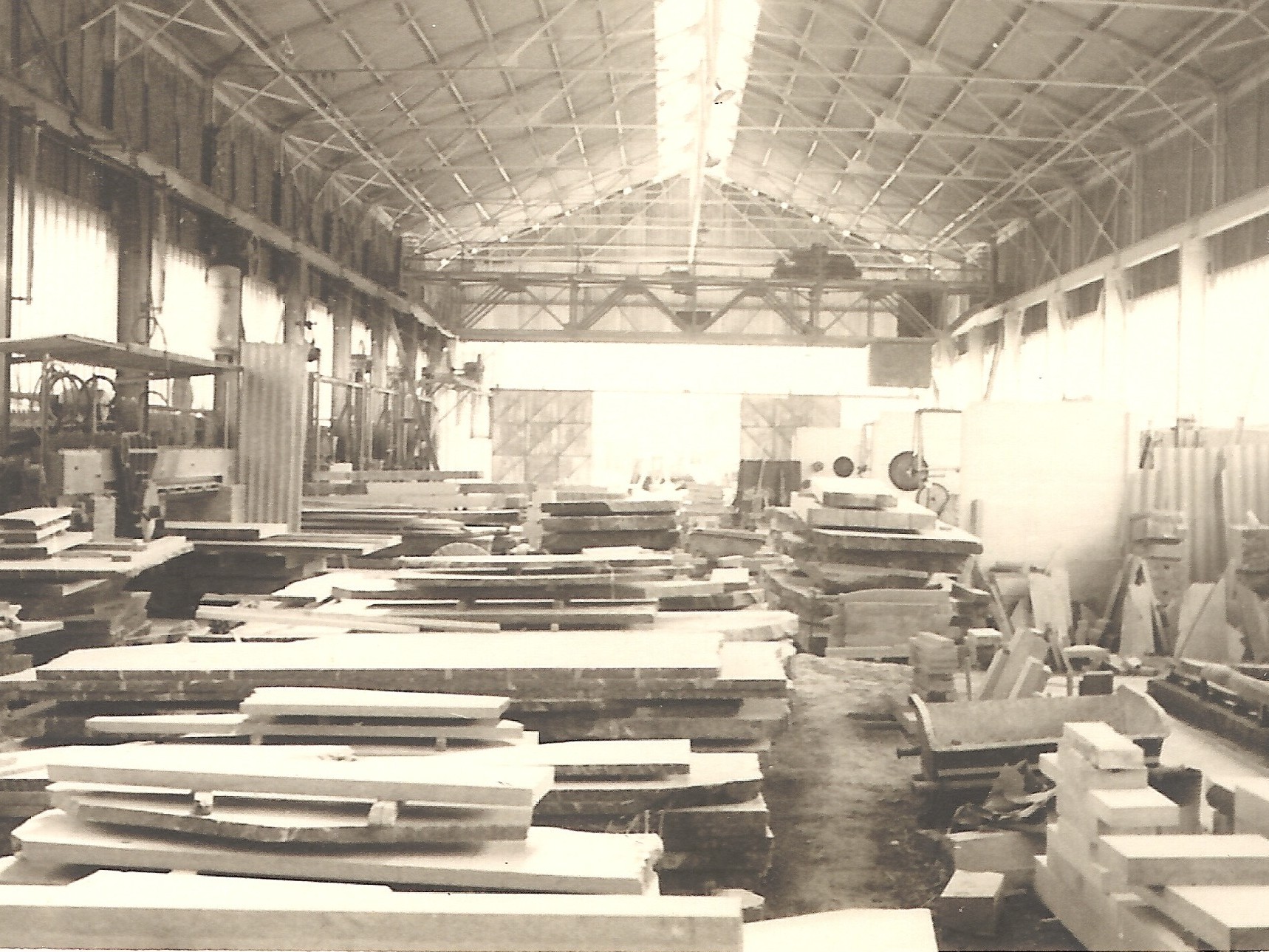
Through wars, reconstruction, innovation, and strategic decisions, Renier grew into a family-owned business with its own quarries and a modern production facility in Aarschot.
When the money for the restoration ran out, François had to return to Gobertange. He asked his sweetheart to move with him, but her father needed his daughter to help at the inn. The innkeeper suggested an alternative: becoming an independent stonemason in Aarschot.
François borrowed money and started his own stone-cutting business. That was the real beginning of the Renier story in Aarschot.
In 1914, World War I broke out. Aarschot became a city of martyrs. François survived and fled to England with his pregnant wife and their one-year-old child.
Albert Renier was born in Chesterfield in November 1914. During the war, François worked as a miner and a cobblestone paver.
After the war, the family returned to Aarschot. The town had been severely damaged and had to be rebuilt. For a stonemason, there was once again plenty of work to be done.
In the early 1930s, Albert Renier joined the family business. World War II broke out later. Aarschot was hit by bombings targeting the train station, but the family remained in Aarschot. After the war, another period of reconstruction followed.
In the early 1950s, Albert supplied thresholds to a German military cemetery. There, thousands of gravestones had to be engraved by hand, which was far too slow.
Albert knew that pantographs existed in Italy that could engrave names more quickly. He traveled to Italy with a steel stone, had a name engraved, and presented the result. The customer was satisfied.
He then convinced the supplier to build five machines in one month instead of just one. The project was completed on time, at a fraction of the original cost. Several more cemeteries followed, and the company grew steadily.
In the late 1950s, Renier invested in a machine that could cut blocks of natural stone into slabs: a frame saw. This investment completely transformed the company.
From then on, the company stopped buying individual plates and started buying blocks instead. Renier gained more control over quality, inventory, and finishing.
In the early 1960s, the company was bursting at the seams. Production moved to the industrial park in Aarschot, where Renier is still located today.
Several frame saws and other machines followed. Logs were purchased in Belgium and imported from countries including France, Portugal, Greece, and Turkey.
In 1974, François Renier, Albert’s son, joined the company as the third generation. Together with Albert, he continued to build a modern natural stone business.
In the late 1970s, an increasing number of quarries in Europe were being bought up by larger groups. Albert and François feared that the supply of blocks would become more difficult and more expensive.
That is why they made a strategic decision: to buy a quarry themselves. They chose the La Préalle quarry in Sprimont, where Renier had already been purchasing blocks of Belgian Blue Stone.
At that time, La Préalle was one of the smallest quarries in Belgium. Today, it is one of the most important quarries for Belgian Blue Stone.
Over the decades, Renier continued to invest in the latest technological developments: CNC machines, waterjet cutting, digital sawing techniques, and automation.
In the early 21st century, Evelien and Stijn Renier joined the company as the fourth generation. They continued on this path with digital cutting lines, robotics, and Industry 4.0.
In 2014, Renier invested in a second quarry: the Vinalmont quarry. There, Meuse limestone is quarried—a distinctive Belgian limestone that further strengthens Renier’s product range.
The acquisition of La Préalle was one of the most important decisions in Renier’s history. By investing directly in Belgian quarries, the company remained independent and was able to continue ensuring quality from raw materials to finished products.
Today, that short supply chain remains an essential part of our identity: Belgian natural stone, sourced from our own quarries and processed in our own facilities.
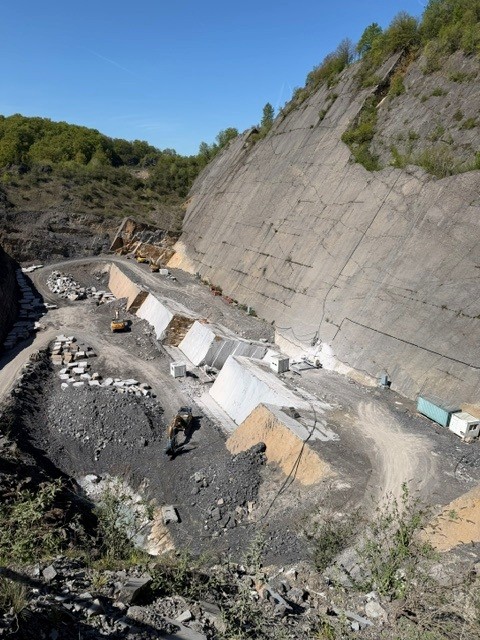
Today, Renier combines the expertise of four generations with modern technology, sustainable investments, and a strong focus on quality and service.
Today, Renier is led by Frank Oosterlinck, the first non-family member to serve as Chief Executive Officer (CEO) in the company's history.
Together with Stijn Renier, responsible for Special Projects, and Evelien Renier, As the person in charge of production, he is part of a complementary management team that continues to build on the company’s rich family tradition.
Thanks to a combination of more than a century of craftsmanship, the commitment of the fourth generation, and professional business management, Renier continues to invest in innovation, sustainability, and a customer-focused future.
The fundamentals remain the same: understanding natural stone, processing it correctly, and finishing it with care.
Digital cutting lines, CNC, robotics, and automation are enhancing the craft.
Own quarries, short supply chain, solar panels, water reuse, and circular waste streams.
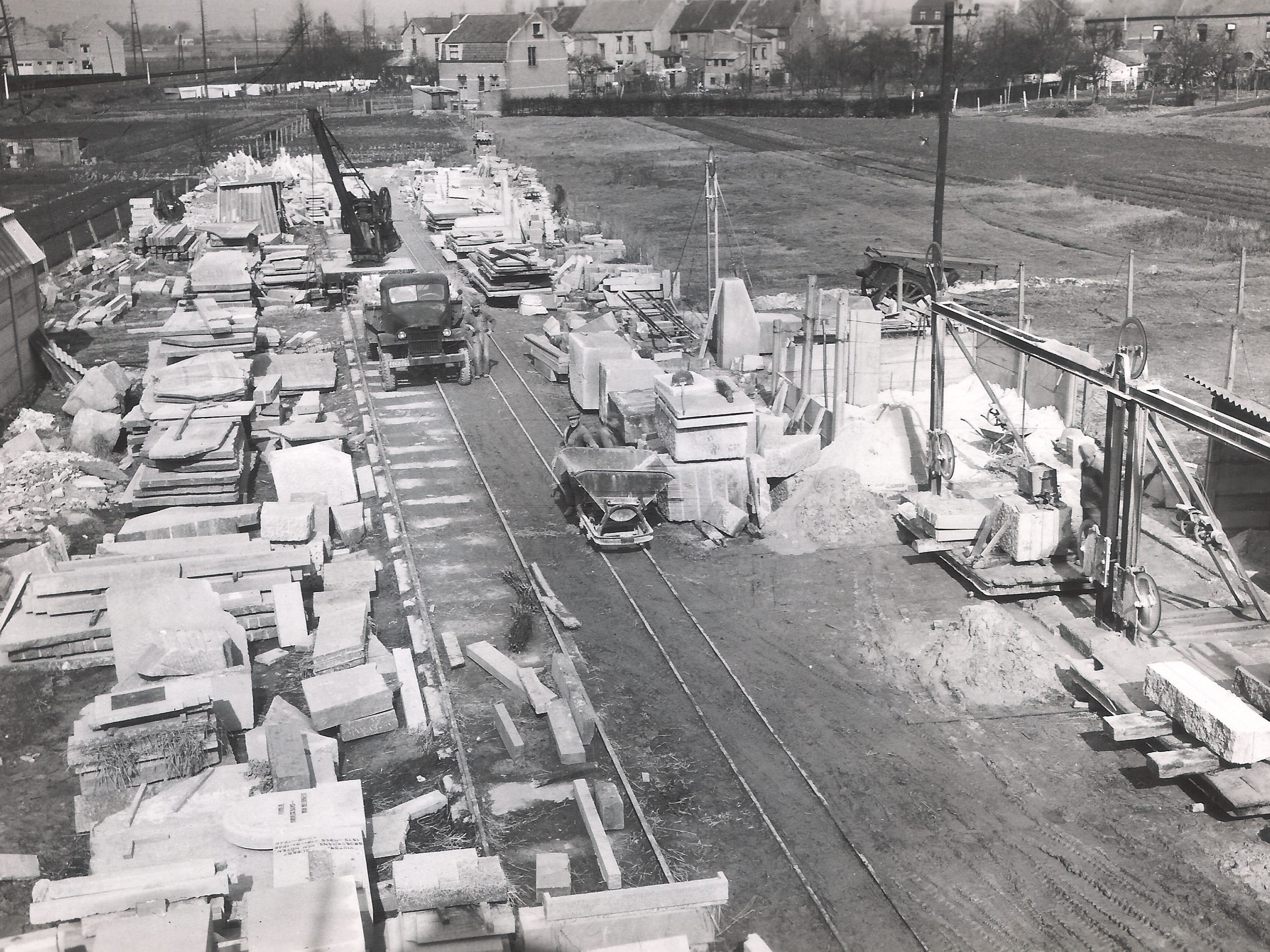
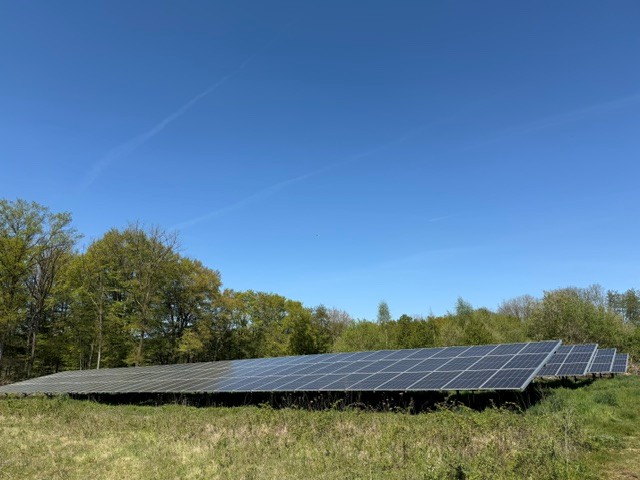
From François Renier to the fourth generation: our history is built on craftsmanship, entrepreneurship, and respect for Belgian natural stone.