

Composition of Belgian Blue Stone
At first glance, Belgian Blue Stone appears to be a homogeneous rock. Under a microscope, however, a much more complex world of calcite, fossil remains, a fine limestone matrix, and small mineral components becomes apparent. Together, they determine the character, the structure, and the stone’s typical blue-gray color.
What is Belgian Blue Stone made of?
Belgian Blue Bluestone is a compact, fossil-rich limestone. Its main mineral is calcite. In addition, the stone contains numerous fossil fragments and a very fine limestone matrix in which these components are embedded.
That composition is the result of the original depositional environment, the marine life present, and the geological processes that ultimately transformed the sediment into natural stone.
The Composition of Belgian Blue Stone
Belgian Blue Bluestone consists mainly of calcite, supplemented by fossil components, a fine limestone matrix, and small amounts of other minerals. This combination gives the stone its distinctive structure and character.
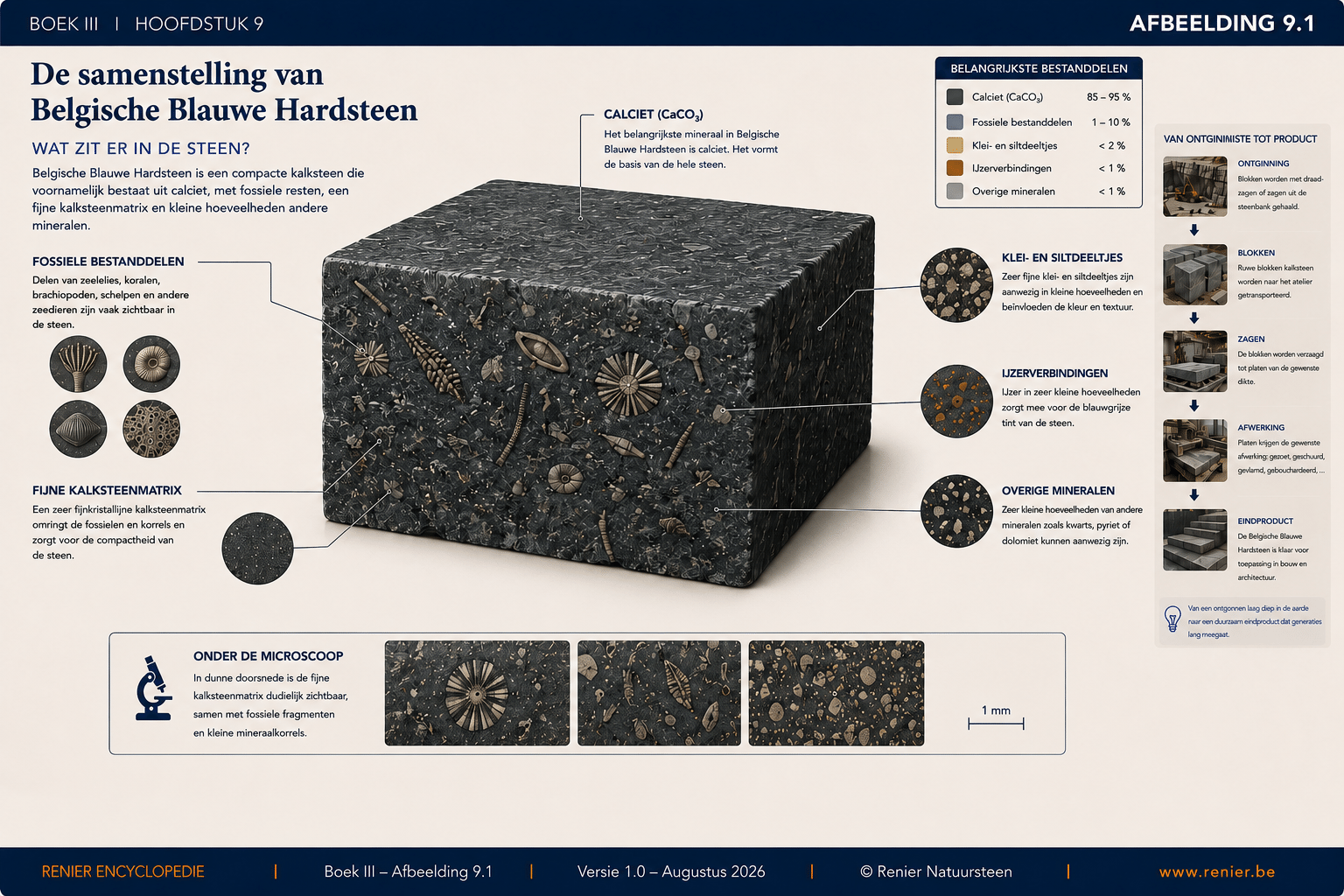
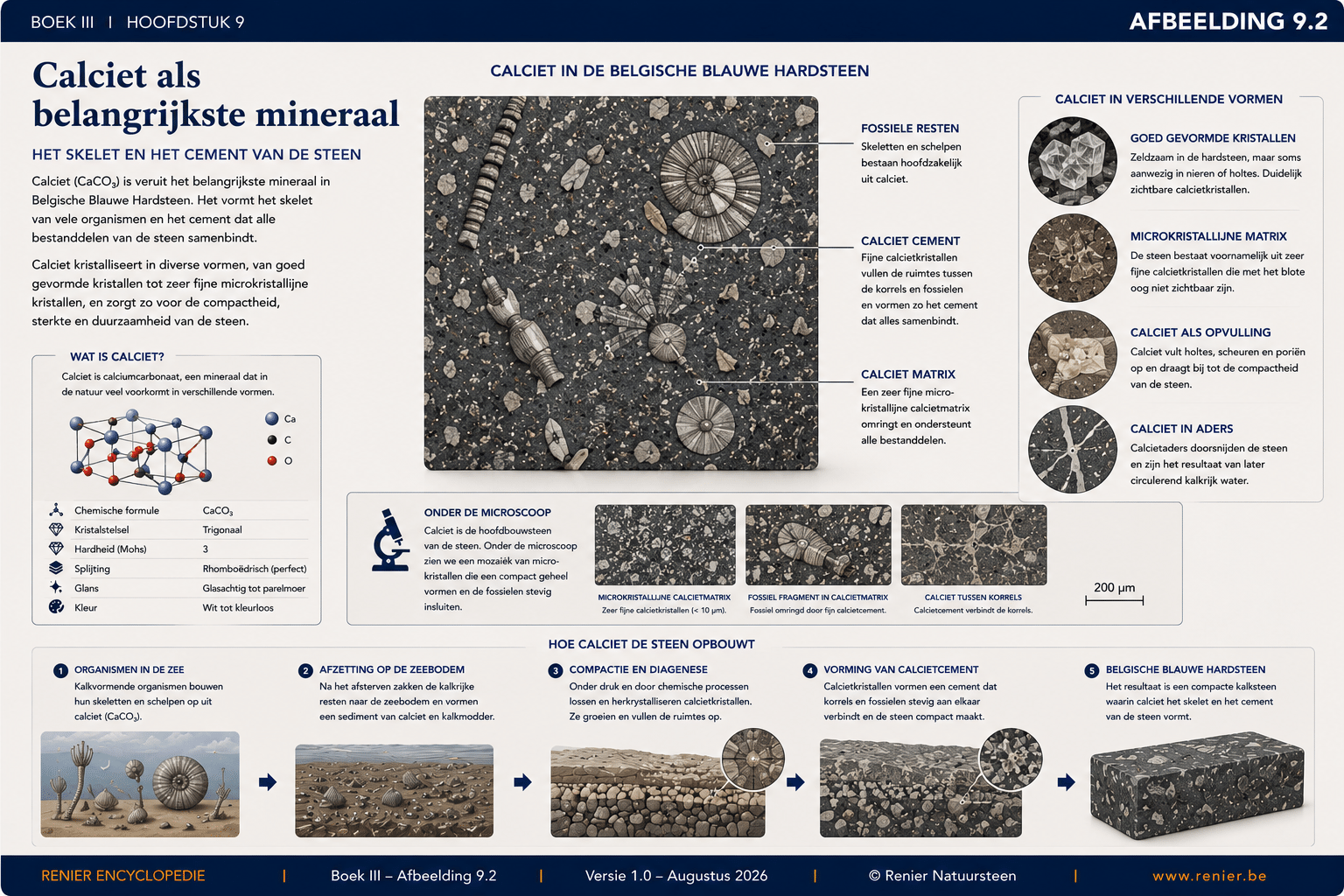
Calcite as the primary mineral
Calcite forms the mineral foundation of Belgian Blue Bluestone. The calcium carbonate is present in the original calcareous components and in the cement that formed during the rock’s formation.
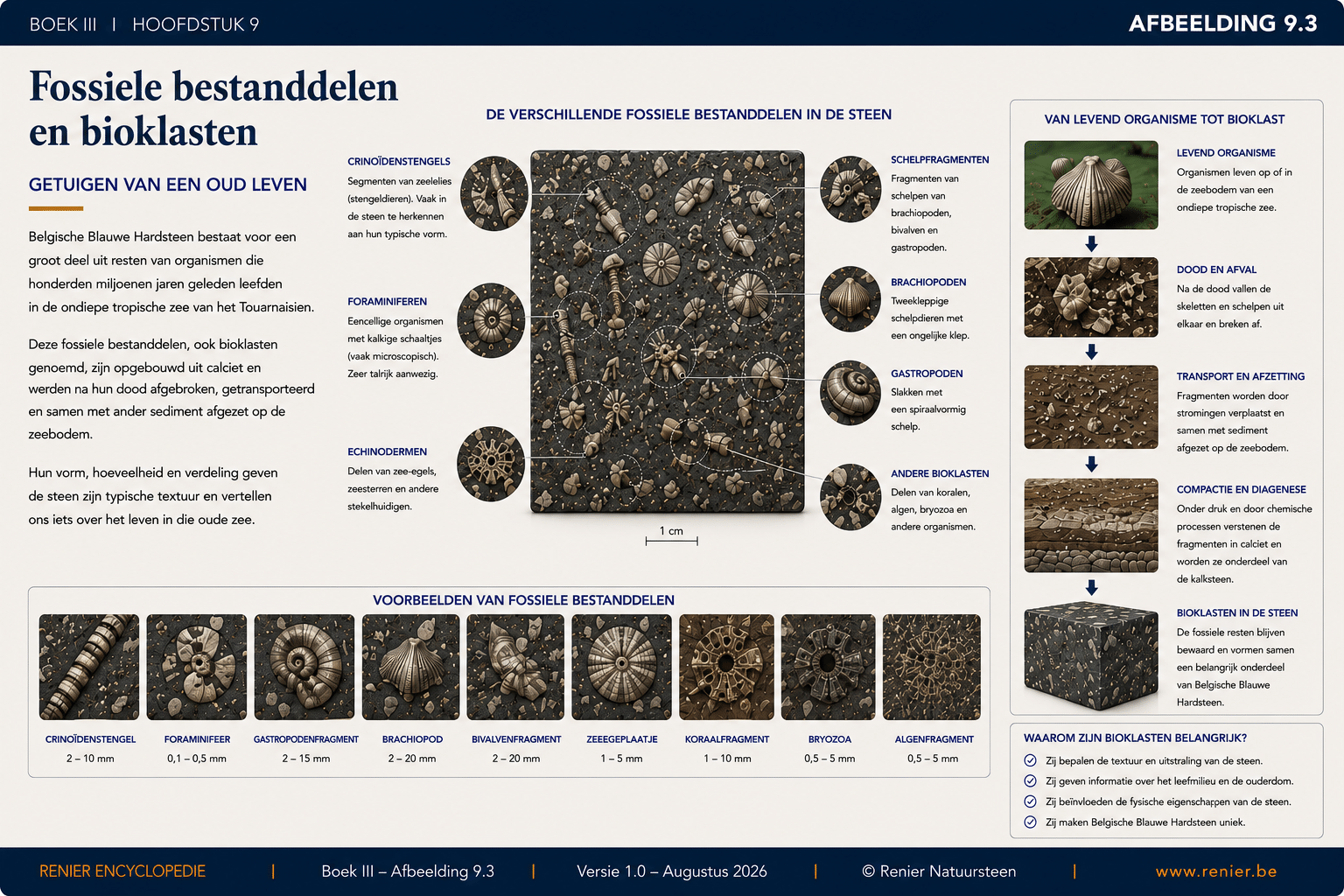
Fossil components and bioclasts
A striking portion of the rock consists of the remains of organisms that once lived in the tropical sea. Fragments of crinoids, in particular, but also other fossil components, have been preserved in the rock.
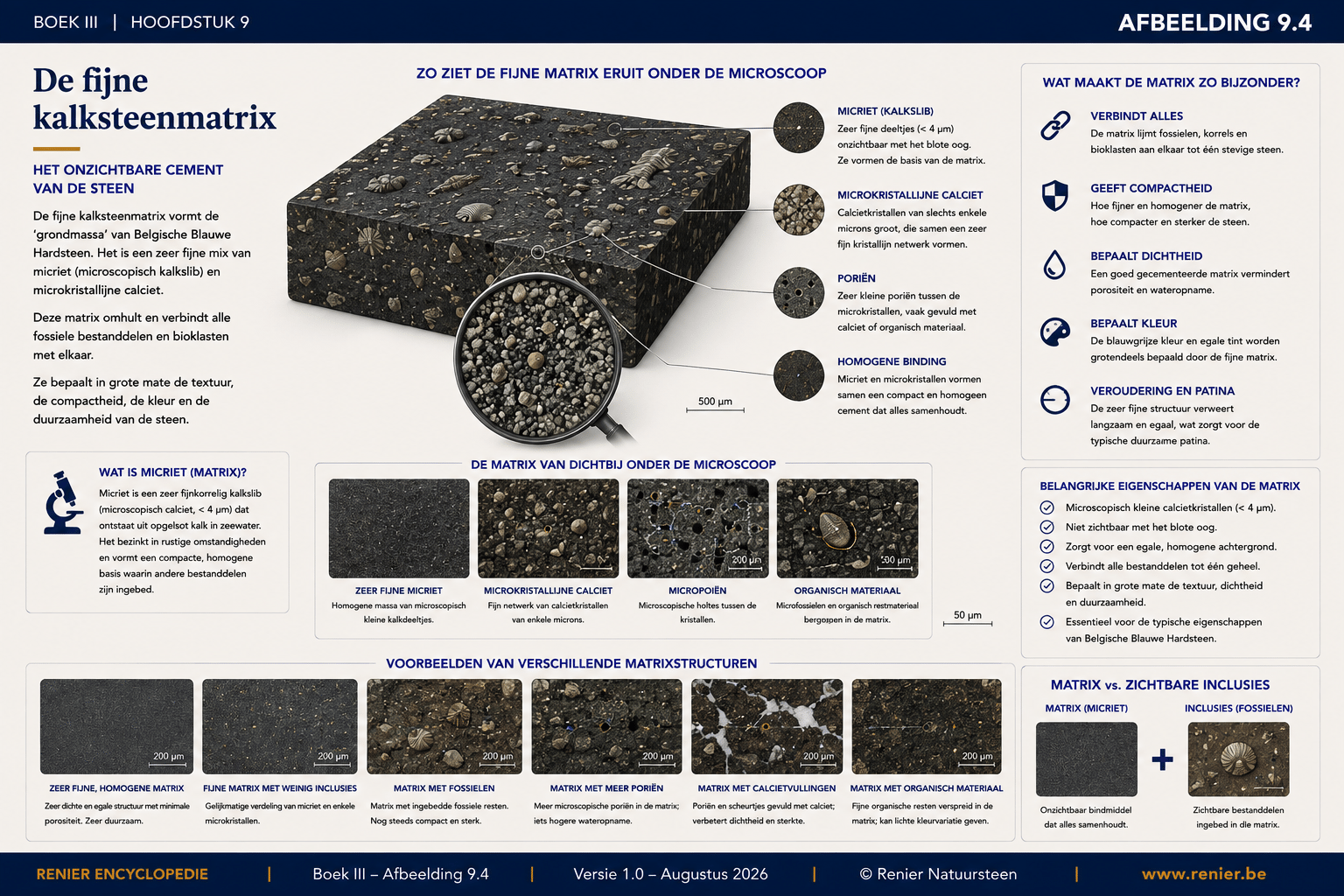
The fine limestone matrix
Among the larger fossil fragments is a much finer, calcareous mass: the limestone matrix. It fills the spaces between the larger components and forms an important part of the stone’s compact structure.
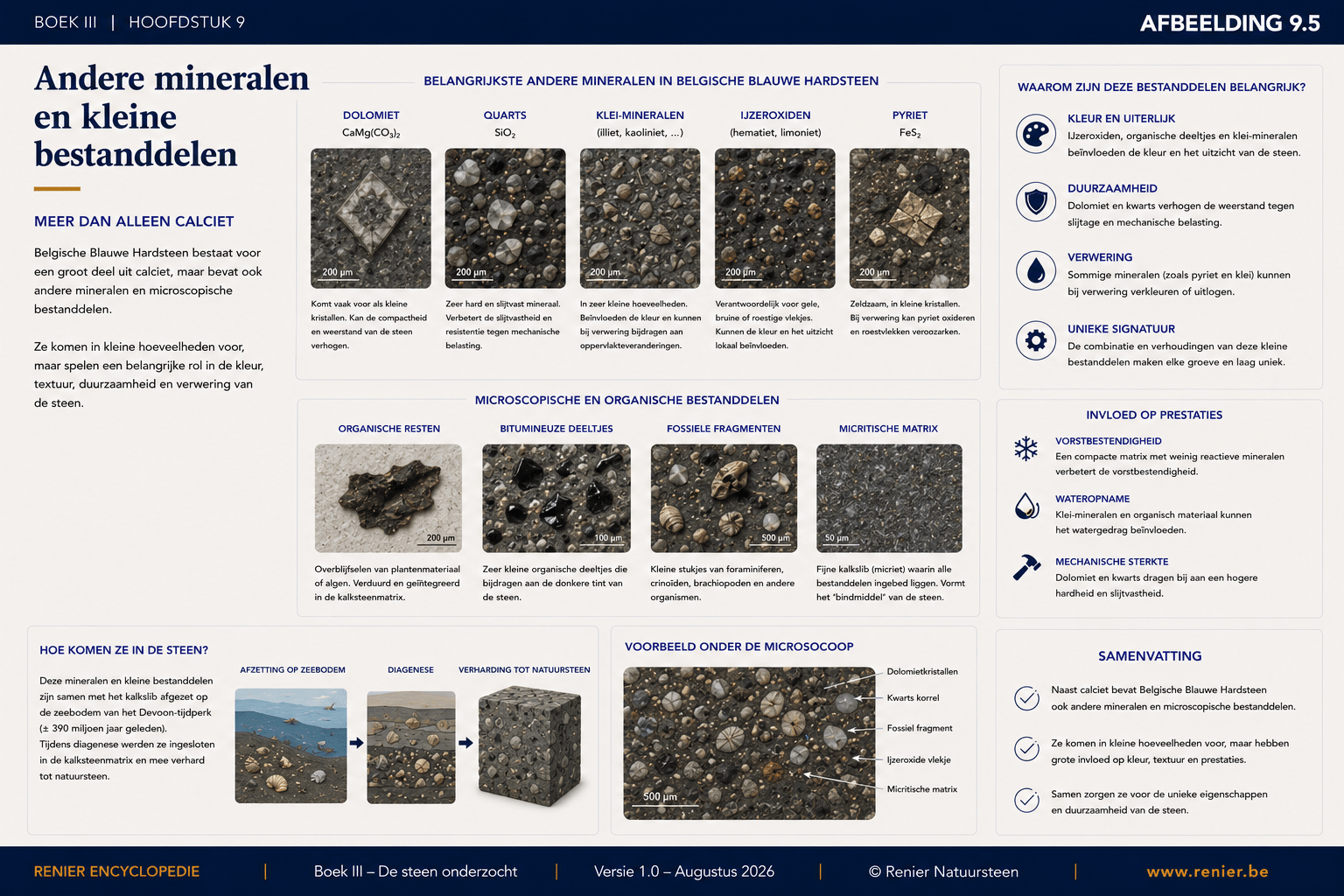
Other minerals and trace elements
In addition to calcite, Belgian Blue Stone also contains small amounts of other mineral components. Although their proportion is limited, they can contribute to color differences and local variations in the rock.
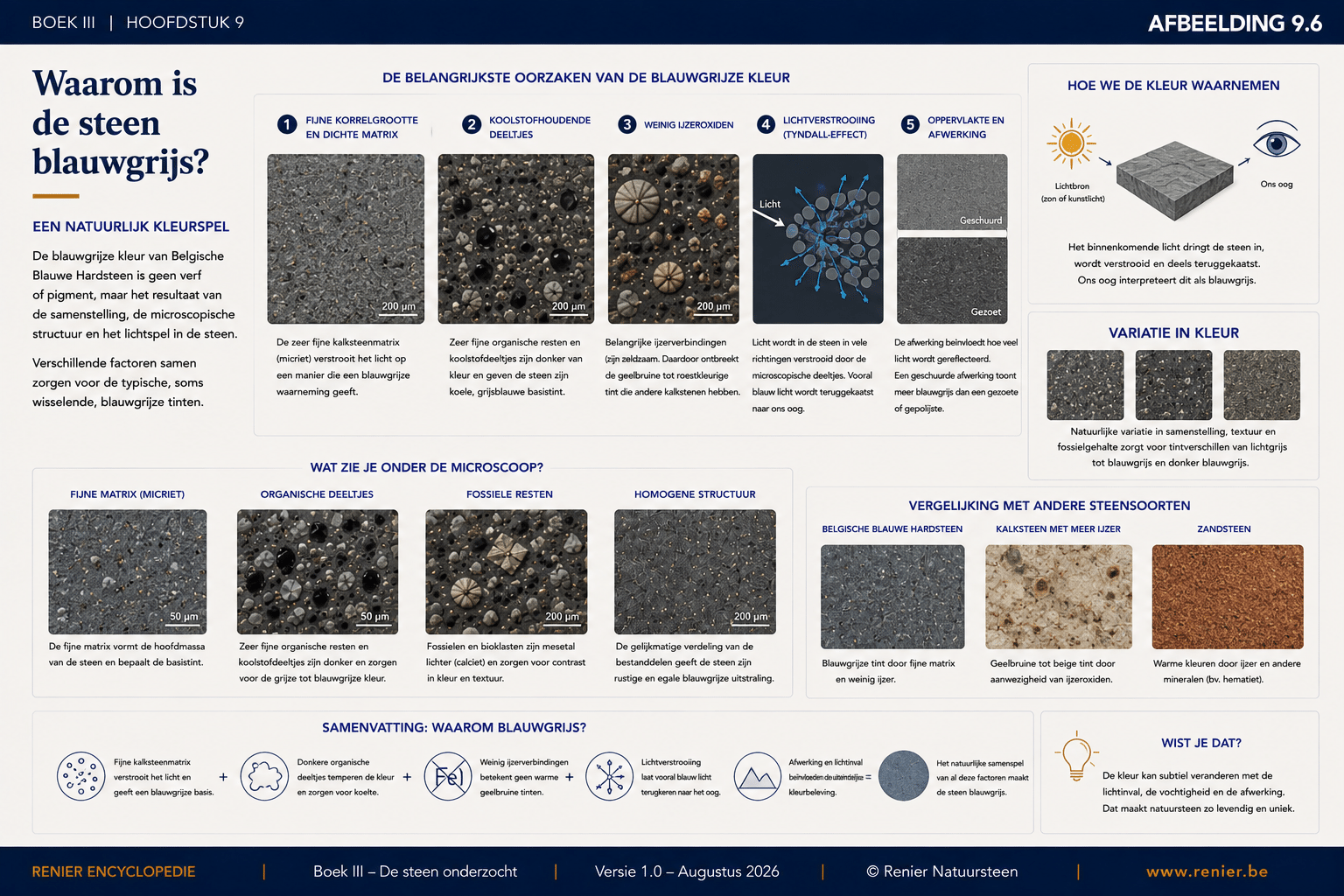
Why is the stone blue-gray?
The distinctive blue-gray color results from the combination of the fine limestone matrix, organic material, and very small mineral components. The final color perception is also influenced by the chosen surface finish.
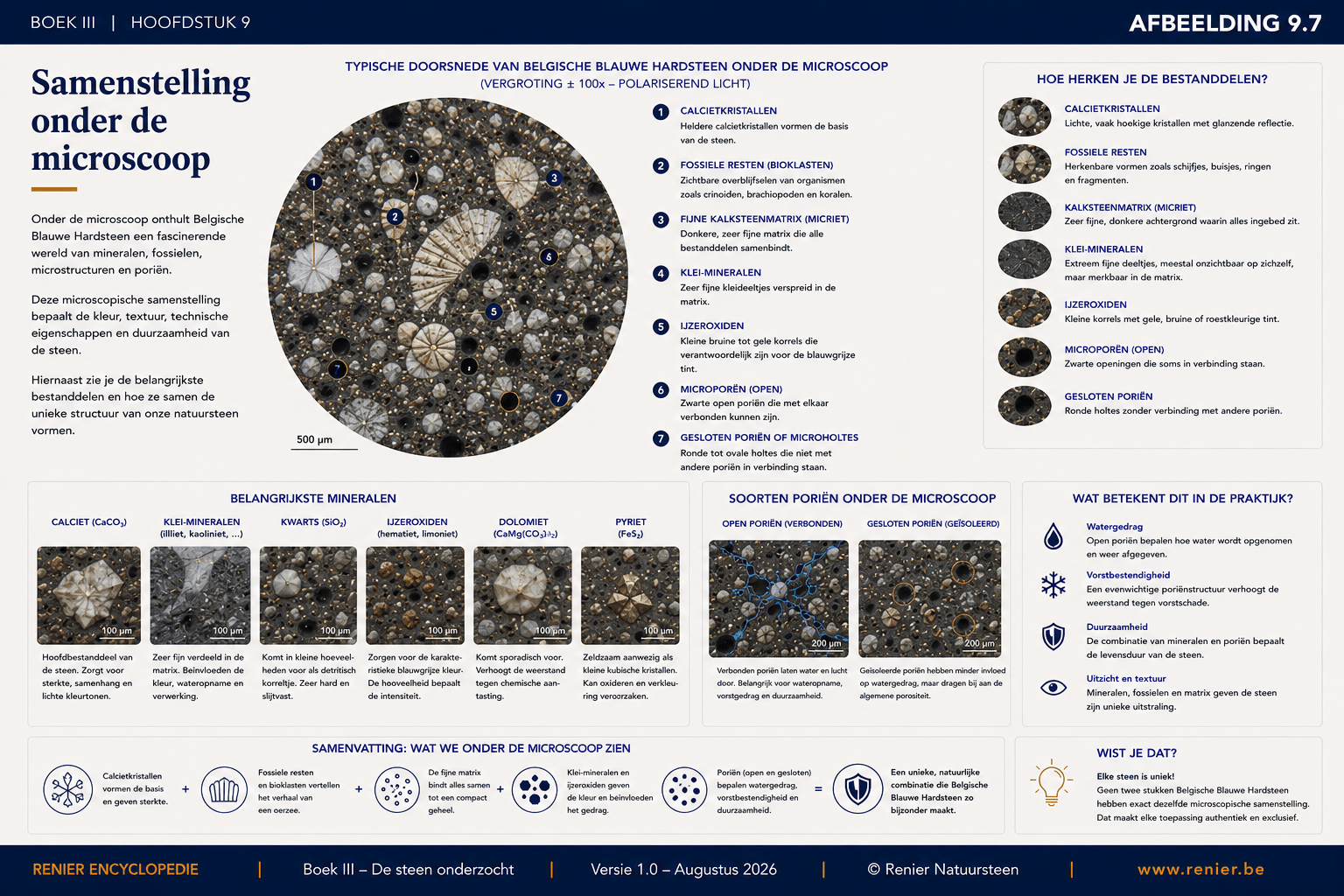
Composition under the microscope
Under the microscope, it becomes clear how fossil fragments, calcite, and the fine matrix together form a single compact rock. At this scale, structures become visible that are barely or not at all visible to the naked eye.
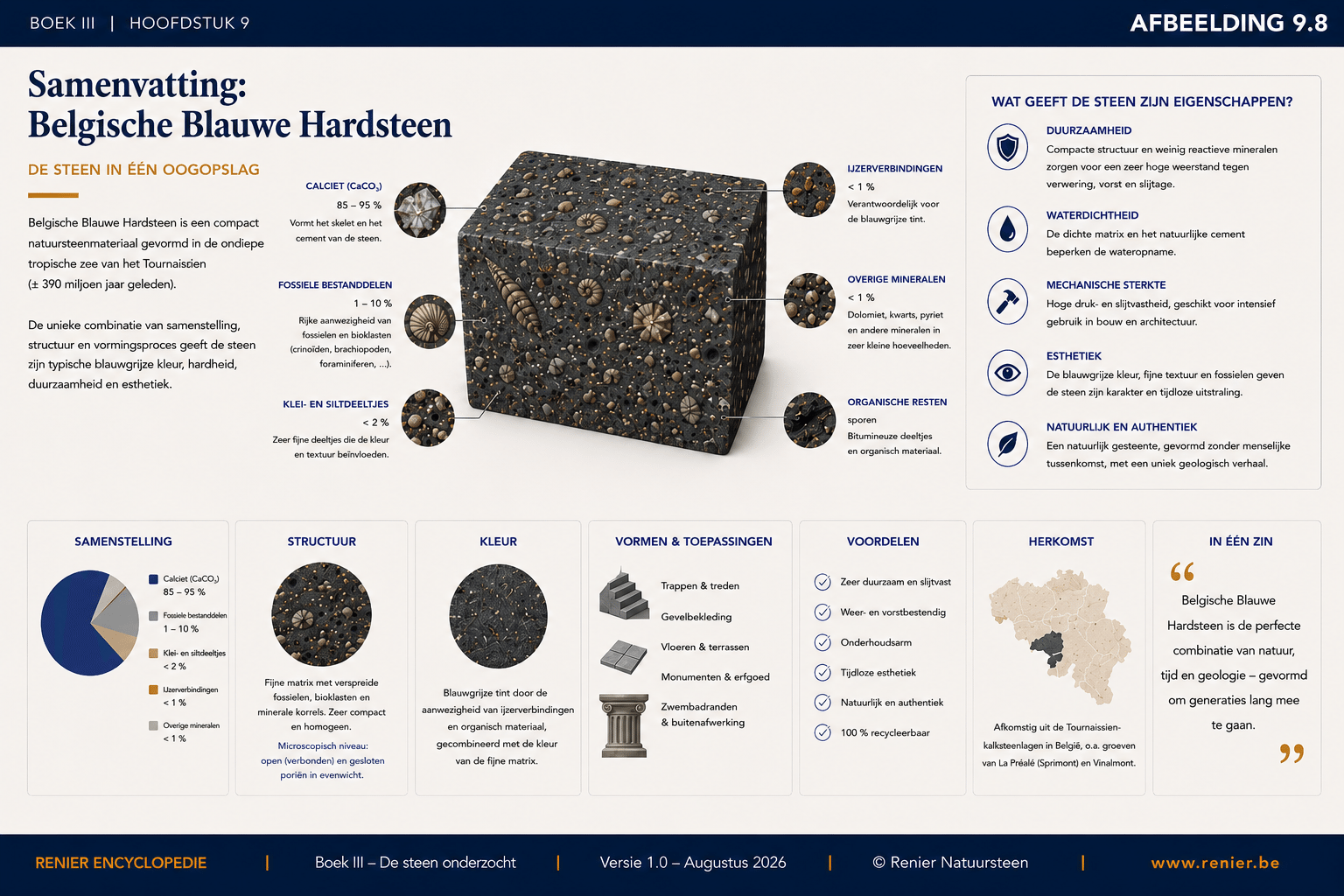
Summary: The Composition of the Stone
Belgian Blue Bluestone is the result of a unique combination of calcite, fossil components, a fine matrix, and small mineral components. Together, they form the material that we recognize today as a compact, fossil-rich natural stone.
From Composition to Structure
We now know what Belgian Blue Stone is made of. But just as important is how these components are organized within the rock. In Chapter 10, we will therefore examine the texture, grain size distribution, and pore structure of the stone.