
A patio is a place you want to enjoy for many years. Choosing the right material is therefore important. Natural stone remains one of the most popular solutions for patios thanks to its durability, natural look and timeless character.
But not every type of stone has the same properties. Below is an overview of the most commonly used materials for terraces and their main characteristics.
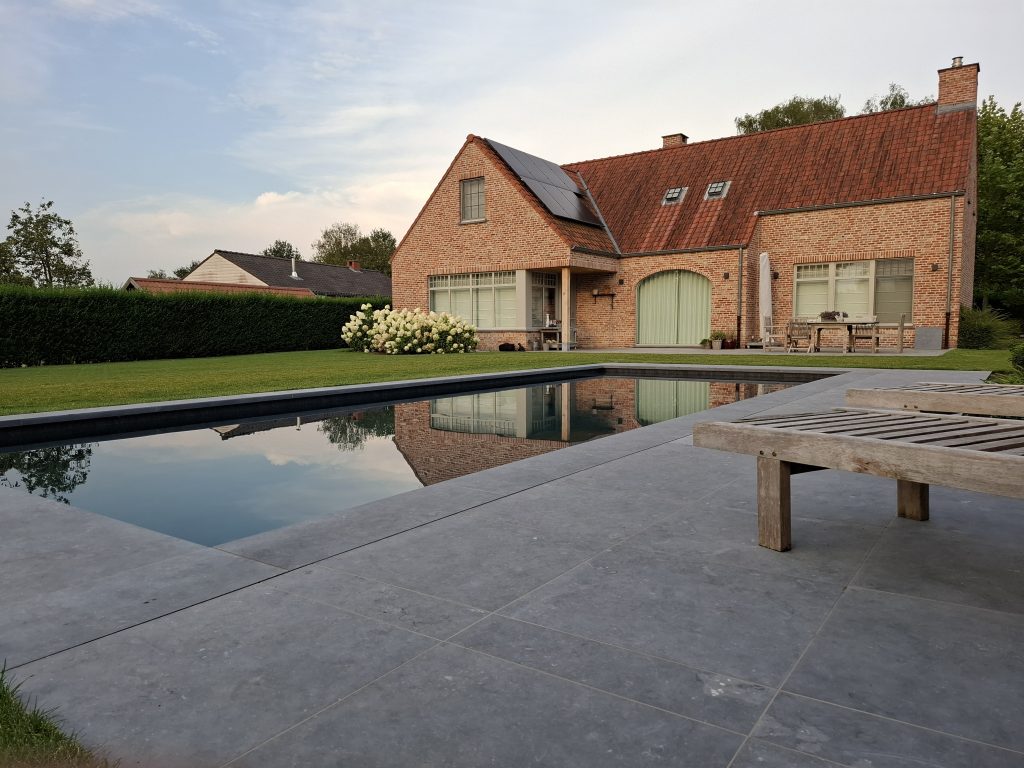
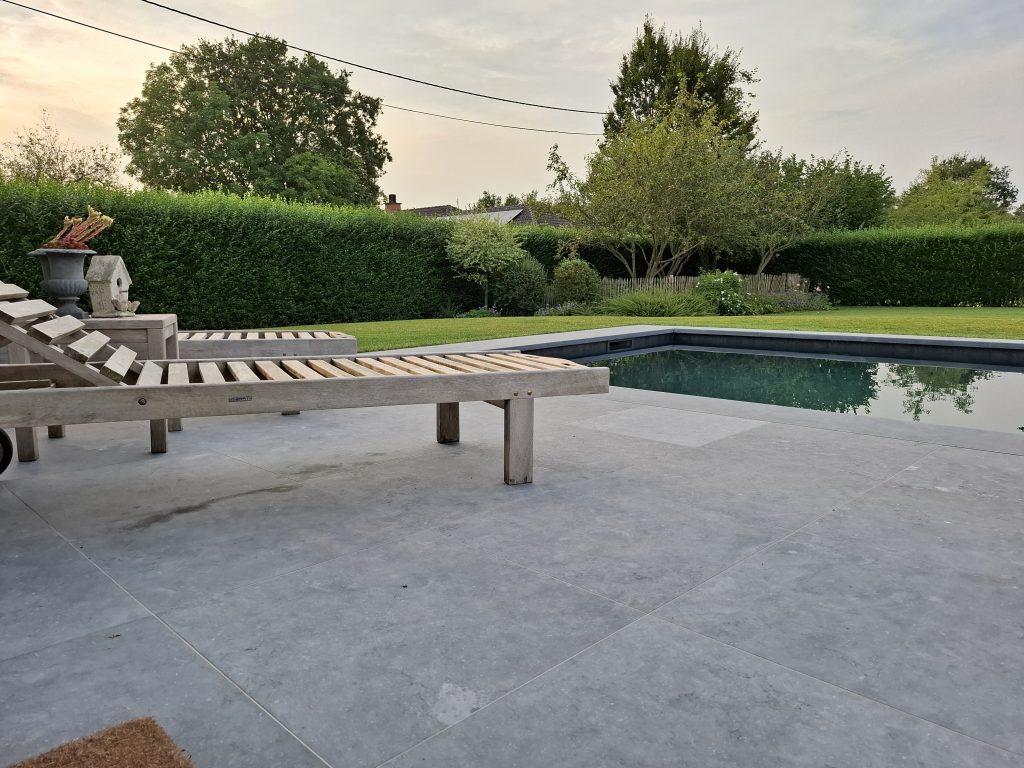
Belgian bluestone, also known as Petit Granit, has been one of the most chosen natural stones for terraces for generations. This limestone from Belgian quarries is known for its strength and authentic appearance.

Key features:
Thanks to the various possible finishes - such as sanded, honed or bush hammered - bluestone can be used in both classic and modern projects.
➡ Also see our terrace tiles in Belgian bluestone.
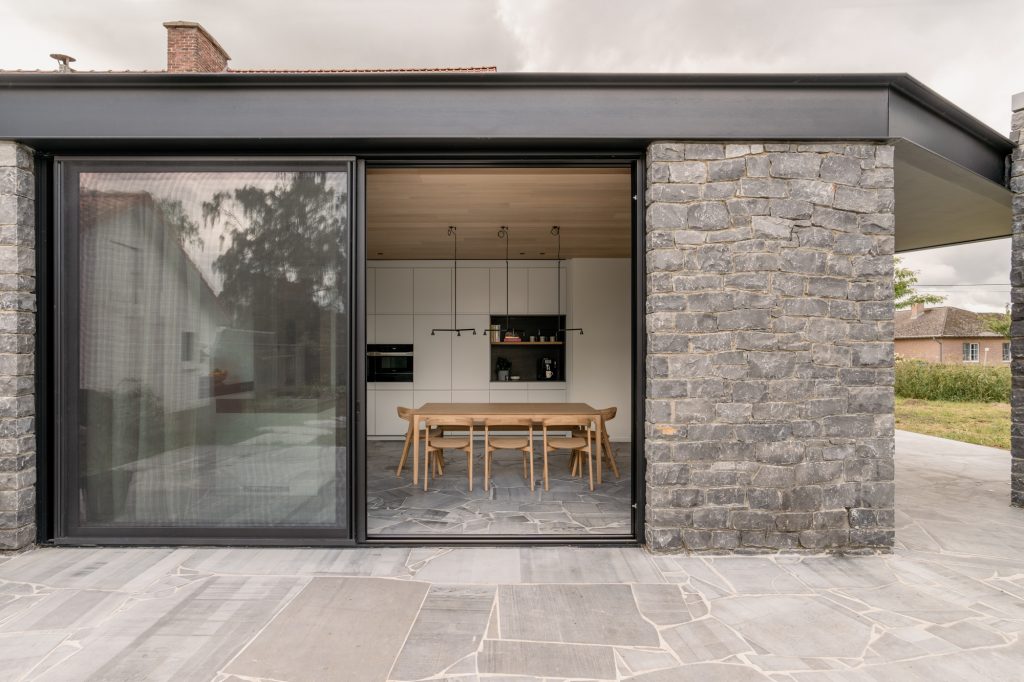
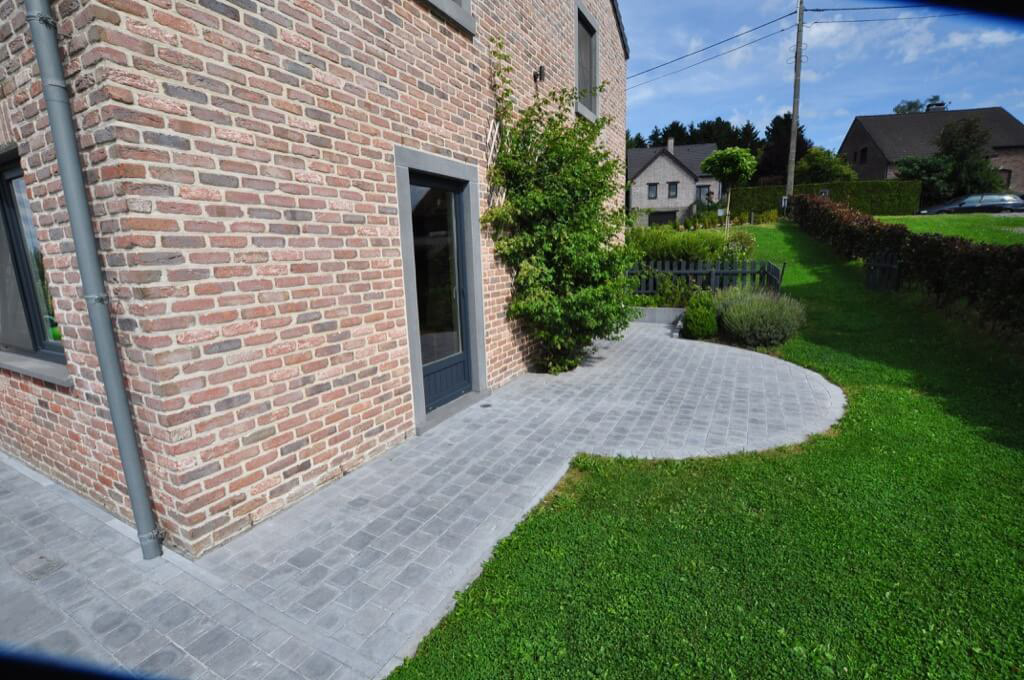
In addition to bluestone, limestone such as Vinalmont often used for patios. This stone has a lighter, warm gray tone and provides a calm and elegant look.
Advantages of limestone:
Because of its natural character, limestone fits perfectly into gardens with contemporary architecture.
➡ Also check out our patio tiles in Vinalmont
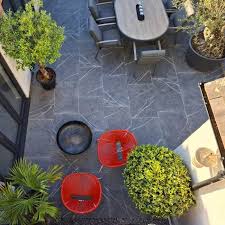
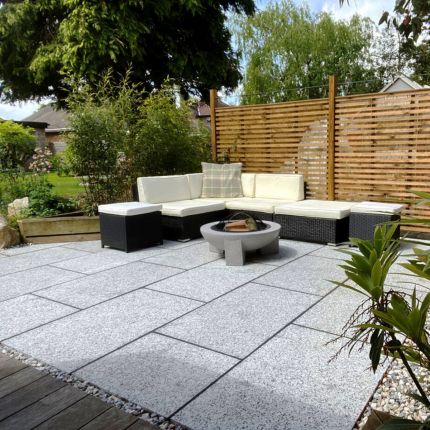
Granite is among the hardest natural stones and is also used for terraces.
Properties of granite:
For terraces, granite is often finished with a flamed surface, which provides a non-slip texture.
Granite tends to have a more uniform appearance than limestones such as bluestone.
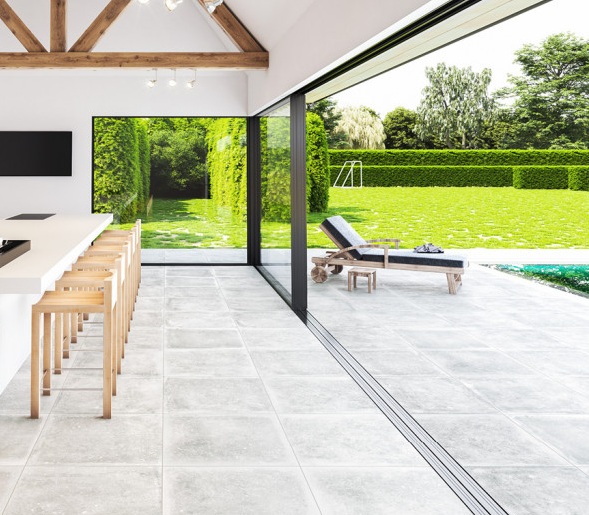
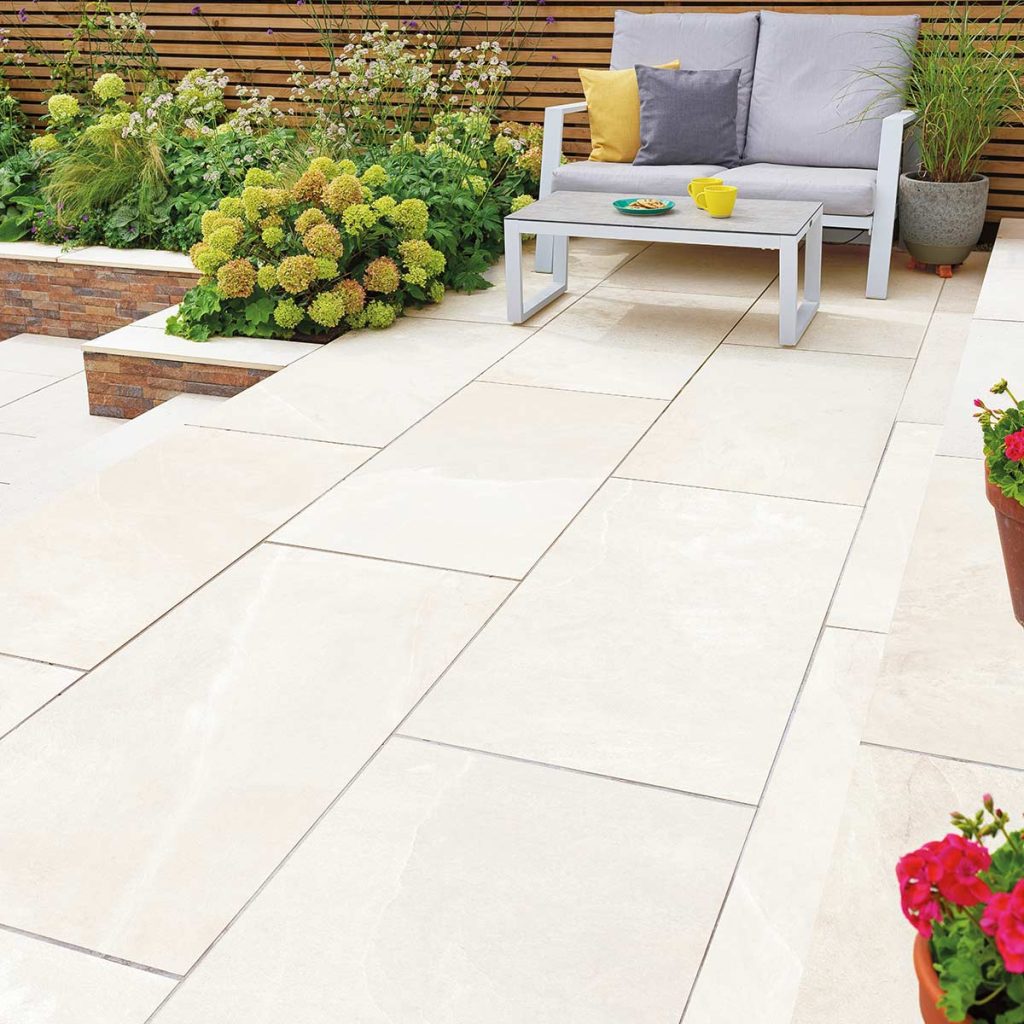
In addition to natural stone, ceramic patio tiles are also popular today. These tiles are industrially produced and can imitate different materials, such as natural stone, concrete or wood.
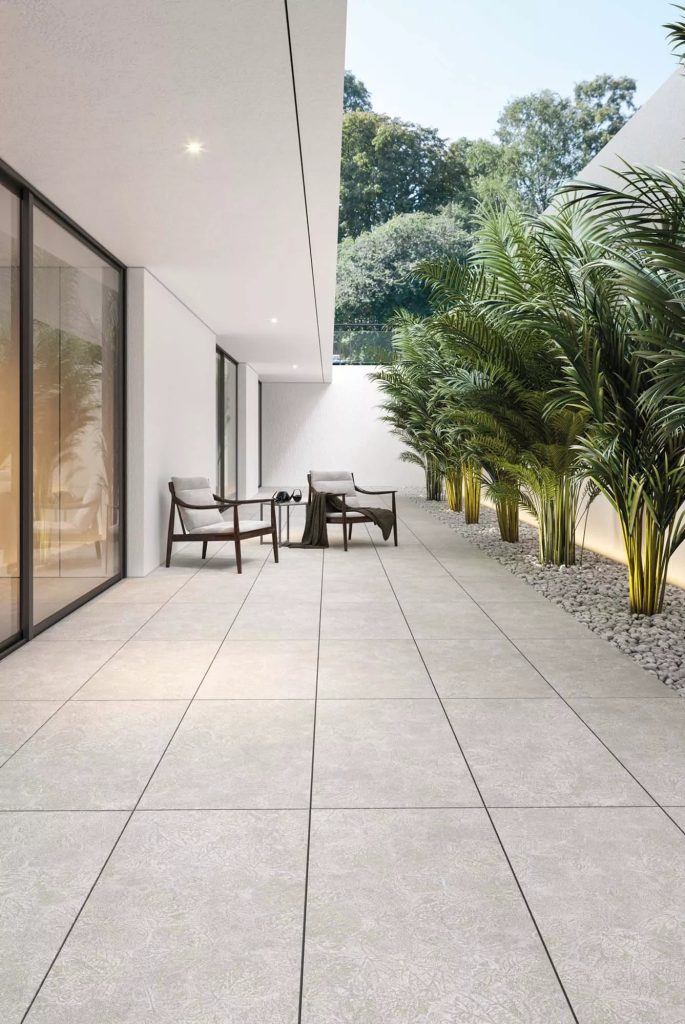
Advantages of ceramic tile:
Ceramic tiles tend to have a more uniform appearance. Natural stone, on the other hand, remains a all-natural product, with each tile being unique in color and texture.
A common question when constructing a patio is: “What does that cost anyway?” A distinction must be made between the price of the material and the cost of professional installation.
Although the price of the material depends on several factors, the table below gives a first indication of guide prices.
| Material | Guide price €/m² | Price Indication |
|---|---|---|
| Ceramic patio tiles | €40 - €80 |
|
| Vietnamese blue stone | €60 - €90 |
|
| Granite | €60 - €110 |
|
| Belgian bluestone | €75 - €150 |
|
| Vinalmont limestone | €100 - €160 |
|
*Indicative material prices for 60×60 cm terrace tiles and ±2 cm thickness. Final price may vary depending on finish, thickness, size and installation method.
The price of professional installation also depends on several factors, such as the substrate and installation method. On average, you can count on about €65 to €100 per m² for this.
Besides the choice of material, other factors also play an important role.
The finish determines both the appearance and ease of use of a deck.
Common finishes are:
For outdoor use, it is important that the finish sufficient slip resistance offers.
The thickness of the terrace tiles depends on the installation method.
General guidelines:
Proper placement is essential for a durable patio. Consider:
This prevents sagging and other long-term problems.
Whether you choose natural stone or ceramic tiles, the most important thing is that the material should be matches the style of your home and the use of your patio.
Natural stone has as its great advantage its authenticity and natural charm, while ceramic tiles are especially valued for their ease of maintenance and uniform appearance.
With the right choice and proper placement, you will create a patio that is stays beautiful for years.
Are you unsure between different materials or finishes?
Our team is happy to help you choose the right stone for your project.
➡ Discover our solutions here in Belgian bluestone from our own quarries