
Our Belgian blue stone is one of the most sustainable materials with a minimal carbon footprint. This ancient stone, formed over millions of years, is quarried locally, which keeps transportation distances—and thus the environmental impact—to a minimum.
We also make a conscious effort to minimize our environmental impact during processing at our production site in Aarschot.
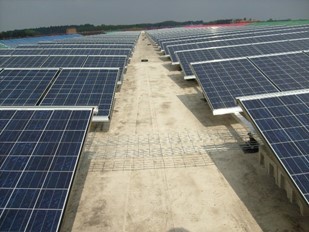
We generate 65% of our energy needs with our impressive solar panel array on the roof of our warehouse in Aarschot.
This park is one of the largest solar power facilities in the region and underscores our commitment to renewable energy and environmentally friendly production.
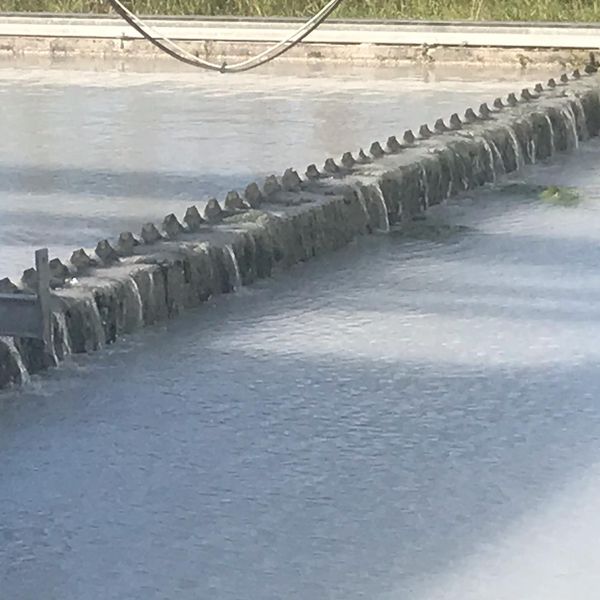
Renier collects rainwater separately as much as possible and stores it for reuse, which means we hardly use any municipal water anymore. All process water is discharged separately to our settling basin, where it is purified through sedimentation.
The water is then clean enough to be reused in our production process.
As a result, we do not need to discharge process water, and we significantly reduce our use of groundwater.
All excess natural stone is stored separately and crushed for recycling in water or road construction.
So they are never dumped.
.
The limestone dust that has settled to the bottom of the settling tank is further dewatered in a filter press and collected separately.
The sludge is then used as a soil amendment in agriculture. Therefore, the sludge is never sent to a landfill.