

For outdoor applications in Belgium, Belgian blue stone is usually the best choice: it has lower water absorption, is sourced in Belgium with traceability, and offers a price advantage over granite. Granite is the better choice when maximum scratch and stain resistance is essential—such as for heavily used surfaces—and for those seeking a speckled, modern look. Both are frost-resistant and will last for generations. Below is a comparison by criterion, so you can make your choice based on your project.
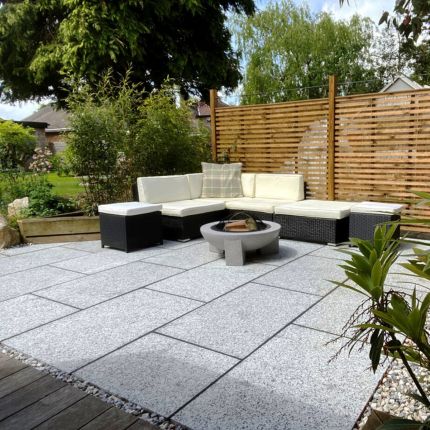
Belgian blue stone is a limestone formed from compressed seabed containing crinoids, quarried in Walloon quarries, including our own. Granite is a volcanic rock with a high quartz content, which makes it extremely wear-resistant; Belgian granite is virtually nonexistent—most of it comes from Portugal, India, or China. This difference in origin explains nearly all of the practical differences.
| Criterion | Belgian blue stone | Granite |
|---|---|---|
| Rock Type | Limestone (sedimentary) | Volcanic, high quartz content |
| Water Absorption | Very low | Low |
| Frost-resistant | Yes | Yes |
| Scratch and stain resistance | Good | Very good (quartz) |
| Sensitive to acids | Yes (limestone: no vinegar or descaler) | Hardly |
| Origin | Belgium, company-owned quarries, traceable | Especially Portugal, India, and China |
| Appearance | Even blue-gray, with a patina that has developed over the years | Speckled, colorfast |
| Price | Reference | Usually a little more expensive |
Choose Belgian blue stone For patios, sills, foundation plinths, stairs, and paving where you want a timeless Belgian look—with local origins and the assurance of a stone that has been weathering outdoors here for centuries. The patina the stone develops over the years is part of its character.
Choose granite where stains and scratches pose the greatest risk (heavily used kitchen countertops, high-traffic floors) or where you specifically want the speckled, color-fast look. Keep in mind that you’ll have to compromise on origin and shipping distance.
Not sure which material to choose for your patio? You can find our comprehensive comparison of four materials in Which type of natural stone should you choose for a patio?, or request advice on your project plan via contact.

Which is better for outdoor use: blue stone or granite? Both are frost-resistant and durable. Blue stone has the edge in terms of origin, price, and its Belgian character; granite has the edge in terms of scratch and stain resistance. For most Belgian outdoor projects, blue stone is the logical choice.
Is granite harder than bluestone? Yes, due to its high quartz content, granite is more scratch-resistant. For normal outdoor applications, the hardness of blue stone is more than sufficient, as centuries-old Belgian monuments prove.
Does granite discolor less than blue stone? Granite retains its color; blue stone develops a gray patina when exposed to the elements. This patina is not a defect but a natural weathering process that is part of the stone's character.
Can you use vinegar on granite? It usually works on granite, but never on bluestone: limestone dissolves in acid. Clean both safely with pH-neutral natural stone soap.