

Door sills in natural stone
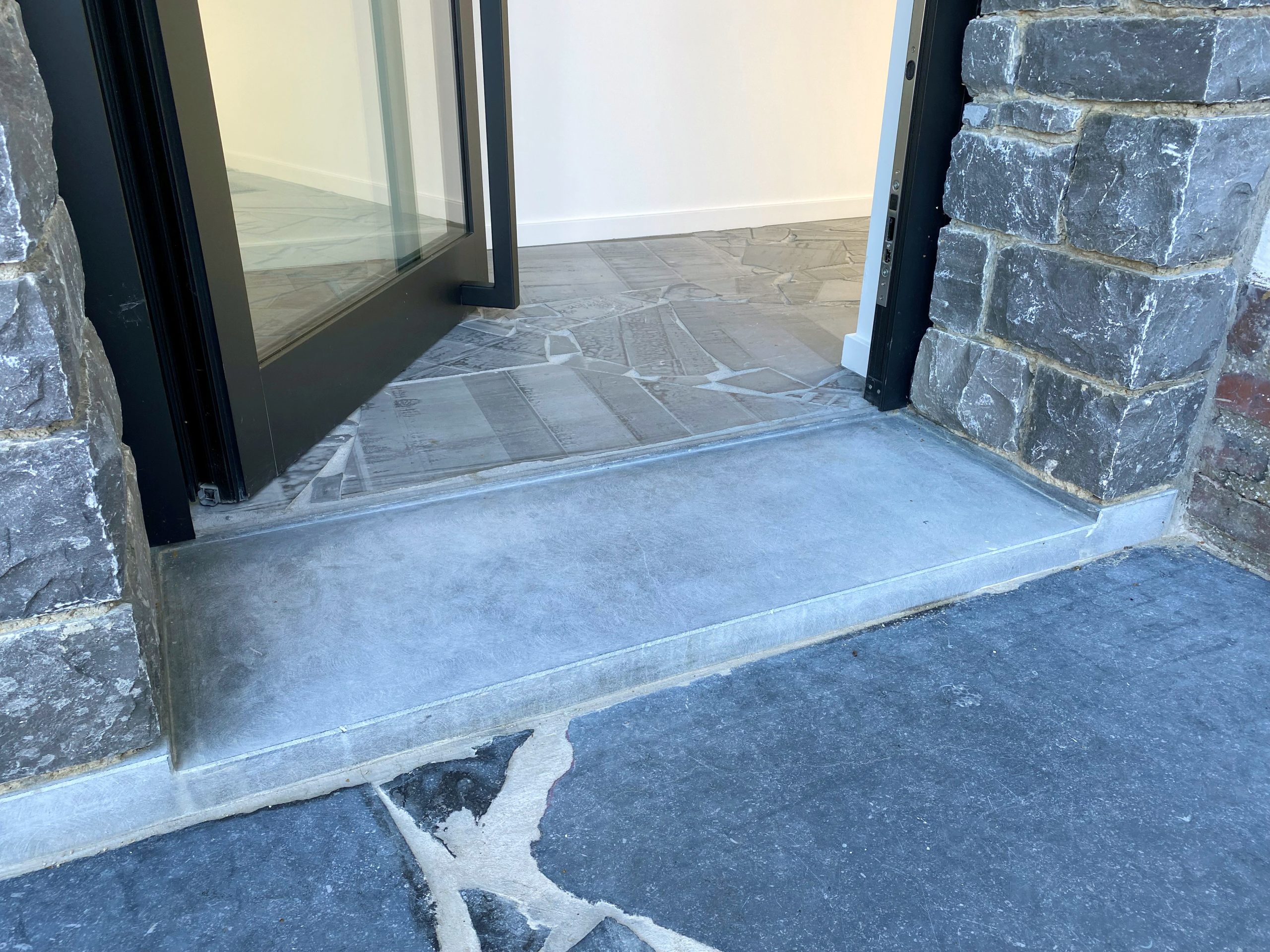
A door sill in natural stone provides a strong, durable and neat transition between outside and inside. It helps drain rainwater, protects the underside of the door and gives your entry a neat finish.
At Renier, we make completely custom door sills in Belgian Blue Stone and other quality natural stone types.
Why does an exterior door need a door sill?
A door sill seems like a small detail, but it has an important function. It forms the transition between the facade, the exterior door and the floor or pavement. Without a correct sill, rainwater can enter more easily and the underside of the door will suffer more.
Water drainage
A well-placed sill helps drain rainwater to the outside so it does not seep in under the door.
Sealing and insulation
The sill helps seal the space under the door against drafts, cold air and moisture.
Protection of the door
The underside of a door is susceptible to moisture, dirt and wear and tear. A sill helps prevent damage.
Sustainable transition
A natural stone sill is strong and resistant to daily use, foot traffic and weathering.
Neat finish
The sill provides a neat transition between outside and inside, in both modern and classic homes.
Added value for your home
Natural stone exudes quality and stays beautiful for years, giving your facade a durable finish.
Why choose a door sill in natural stone?
Natural stone is often chosen for exterior doors because it is strong, durable and timeless. Belgian Blue Stone is particularly suitable for door thresholds: the stone is hard-wearing, frost-resistant and suits almost every style of facade.
- Durable: natural stone will last for years and withstand intensive use.
- Weatherproof: suitable for rain, frost, sun and temperature changes.
- Low maintenance: easy to clean and resistant to daily dirt.
- Timeless look: suits modern, country and classic homes.
- Solid base: ideal as a transition between facade, door profile and floor finish.
Flat door sill or door sill with raised edge?
When it comes to door sills, you often choose between a flat sill and a sill with raised edge. Which version you need depends mainly on the door profile, the desired waterproofing and the way the door will be installed.
Flat door sill
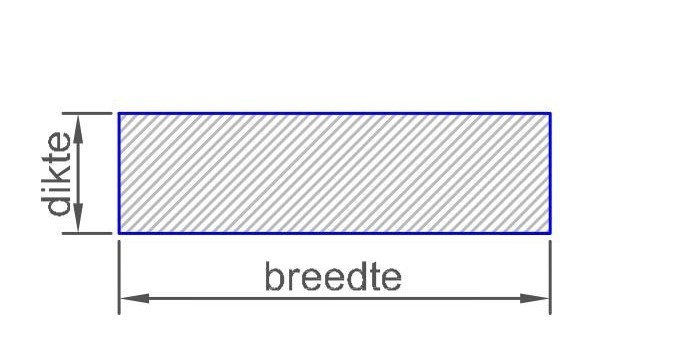
A flat door sill has no raised edge. Thus, the top remains completely flat.
- Sleek and modern look
- Easier passage
- Often chosen for modern doors
- Suitable when the door profile itself provides the seal
Flat door sill with raised edge
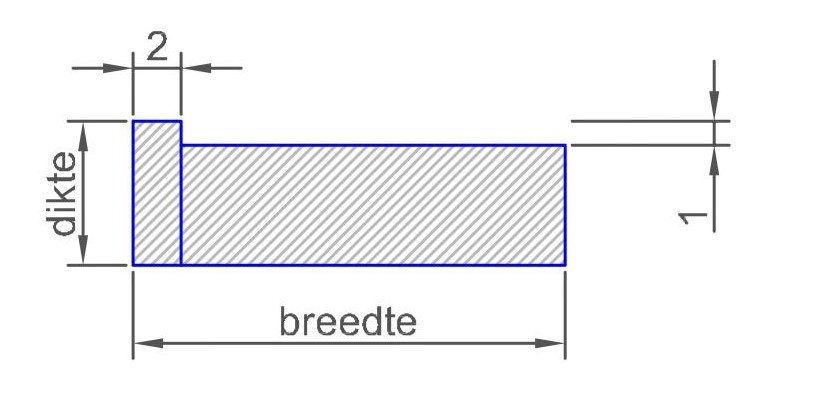
In the case of a flat sill with upstand, a small raised edge is provided at the back. The door profile connects against or over this.
- Better rainwater protection
- Good connection with the door profile
- Often chosen when waterproofing is important
- Helps prevent water from running inside
Why is there sometimes a recess in a door sill?
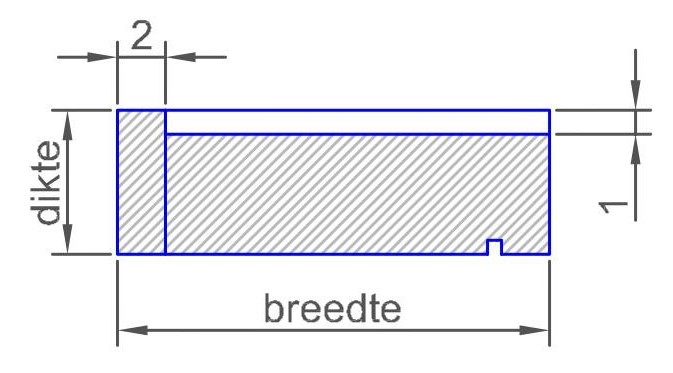
On some exterior doors, part of the door sill is worked out locally so that the door profile fits perfectly with the natural stone. In the industry, this is called a "pillow places".
This recess ensures that the door can be placed correctly and fit nicely to the sill. In addition, it often helps drain rainwater better and create a durable connection between the door and natural stone.
The shape, depth and position of the cushion depend on the type of door and the chosen door profile. Therefore, this operation is always performed to size.
Door sill with a continuous cushion
The cushion ensures a better connection between door profile and sill. This gives you a technically and aesthetically neat finish.
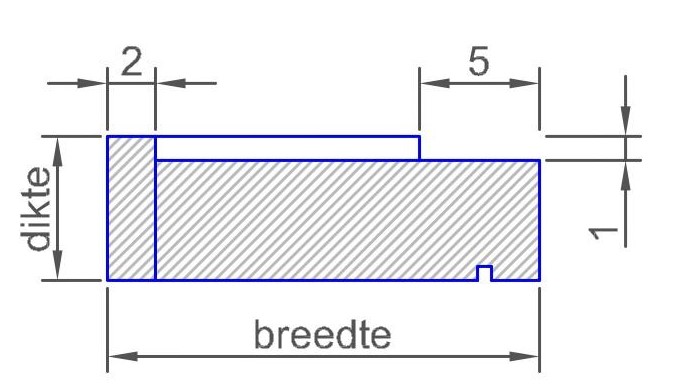
Door sill with a customized cushion
The location of the cushion can be adjusted according to the technical data of the door supplier, for example at a fixed distance from the side.
What is a miter on a door sill?
Sometimes a door sill needs to connect to a facade plinth, door frame or other natural stone element. To make that connection beautiful and seamless, a mitre is provided.
A mitre is a beveled finish at the end of the sill. This allows both natural stone parts to fit neatly together and avoids visible end edges. The result looks more refined and provides a professional finish to the entire entrance.
Whether a miter is necessary depends on the structure of the facade and the natural stone finish chosen. Our staff will be happy to review this with you.
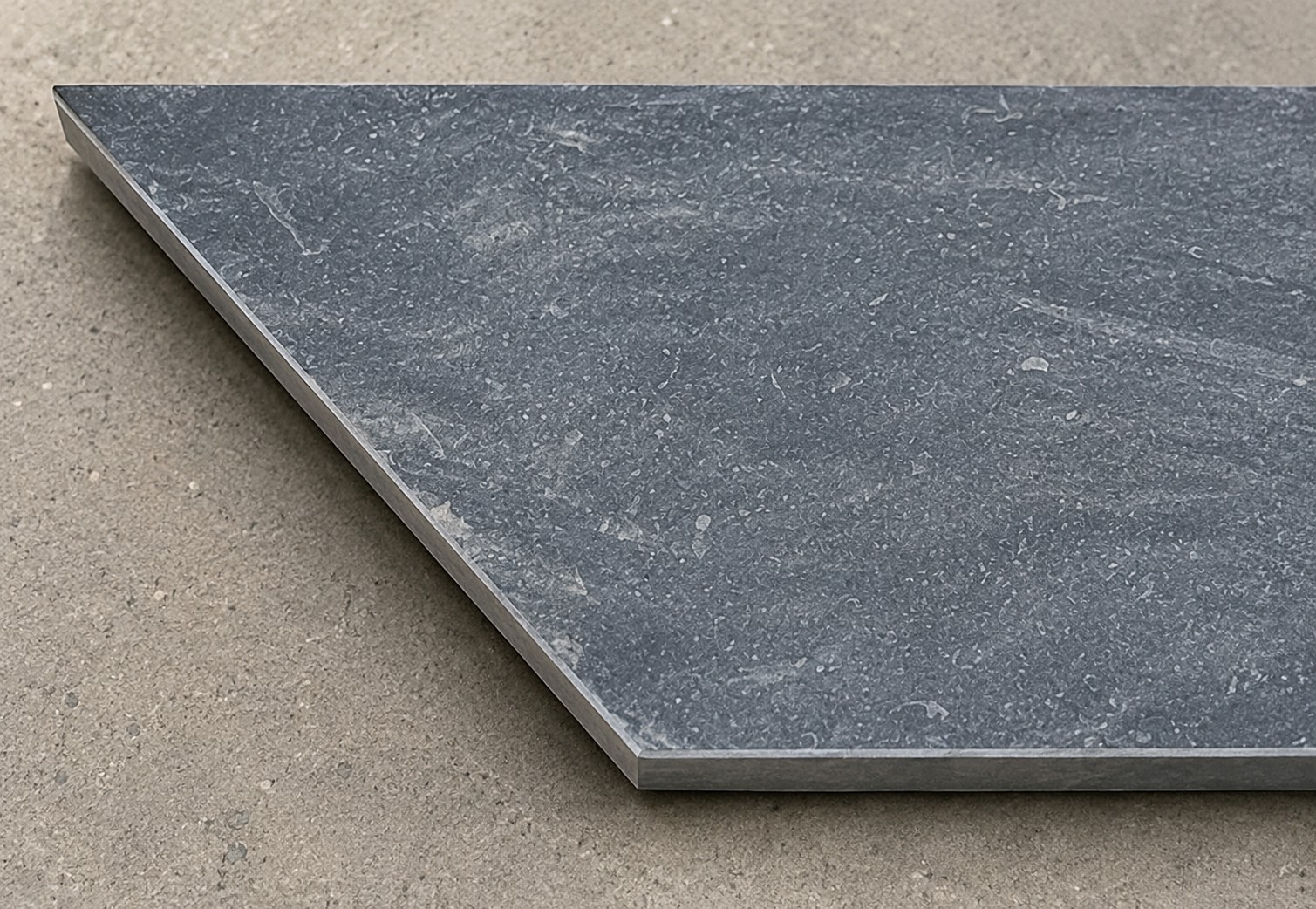
Example of a mitred door sill
How do you choose the right door sill?
The right door sill depends on your door type, facade, floor construction and desired finish. Are you in doubt? Then together we will look at which version is most suitable.
New construction or renovation
Renovation often involves working with existing openings. Thanks to customization, the sill can be adjusted accordingly.
Flat or edged
The choice depends mainly on the door profile and the desired waterproofing.
With or without cushion
Some door profiles require a local recess in the sill for proper fit.
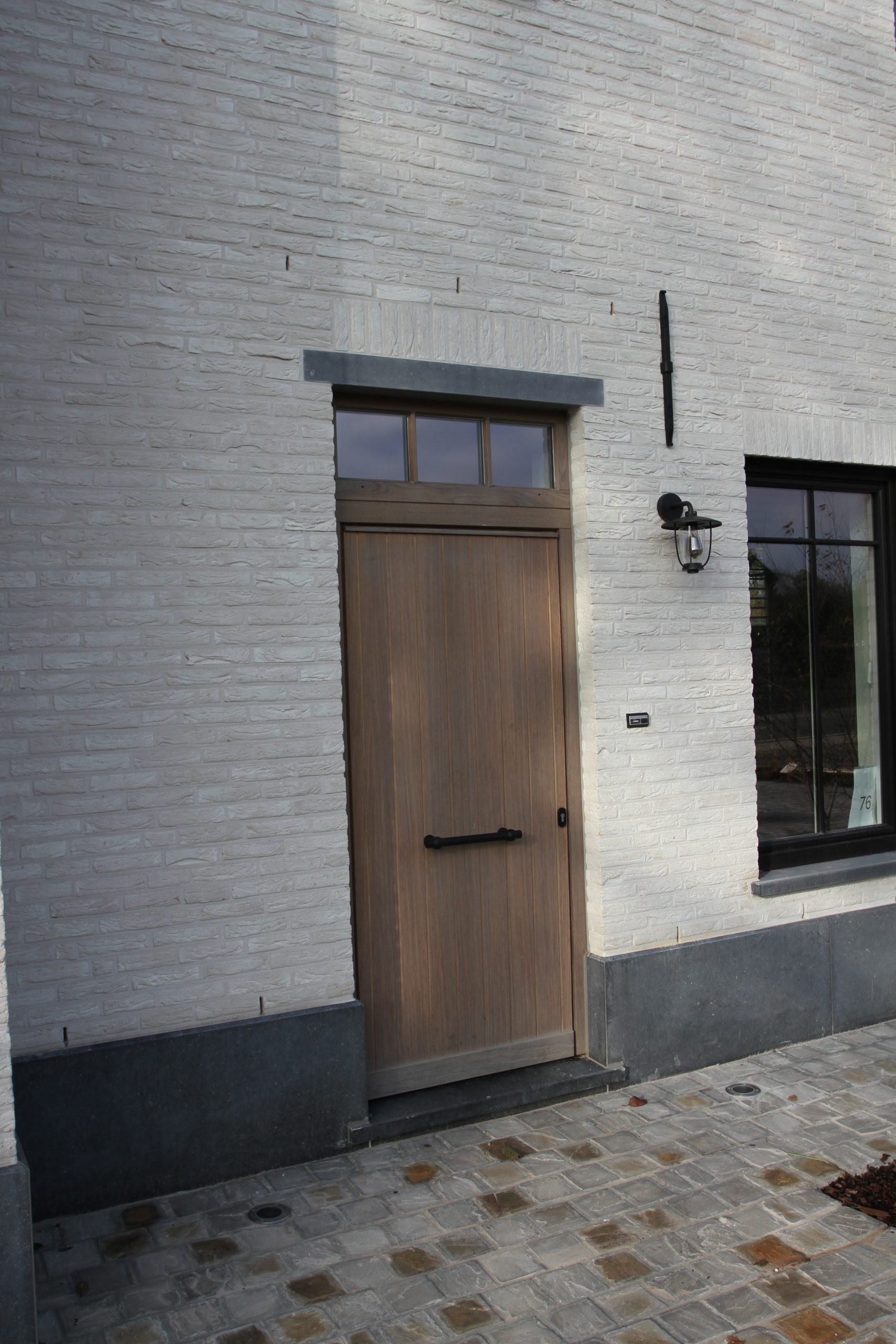
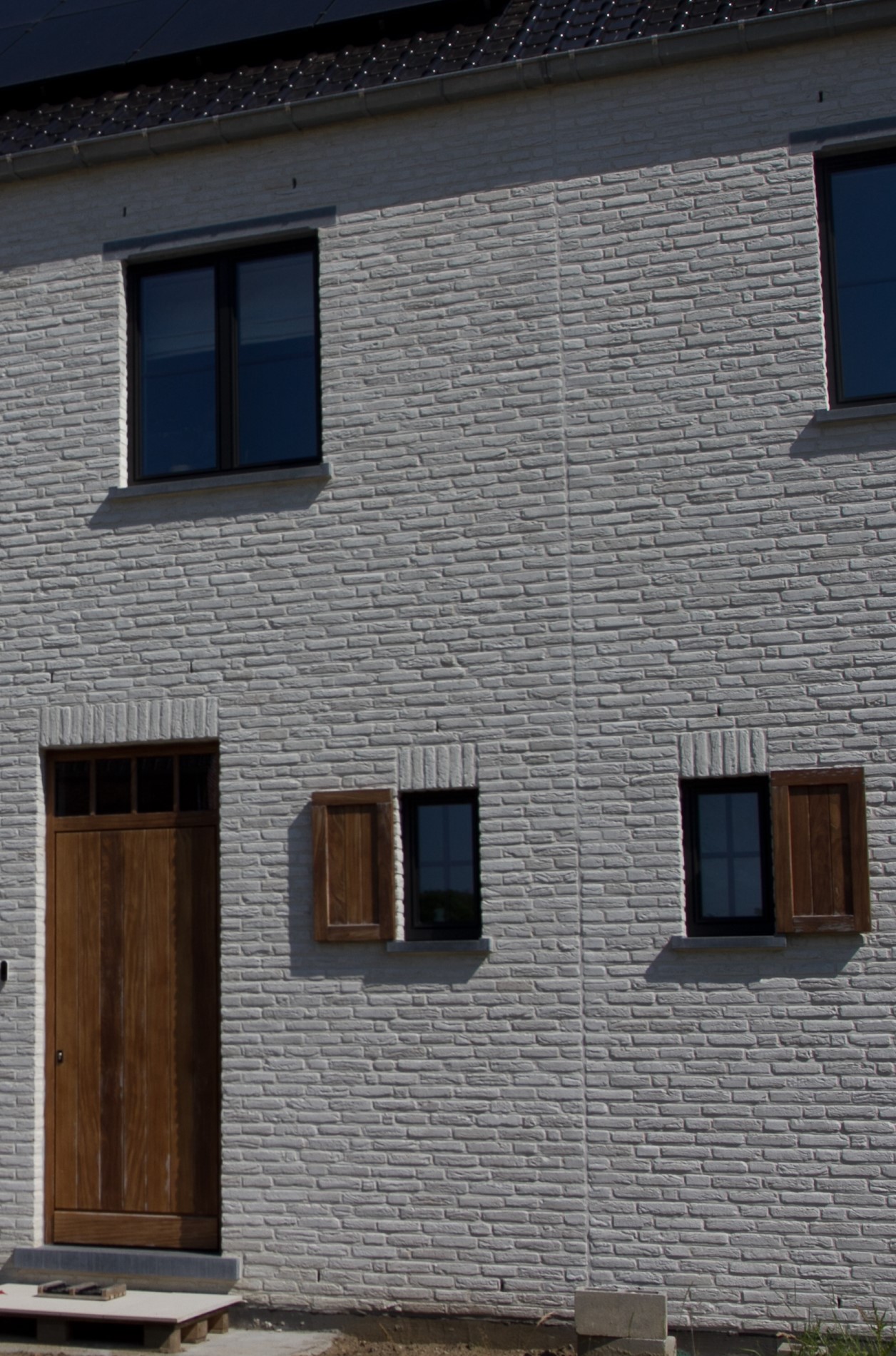
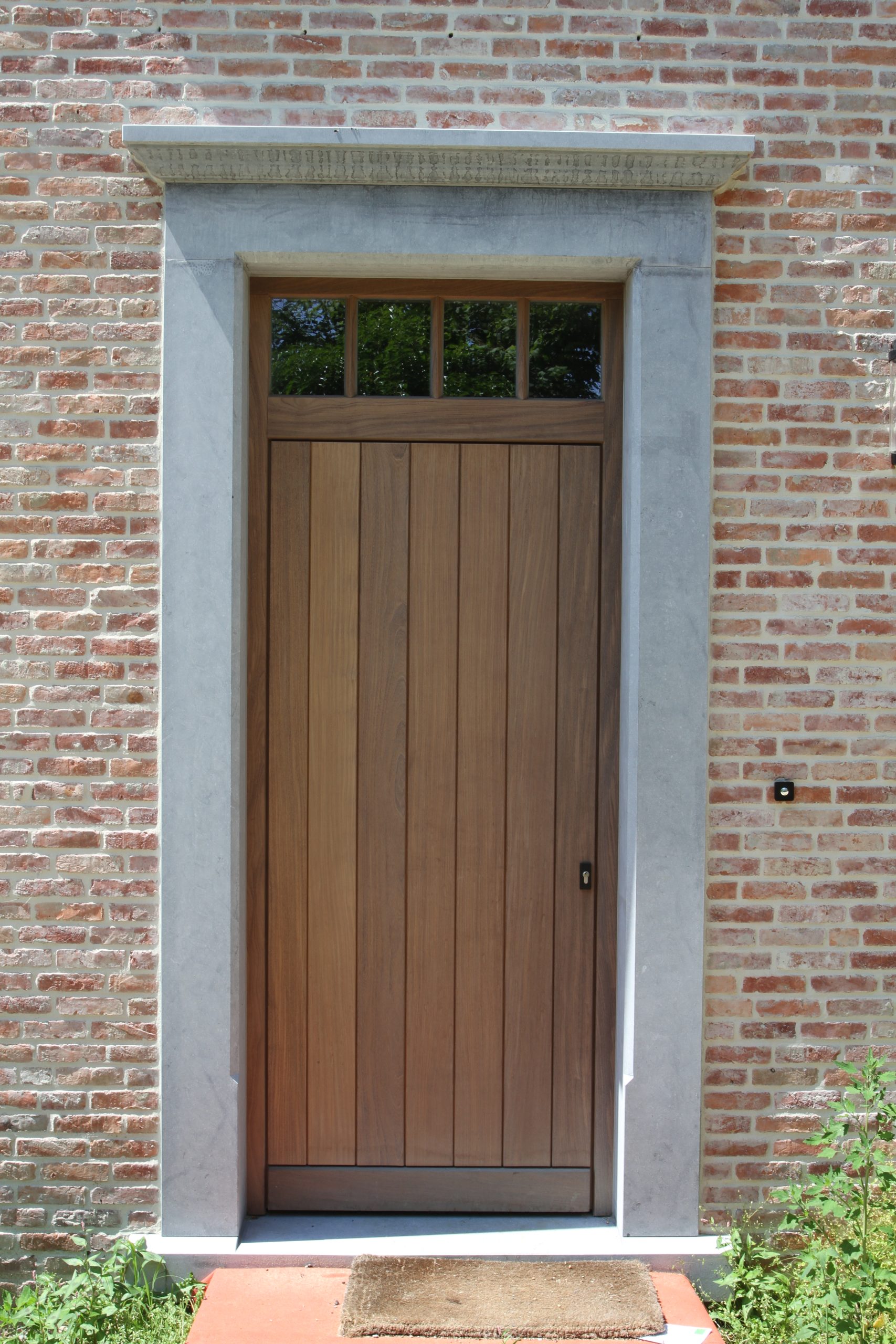
Door sills in Belgian Blue Stone in practice
Door sills in Belgian Blue Stone suit many home styles. They combine technical quality with a natural and timeless appearance.
Need a door sill for your project?
We are happy to help you with the right choice, dimensions and finish. Thanks to our own production, we supply quality custom door sills for contractors, architects and private individuals.
Frequently asked questions about door sills
Which natural stone is suitable for a door sill?
Belgian Blue Stone is one of the most commonly chosen materials for door sills. The stone is strong, durable, weather-resistant and has a timeless look.
What is the difference between a flat sill and an edged sill?
A flat sill has no raised edge. A sill with raised edge has a small edge at the back that helps with connection to the door profile and waterproofing.
What does cushion mean at a door threshold?
Cushioning means making a recess or lowering in the sill locally. This allows the door profile to fit better with the natural stone.
What is the point of a drip groove?
A drip groove prevents water from running under the sill toward the gable or door. This is important for a durable and correct installation.
When is a default required?
A miter is useful when the door sill needs to match nicely with other natural stone elements such as gable skirting or door frames.
Can a door sill be fully customized?
Yes. At Renier, door sills are custom produced according to the desired length, width, thickness, finish and technical design.
Are door sills suitable for renovation?
Yes. Door sills in natural stone are perfect for renovation projects. Customization allows existing doorways to be finished neatly and permanently.
What is the delivery time of a custom door sill?
Standard delivery time is usually about two weeks, depending on the chosen design, finish and production schedule.