

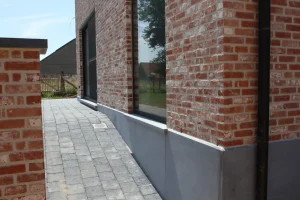
A blue stone base molding protects your facade from moisture and dirt.
When building or renovating a home, a great deal of attention is often paid to exterior brickwork, windows, and doors. Yet there is one element that plays an important role both technically and aesthetically but is sometimes overlooked: the building base.
A facade plinth protects the lower part of the facade from moisture, dirt, and mechanical damage. For this reason, this area is often finished with a strong and durable material such as Belgian blue stone.
A facade plinth is the bottom section of a facade, usually between 10 and 40 cm tall, which protects the masonry from external factors.
This baseboard is located at the junction between the facade and ground level (garden, driveway, or patio). Because this area is most exposed to water and dirt, people often choose a sustainable natural stone material.
A building base has several functions:
Installing a baseboard helps keep the masonry on the facade looking good and protected for longer.
When it comes to facade baseboards, people very often choose Belgian blue stone. This material has a number of important advantages.
Sustainability
Blue stone is a very strong limestone that is resistant to wear, moisture, and temperature fluctuations.
Frost-resistant
Because facade plinths are installed close to the ground, they often come into contact with water. Blue stone is highly resistant to frost.
Timeless appeal
Its natural blue-gray color complements both modern and classic facades beautifully.
Easy to maintain
Natural stone requires little maintenance and retains its appearance for years.
The height of a foundation plinth depends on the home's architecture and the desired look.
Common heights are:
A taller baseboard provides more protection against splashing water and dirt.
Facade baseboards can be manufactured in various finishes, but the most common is sanded blue
The price of a facade plinth depends on various factors, such as:
As a general guideline, you can usually expect to pay approximately €40 to €120 per running meter, depending on the model.
➡ View our selection of exterior baseboards here
Blue stone is highly wear-resistant and resistant to moisture and frost. This makes it an ideal natural stone for applications close to the ground, such as foundation sills.
Most facade baseboards are between 10 and 30 cm. For facades that require extra protection, this can amount to approximately 40 cm.
Yes. In addition to providing protection, a foundation plinth also serves an aesthetic purpose. A natural stone plinth creates a clean and stylish transition between the facade and ground level.
A natural stone base molding not only adds a beautiful finishing touch to your home, but also protects the lower part of the facade from moisture and dirt.
Thanks to its strength, durability, and timeless appeal, it remains Belgian blue stone one of the most popular materials for exterior baseboards.
➡ Browse our selection facade base plates made of Belgian blue stone on renier.be.