

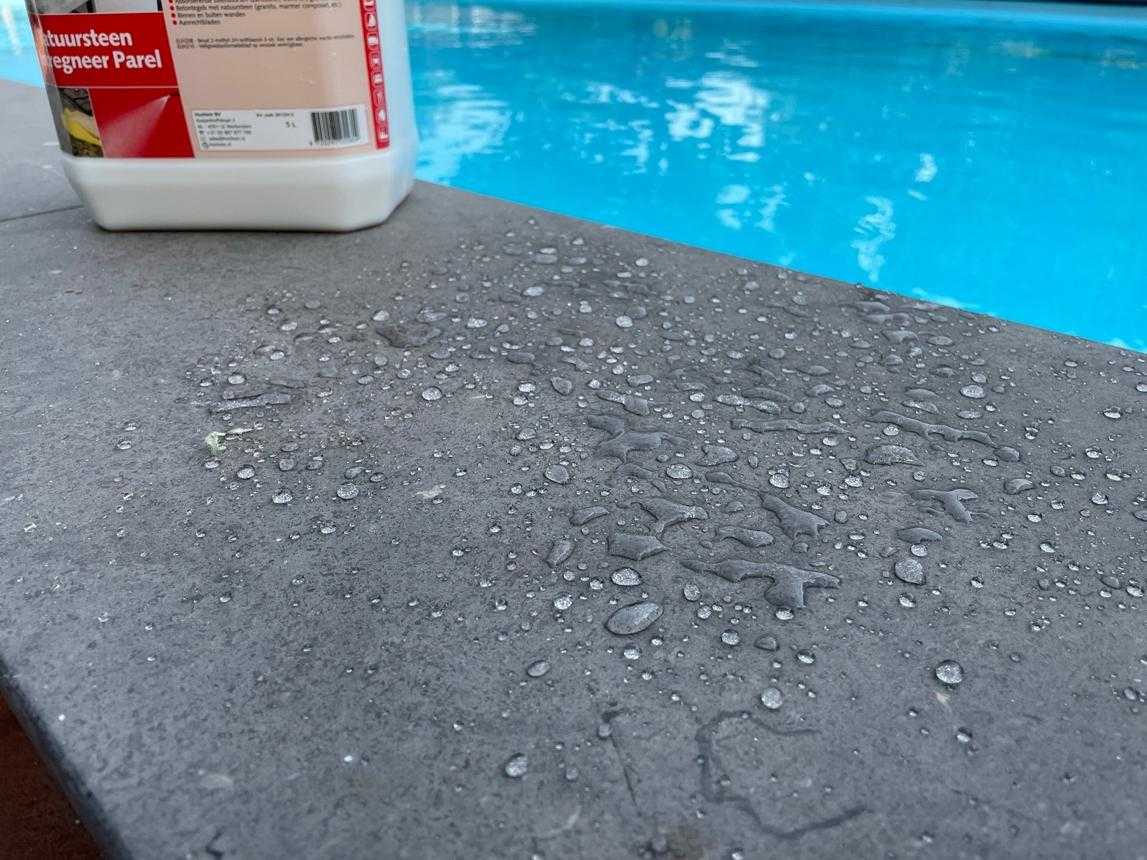
To impregnate natural stone, use a stain blocker: an invisible treatment that penetrates the stone’s pores and repels water and oil without altering its appearance or breathability. Indoors, it’s the standard treatment for natural stone countertops and tables; outdoors, it extends the lifespan of patios and pool decks. Belgian blue stone usually does not need to be treated indoors due to its low water absorption. Below, you’ll learn when impregnation is recommended, which product is suitable, and how to apply it.
| Situation | Waterproofing? | Why |
|---|---|---|
| Kitchen countertop, table, or work surface | Yes | Oil, wine, and coffee don't have a chance to soak in |
| Patio and pool deck | Recommended | Slows the formation of stains and green deposits, making maintenance easier |
| White and light-colored natural stone (Piedra Paloma) | Yes | Stains are more visible on light-colored surfaces |
| More porous stones (porphyry, sandstone) | Yes | Higher water absorption requires protection |
| Indoor blue stone floor | Not necessary | Naturally very low water absorption |
Our product line includes the Lithofin stain removers that we recommend for each specific situation: Lithofin Stain Stopper as all-around protection for indoor and outdoor use, and Lithofin Stain Stop Plus with a color-enhancing effect that brings out the dark hue of blue stone. If you're not sure which one matches your stone and finish, please send a photo to our Technical Department.
Work on dry, thoroughly cleaned stone and test the product first on an inconspicuous area. Apply the product evenly according to the label instructions, allow it to penetrate, and wipe away any excess product with a dry, lint-free cloth before it dries: any residue left behind will cause variations in shine. Allow the treatment to cure before putting any weight on the surface again. Afterward, clean only with pH-neutral solutions to ensure the protection lasts a long time.
That depends on the product, the type of stone, and how heavily the surface is used. The test is simple: if water no longer beads up on the surface, it’s time to repeat the treatment. Outdoors, spring is the natural time to do this, as part of the Seasonal Plan for Your Patio.
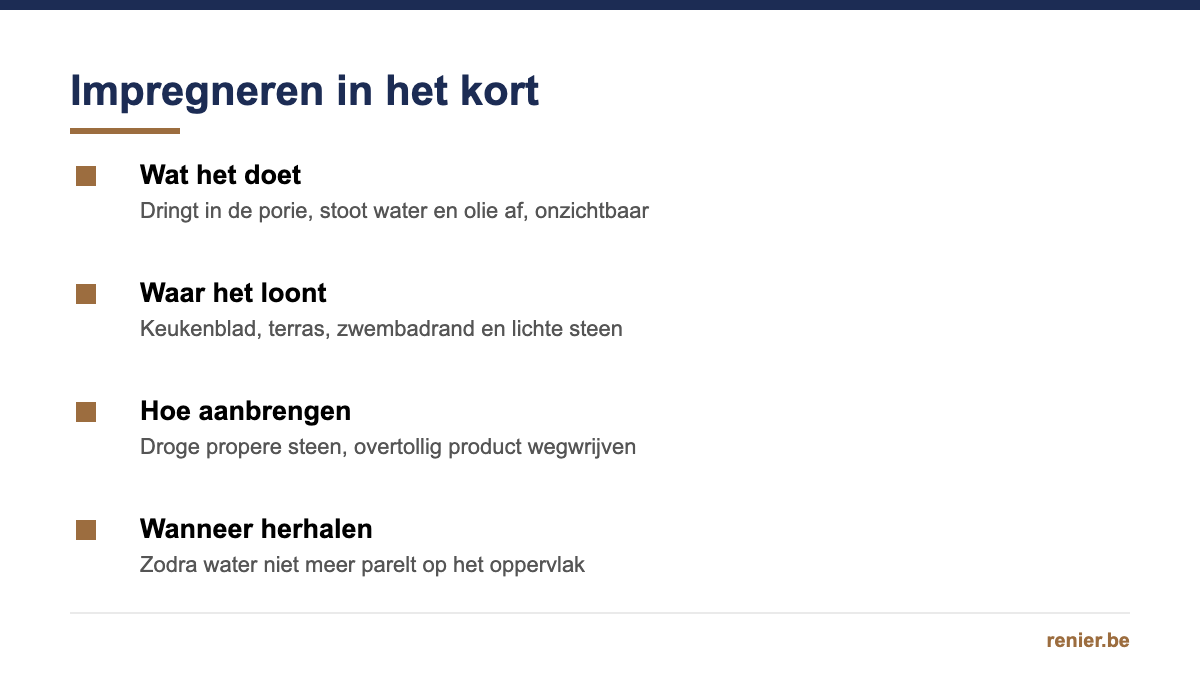
What is the difference between waterproofing and stain protection? No: A stain blocker is an impregnating agent. It penetrates the pores and repels water and oil without forming a film on the stone.
Should you impregnate Belgian blue stone? It is generally not recommended for indoor use, thanks to its low water absorption. However, it is recommended for outdoor use and on high-traffic surfaces such as kitchen countertops or patios.
Does a stain blocker change the appearance of the stone? A regular stain blocker won't do that. If you specifically choose a color-enhancing version like Vlekstop Plus, the shade will become deeper and darker.
How often should you waterproof it? Repeat when water no longer beads on the surface. Follow the manufacturer's instructions for each product.
Can you apply a water-repellent treatment over an existing stain? No, first remove stains using the appropriate product for each type of stain from the category removing stains, otherwise you'll trap them inside the stone.