

For pool edges, choose a natural stone with a rough, slip-resistant finish: Belgian blue stone or Piedra Paloma with a bush-hammered finish (R11-R12), or porphyry, which naturally meets the R12 standard. Just as important as the type of stone is the color: a light-colored stone such as Piedra Paloma Heats up less in the sun, making it pleasant for bare feet. Renier supplies pool coping stones manufactured in-house, in standard sizes and custom sizes. See the selection guide below.
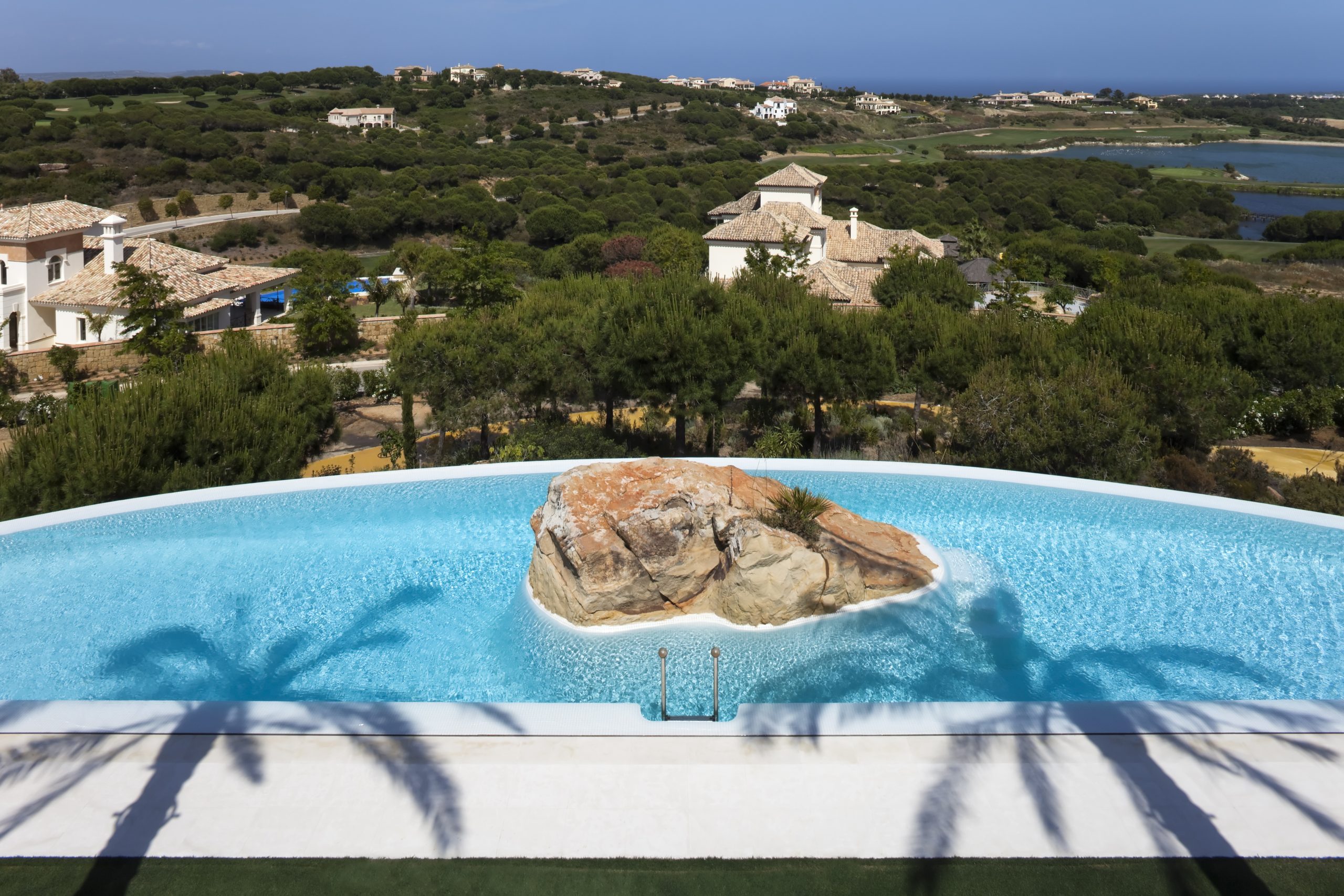
The surface around a swimming pool is constantly wet. The R-classification according to DIN 51130 indicates how slip-resistant a finish is: the higher the number, the more traction it provides. A sanded finish (R10) is fine for a patio, but around the pool, you should choose a bush-hammered or flamed finish (R11–R12). Due to its naturally rough fracture, porphyry naturally has an R12 rating.
| Stone | Recommended finish | Stay strong | Point to Note |
|---|---|---|---|
| Belgian blue stone | Bush-hammered or flamed | Frost-resistant, low water absorption, Belgian | Dark colors heat up faster |
| Piedra Paloma | Bush-hammered | Light in color, stays cooler on bare feet | Waterproofing recommended to prevent stains |
| Porphyry | Natural break | Naturally R12, rustic look | More porous; impregnation recommended |
Pool coping stones are available in a flat design or with a rounded edge that feels comfortable and helps direct the water more effectively. In our category pool coping stones You'll find the standard shapes there; we cut corner pieces and custom-made pieces (e.g., for a round or free-form pool) in our own workshop in Aarschot. Combine the coping with the same stone as pool tiles to create a continuous whole.
Regularly rinse off splashes of chlorine or salt with clean water and clean the surface with a pH-neutral natural stone soap; never use acidic products. Impregnation slows down the formation of stains caused by sunscreen and organic dirt. The complete guide can be found in our Maintenance FAQ.

Which type of natural stone is best for use around a swimming pool? Porphyry or Belgian blue stone with a bush-hammered finish, both R11 or higher. If you want a stone that stays cool under bare feet, choose the light-colored Piedra Paloma with a bush-hammered finish.
Does a dark pool deck get too hot in the sun? Dark stone heats up faster than light stone. For those who are sensitive to this, a light-colored stone such as Piedra Paloma is the most comfortable choice.
Is blue stone resistant to chlorinated water? Yes, provided you perform regular maintenance: rinse off splashes regularly and clean with a pH-neutral solution. Acidic cleaners are the real enemy of calcareous stone, not the pool water.
Can you custom-make pool coping? Yes, we cut custom-sized coping stones in our own workshop, including corner pieces and shapes for free-form pools. Request a quote with your pool plan.