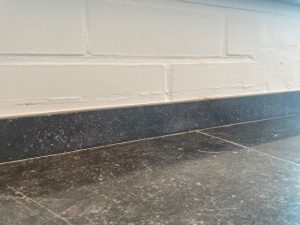

A floor sets the tone for a room’s atmosphere, but it’s the baseboards that provide the perfect finishing touch. They form the subtle boundary between the wall and the floor, bringing visual balance to a room. Baseboards aren’t just an aesthetic detail that creates a polished look; they also serve a practical purpose. They protect walls from bumps and moisture, hide minor imperfections, and even provide space to neatly conceal cables. Without baseboards, a room feels unfinished—with baseboards, every room gets the finishing touch it deserves, as if the final brushstroke of a masterpiece has been applied.
A baseboard is an indispensable link in the harmony between the floor and the wall. The baseboard often matches the floor’s finish, allowing both elements to blend together in perfect harmony. For example, a honed floor looks its best when paired with a sleek, honed baseboard. The versatility of baseboard finishes offers countless possibilities: any style and finish available for the floor can be seamlessly extended to the matching baseboard.
However, you can also opt for a more understated approach, where the wall color extends all the way to the floor. In that case, a simple, sawn baseboard—or a subtle option in meranti or MDF—is sufficient; it doesn’t draw attention to itself but elegantly completes the look. The art of the baseboard lies in serving unobtrusively as the invisible line that connects everything, or, conversely, as the refined finishing touch that elevates the space to a higher level.
A molded baseboard to match a molded floor: