

Texture and Pores of Belgian Blue Stone
The composition tells us which components are present in Belgian Blue Bluestone. The texture tells us how those components are arranged and bonded together within the rock. The size, shape, and distribution of the pores also play an important role in this.
What is the internal structure of Belgian Blue Stone?
Belgian Blue Bluestone is not composed of a single homogeneous mass. Fossil fragments and other grains are embedded in a fine limestone matrix and are bound together by natural geological processes.
On a microscopic scale, there are also pores between these components. Their number, size, and interconnections are part of the rock's internal structure.
That structure helps explain why Belgian Blue Stone has certain physical and mechanical properties.
What do we mean by "texture"?
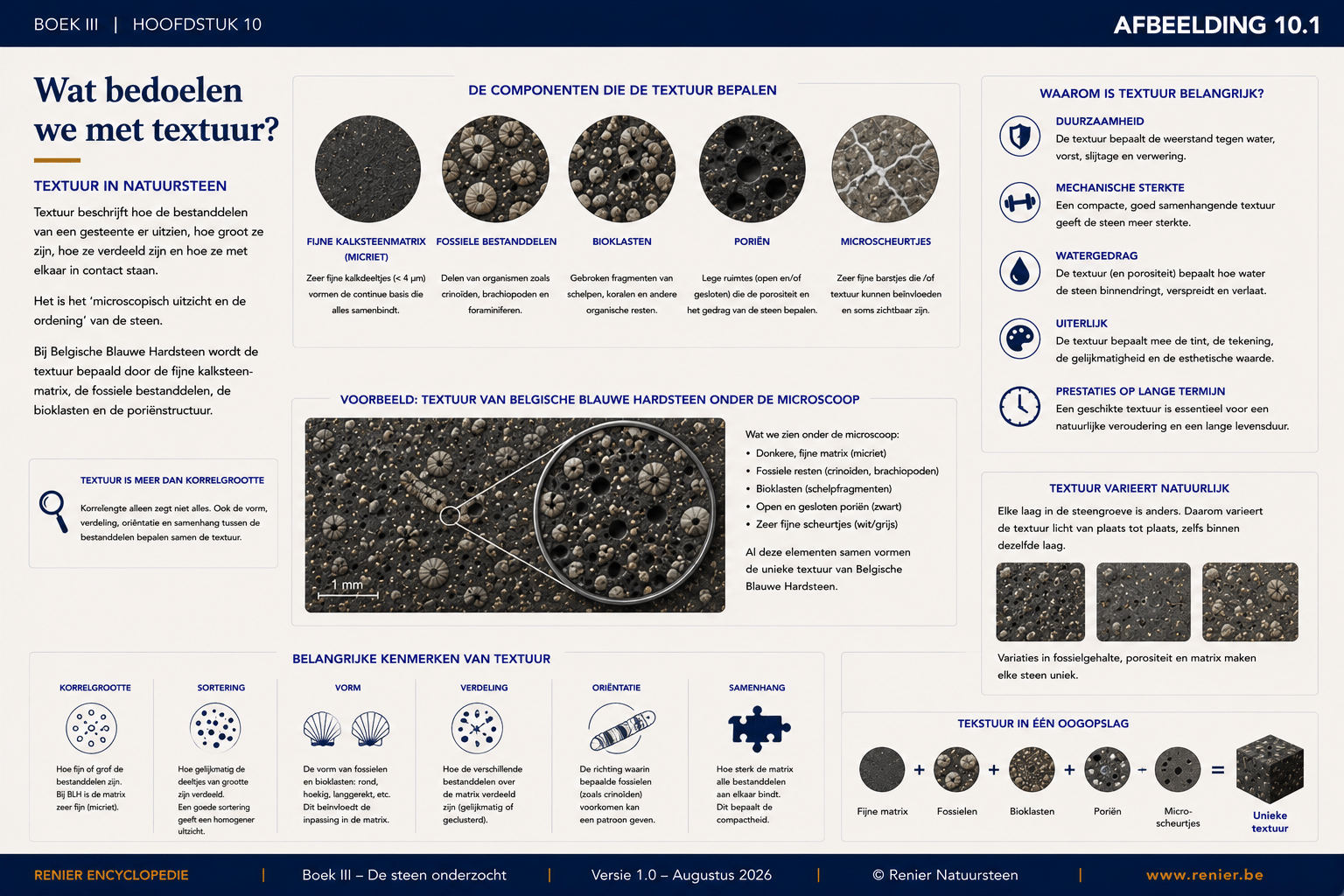
By "texture," we mean the way in which the various components of a rock are composed and arranged. In doing so, we consider, among other things, their size, shape, distribution, and interactions with one another.
Particle Size and Distribution
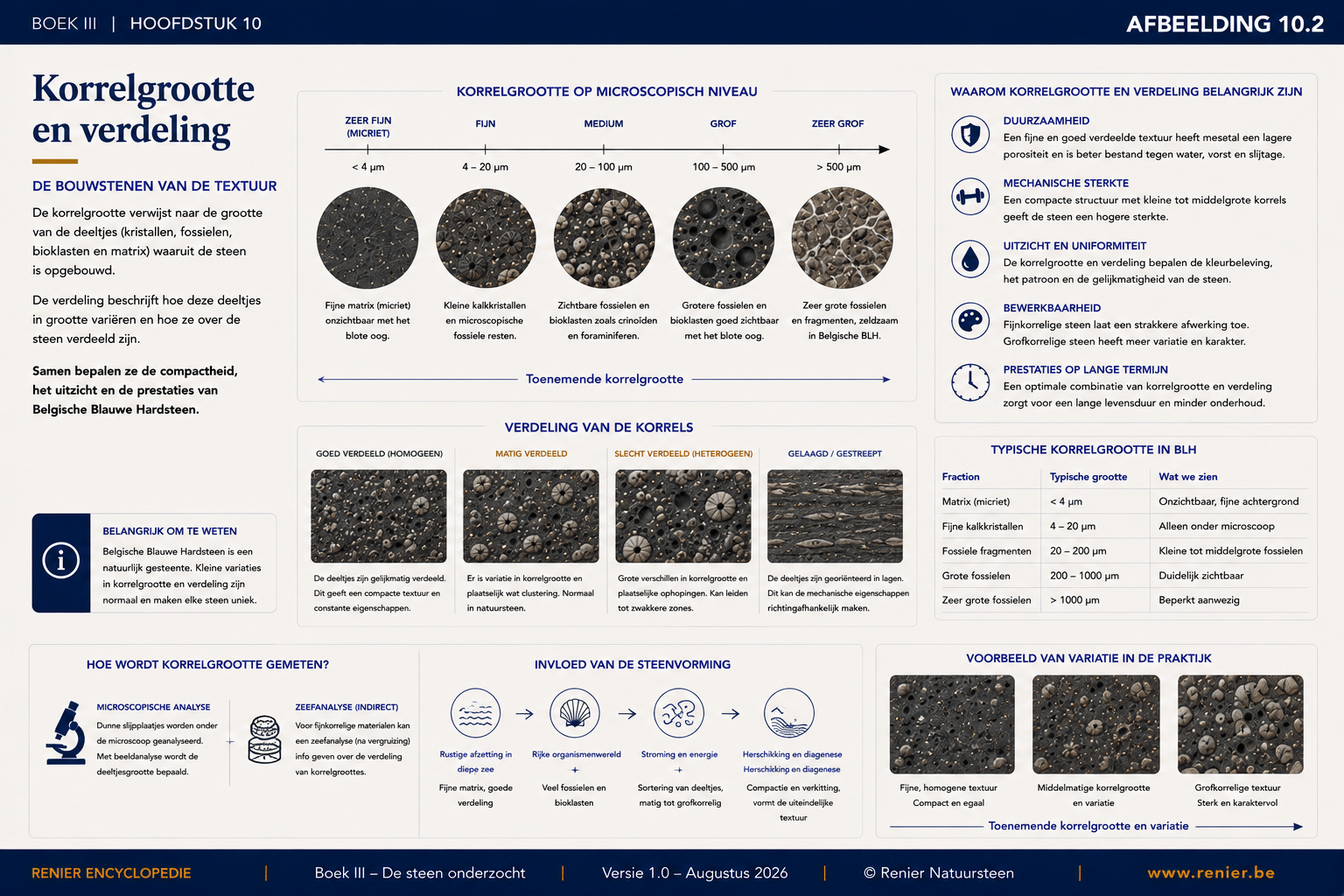
The components of Belgian Blue Stone do not all have the same dimensions. Fine particles, larger fossil fragments, and other grains occur together and form a characteristic grain size distribution.
How Fossils Are Distributed in the Rock
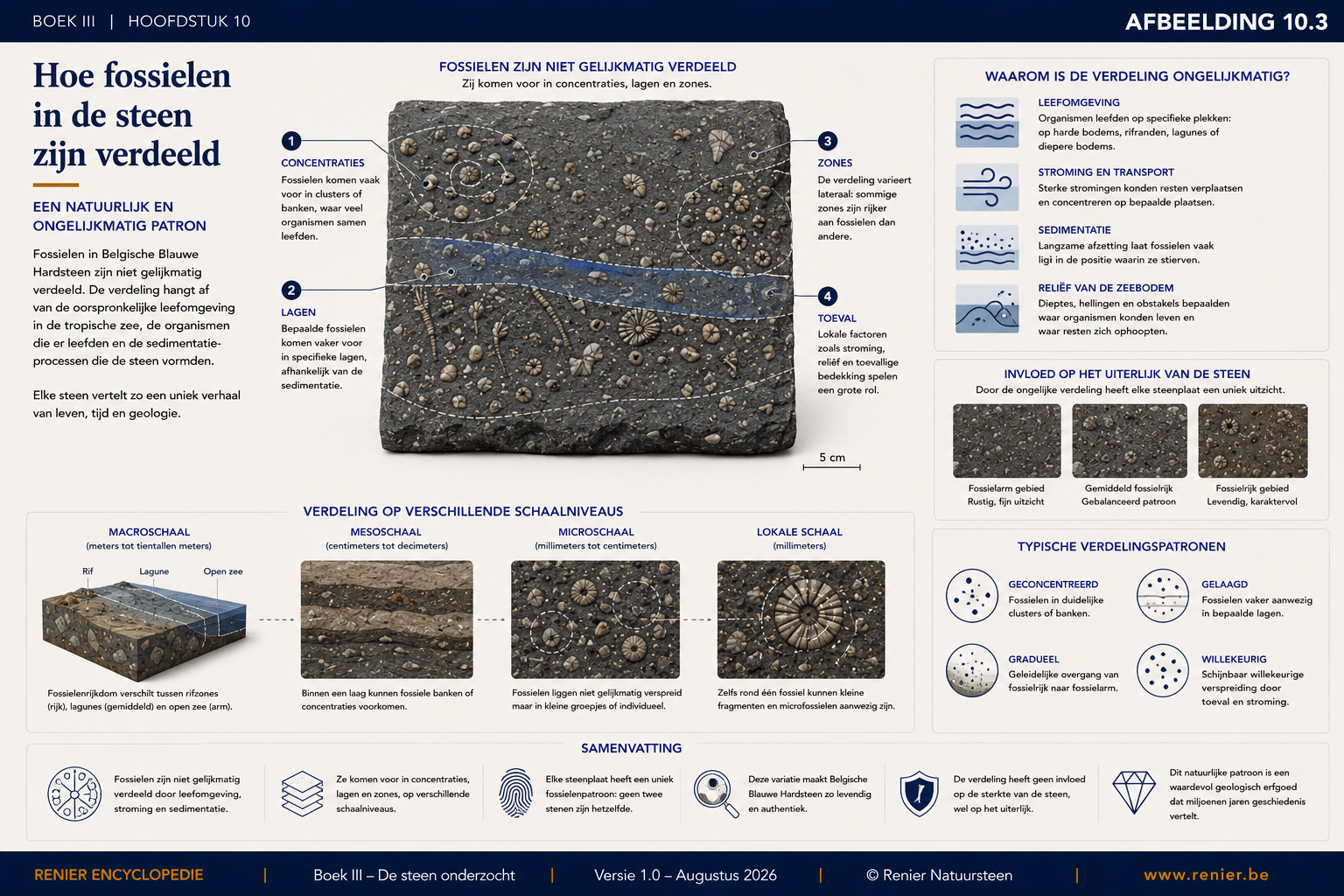
Fossil components are not arranged in an artificial pattern within the rock. Their size, orientation, and distribution are the result of natural deposition and formation processes and contribute to the unique appearance of each stone.
Matrix, grains, and intergranular bonding
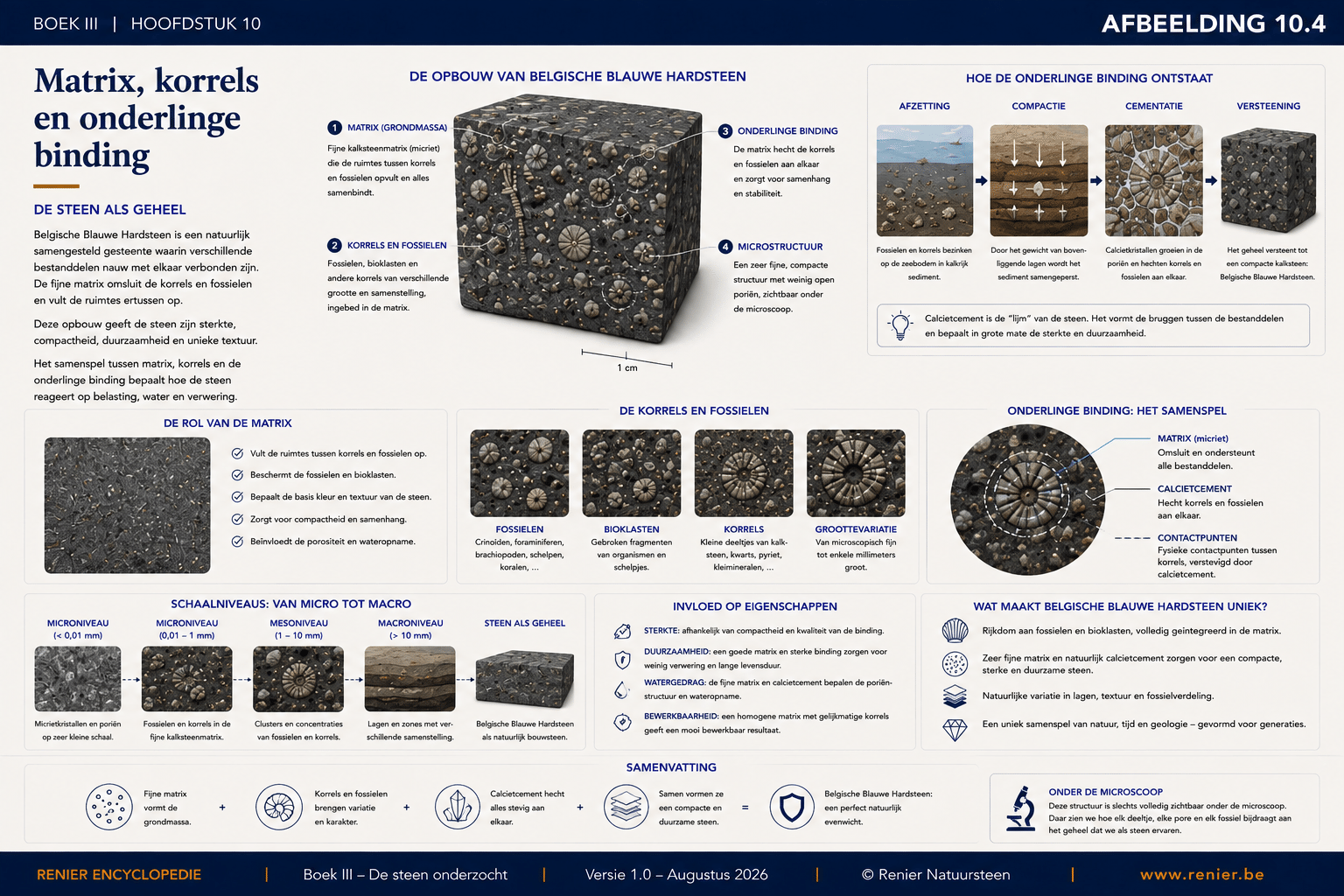
Fossil fragments and other grains are embedded in the fine limestone matrix. During the formation of the rock, these components were compressed and cemented together, resulting in a compact and cohesive structure.
Porosity
Porosity indicates what proportion of the rock consists of small cavities or pores. Belgian Blue Stone has a compact structure with limited pore space, which helps determine its behavior with respect to water and weather conditions.
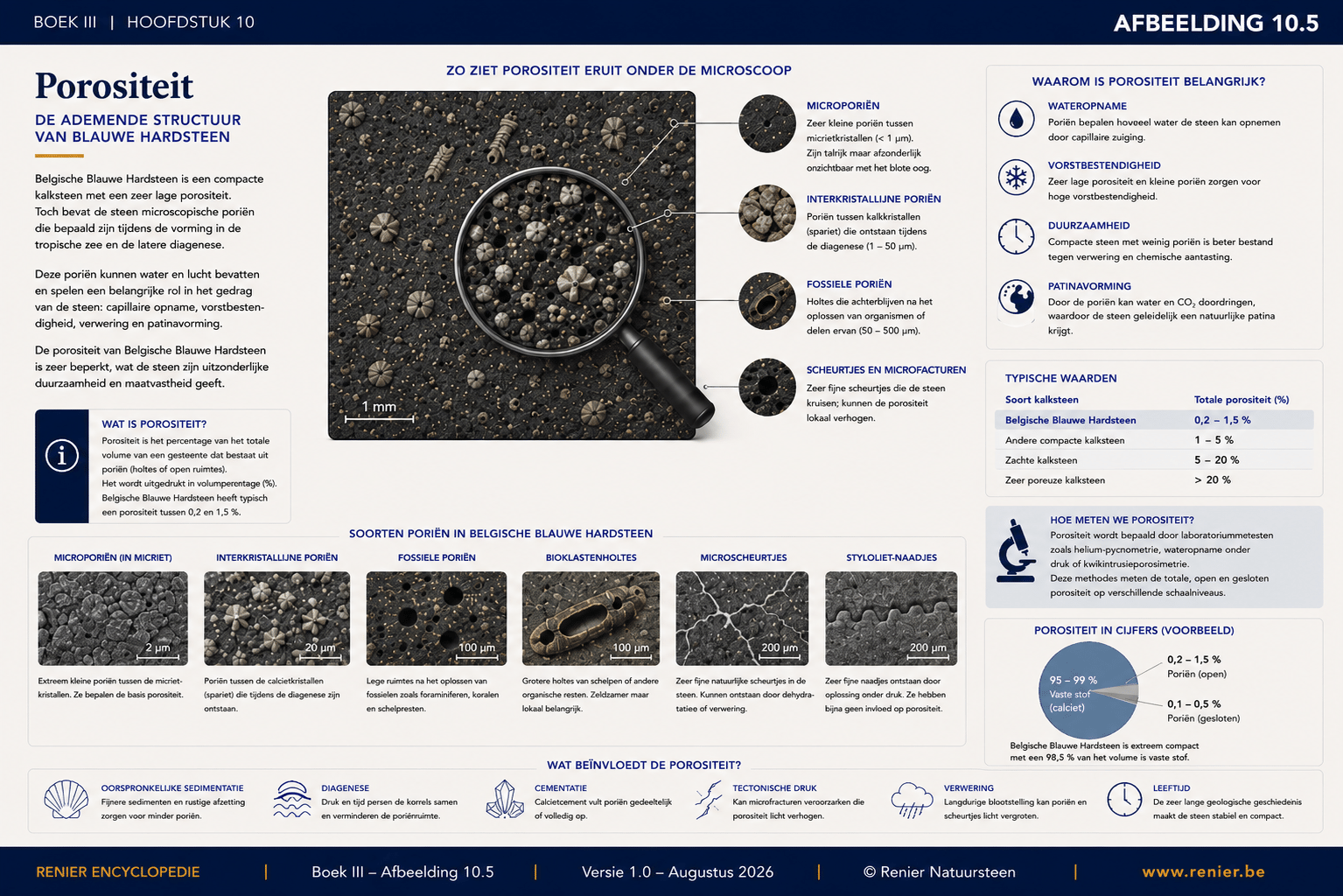
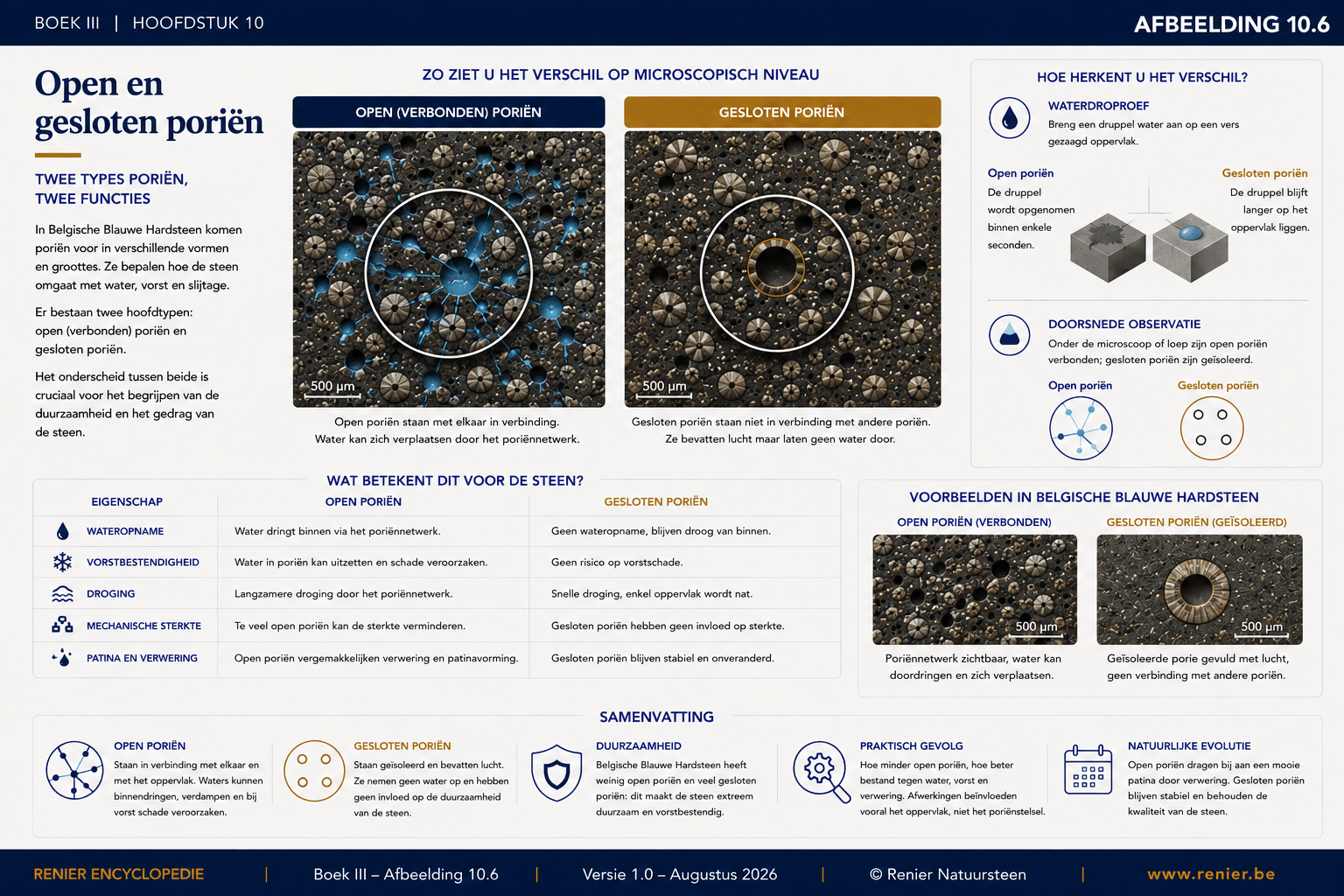
Open and Closed Pores
Not every pore is connected to the surface. Open pores may be connected to the outside through other pores, while closed pores remain completely enclosed within the rock. This distinction is important for the behavior of water within the rock.
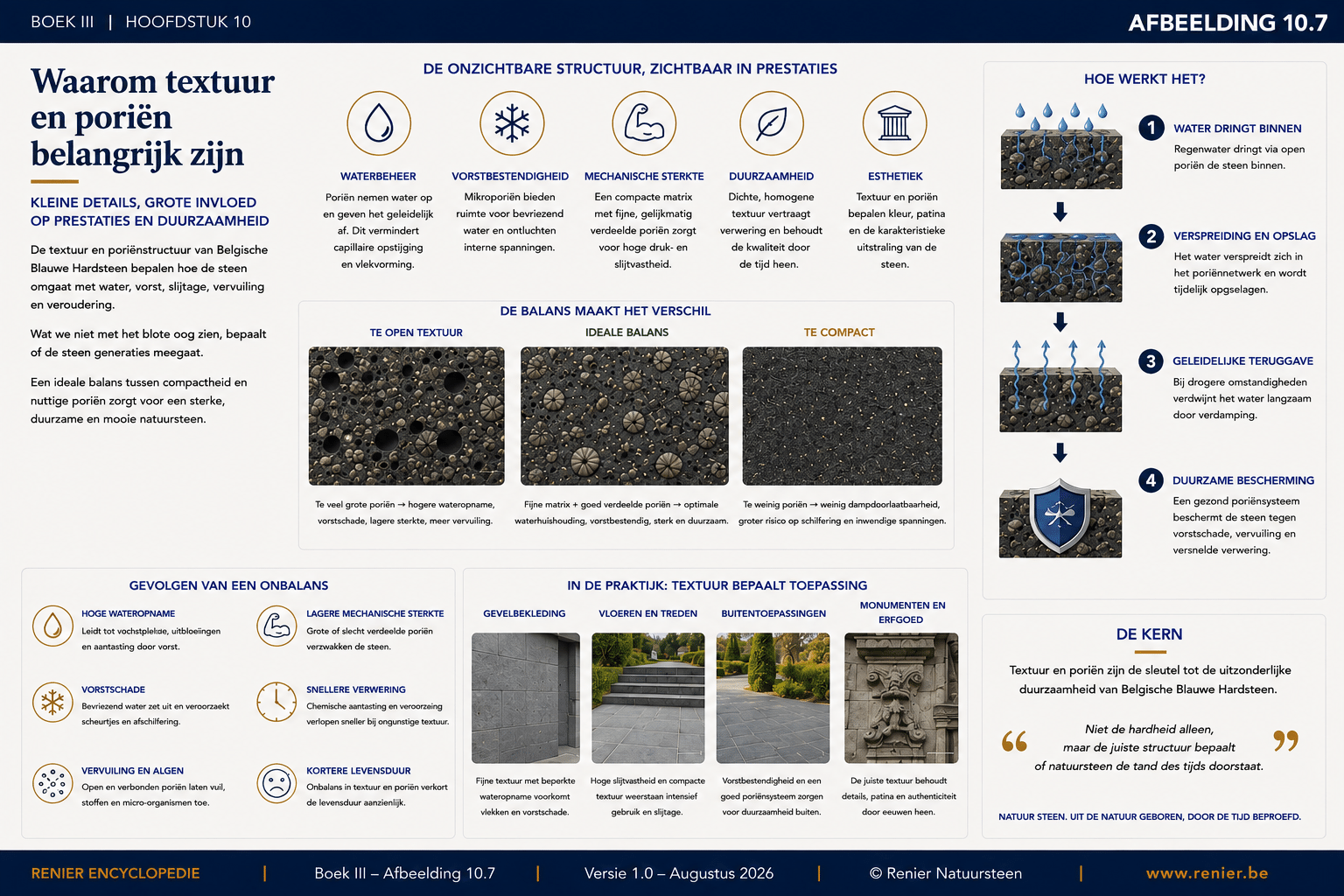
Why Texture and Pores Are Important
Texture and pore structure help explain how natural stone behaves. The compactness, intergranular bonding, and pore accessibility influence, among other things, water absorption, mechanical properties, and durability.
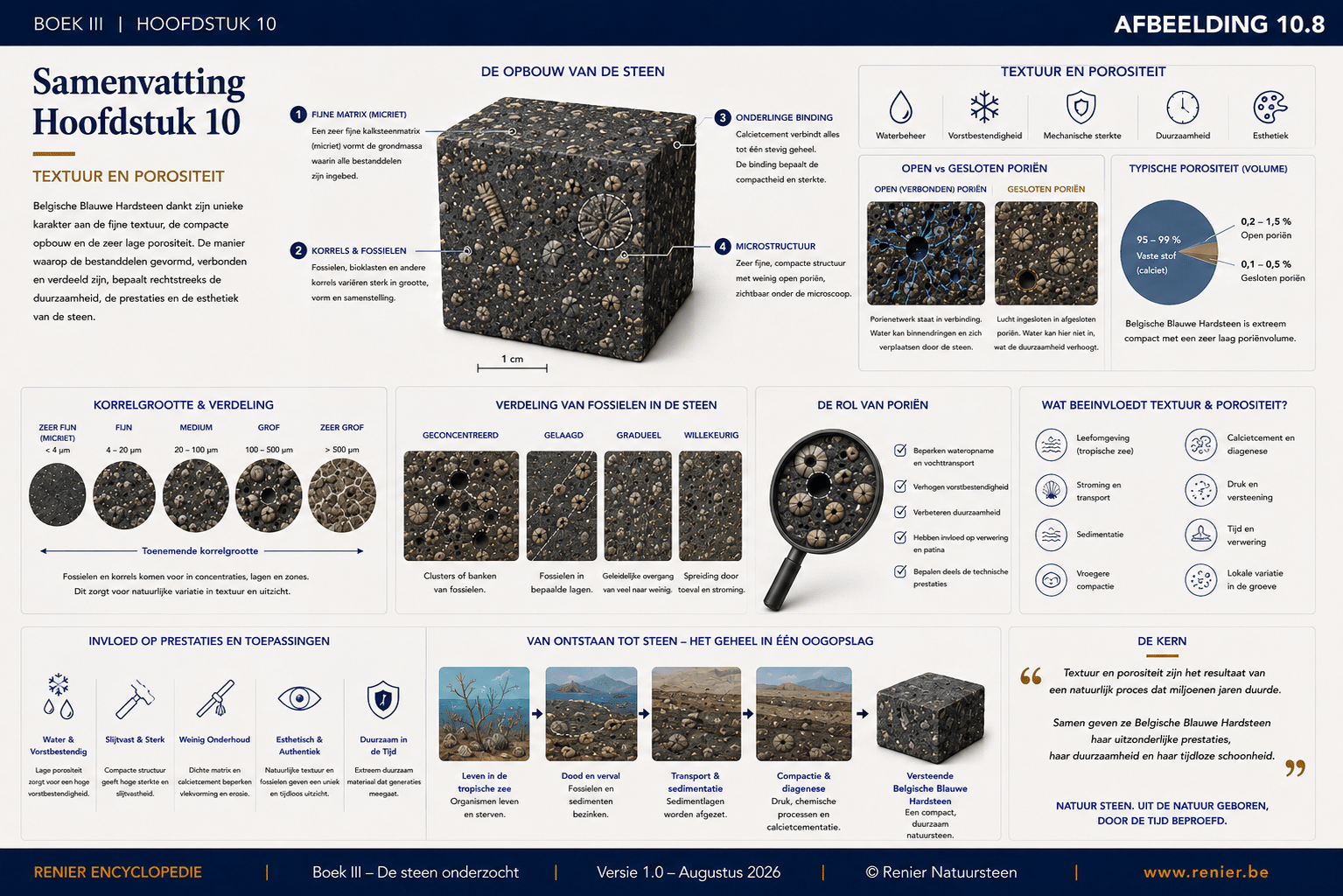
Summary: Texture and Pores
The internal structure of Belgian Blue Stone results from the combination of fossil fragments, other grains, the fine matrix, and the pores between them. Their size, distribution, and interlocking action together form the stone’s characteristic texture.
From Structure to Technical Properties
We have now seen what Belgian Blue Stone is composed of and how these components are organized internally. In Chapter 11, we will examine what this means from a technical standpoint: from density and water absorption to compressive strength, flexural strength, wear resistance, and frost and thaw resistance.