

Physical and Mechanical Properties of Belgian Blue Stone
How strong is Belgian Blue Stone? How much water does the stone absorb, and how does it react to stress, wear, and frost? To evaluate natural stone from a technical standpoint, various physical and mechanical properties are tested using standardized test methods.
How do we evaluate the performance of natural stone?
In Chapters 9 and 10, we examined the composition of Belgian Blue bluestone and its internal structure. Now we will look at how this natural stone behaves physically and mechanically.
To this end, representative test specimens are examined under controlled conditions. This allows properties such as density, water absorption, compressive strength, flexural strength, wear resistance, and freeze-thaw resistance to be determined.
These test results provide an important technical basis for properly evaluating the stone for various applications.
How do we examine natural stone?
Technical properties are not assessed based on visual inspection. Natural stone is tested according to established test methods so that results are reproducible and comparable. In this process, test specimens are prepared and tested under controlled conditions.
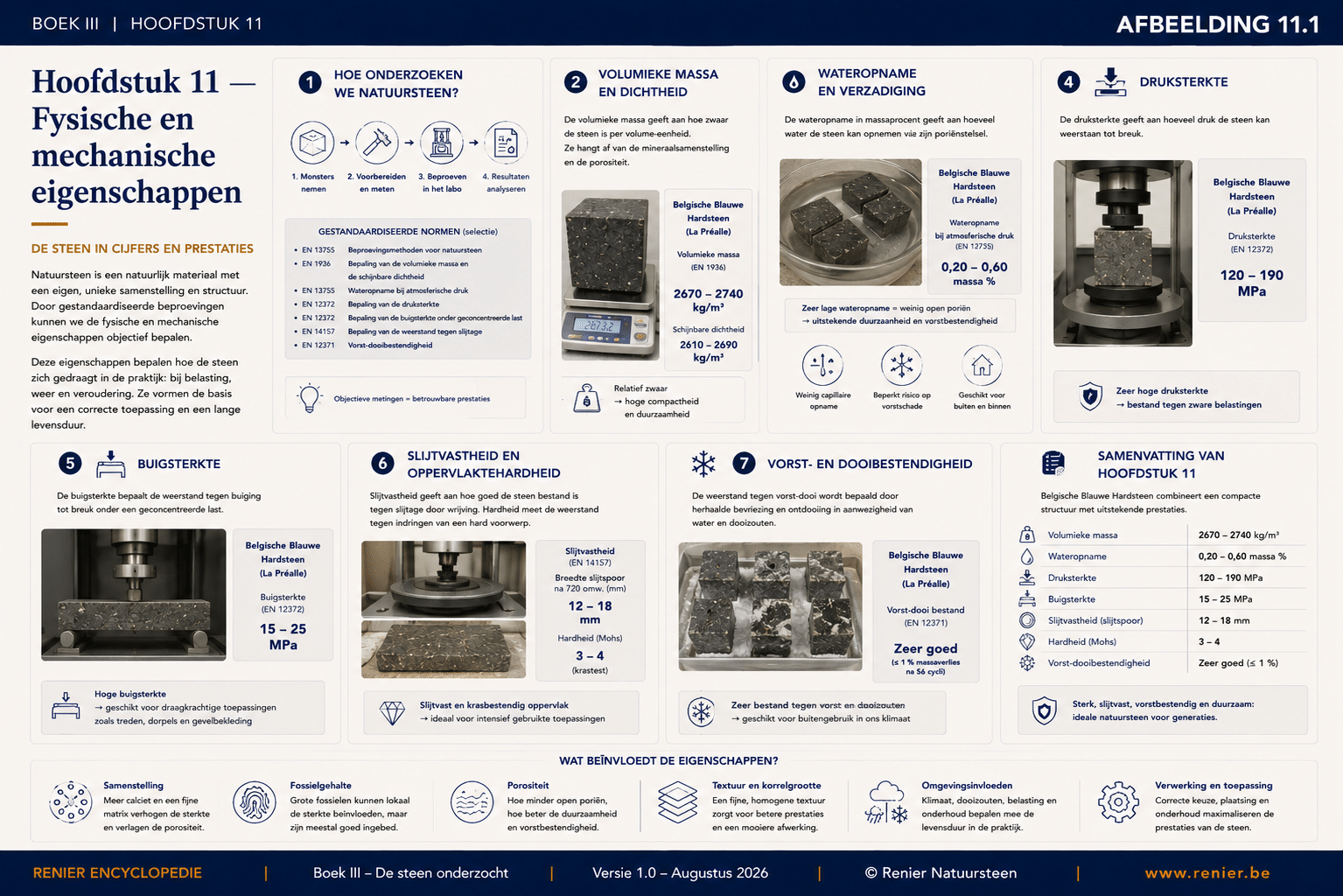
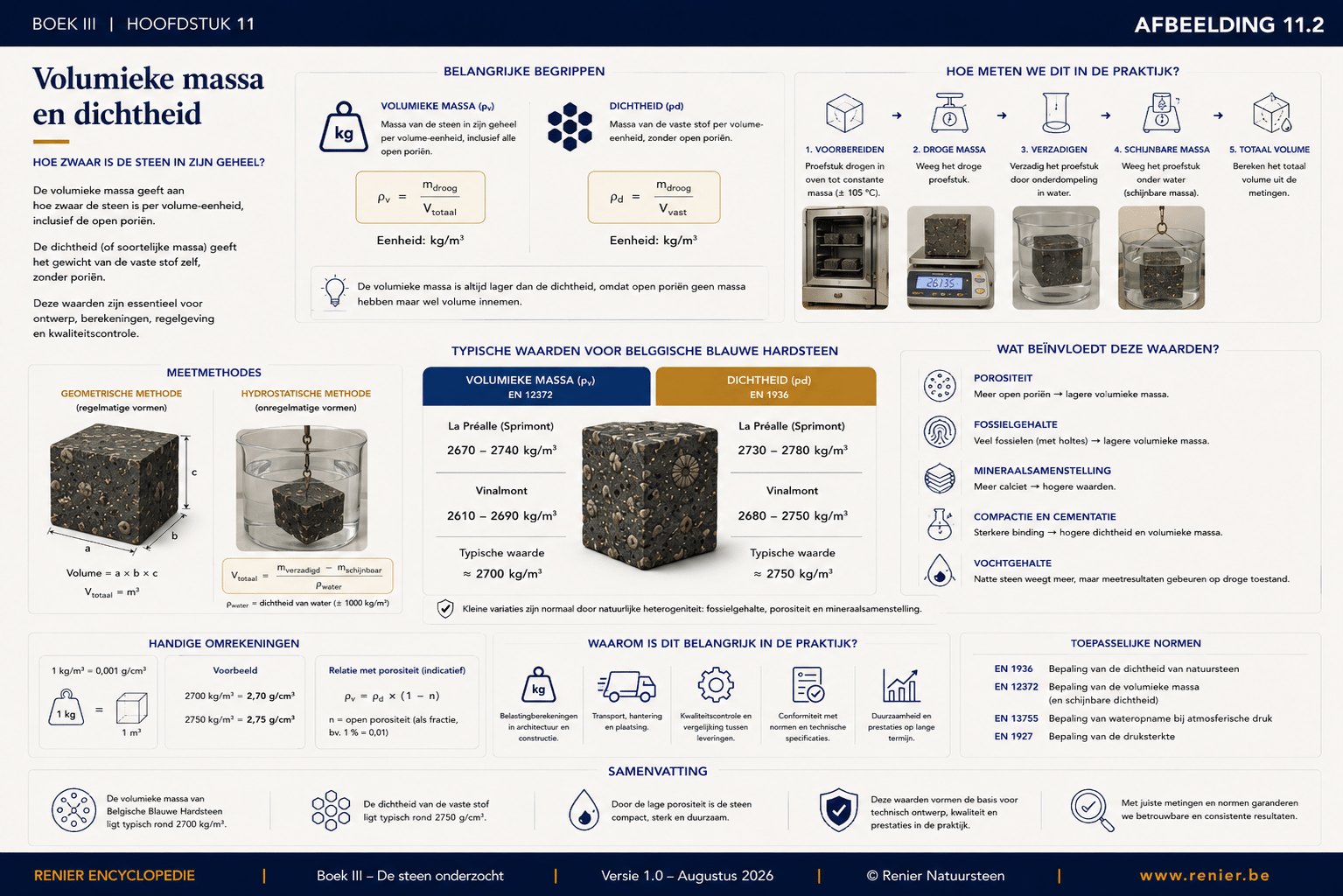
Bulk Density and Density
Density represents the ratio of the mass of a rock sample to the volume it occupies. It therefore provides insight into the compactness of the rock and is closely related to its mineral composition and pore structure.
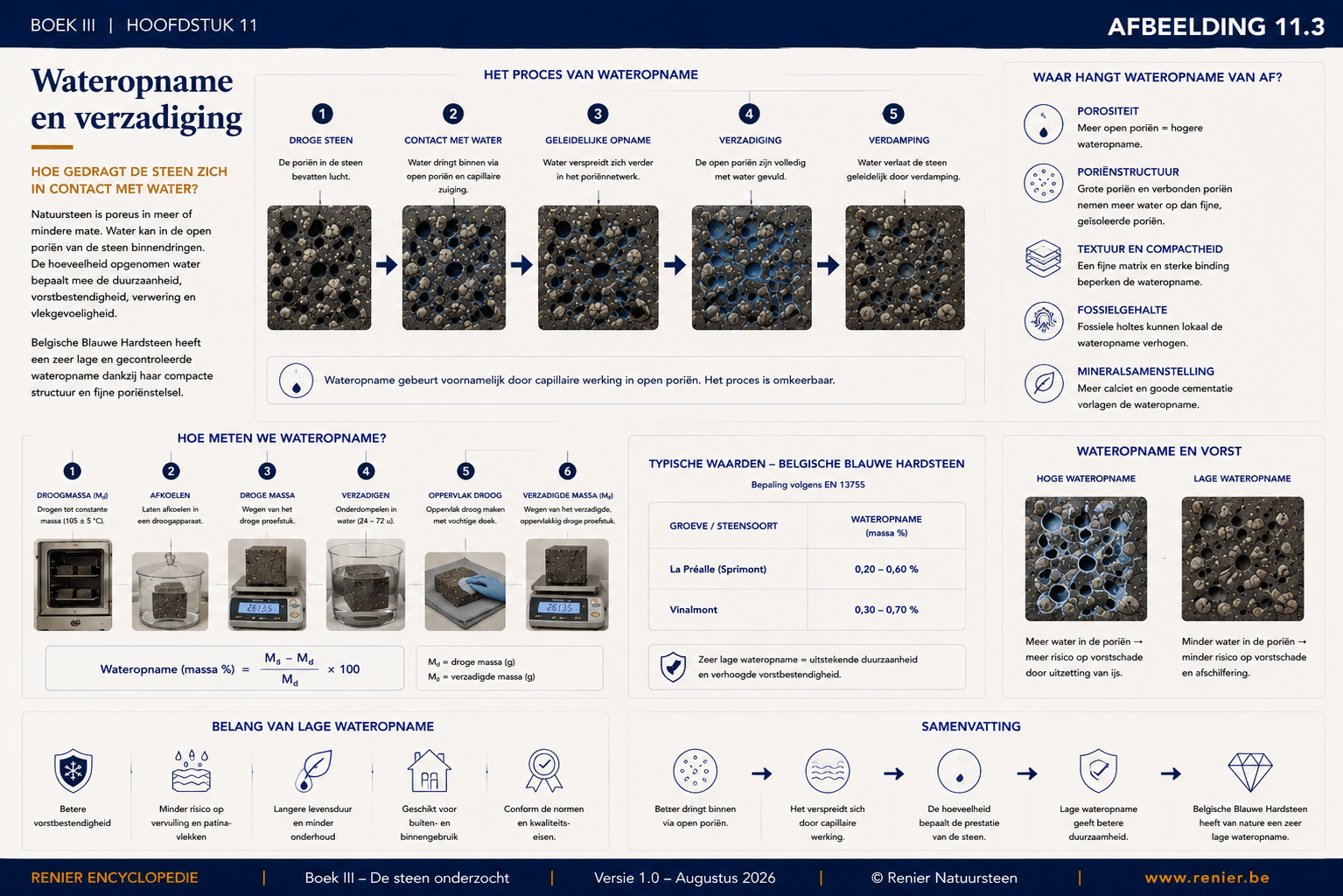
Water Uptake and Saturation
Water can penetrate natural stone through its open pores. Water absorption indicates how much water a stone can absorb under specified conditions and serves as an important indicator of the stone's behavior in damp conditions.
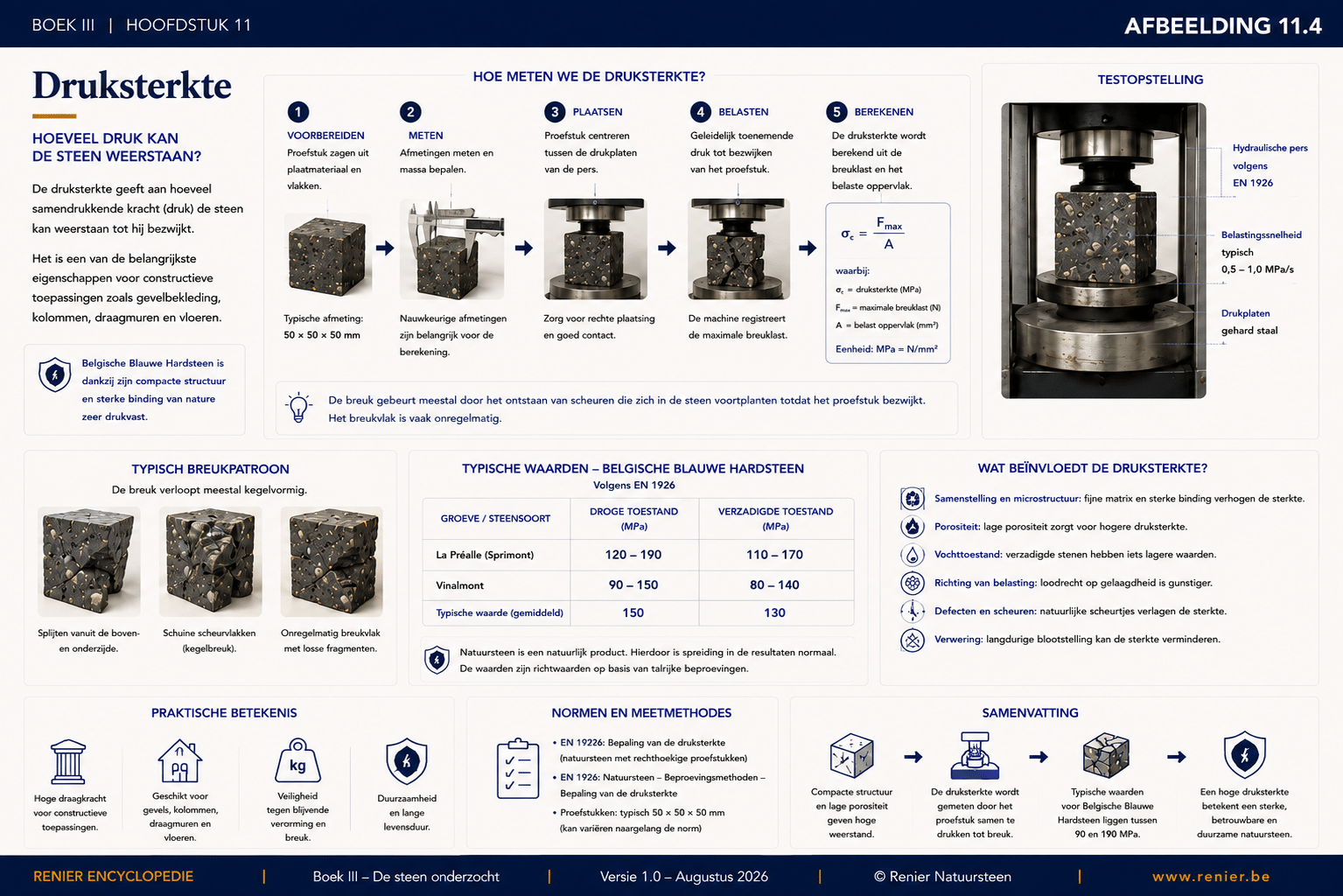
Compressive Strength
Compressive strength indicates how much compressive load the stone can withstand before it breaks. For natural stone, this property is determined by applying increasing pressure to a test specimen. For natural stone, this test is conducted in accordance with EN 1926.
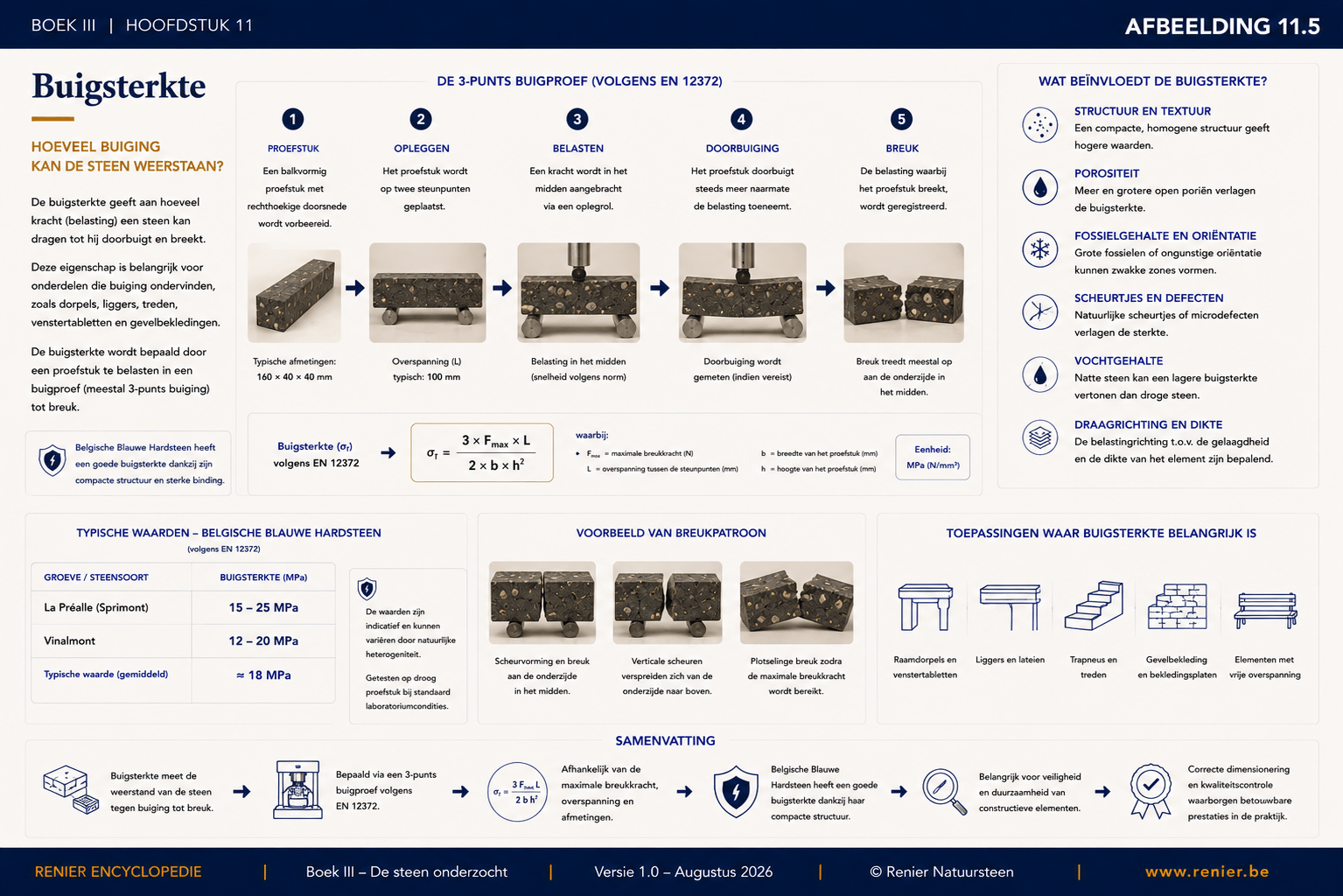
Bending strength
Under bending loads, an element is not directly compressed, but is bent. The bending strength indicates the load that a natural stone element can withstand before breaking, and is particularly important for slabs, steps, and other elements that are loaded between support points.
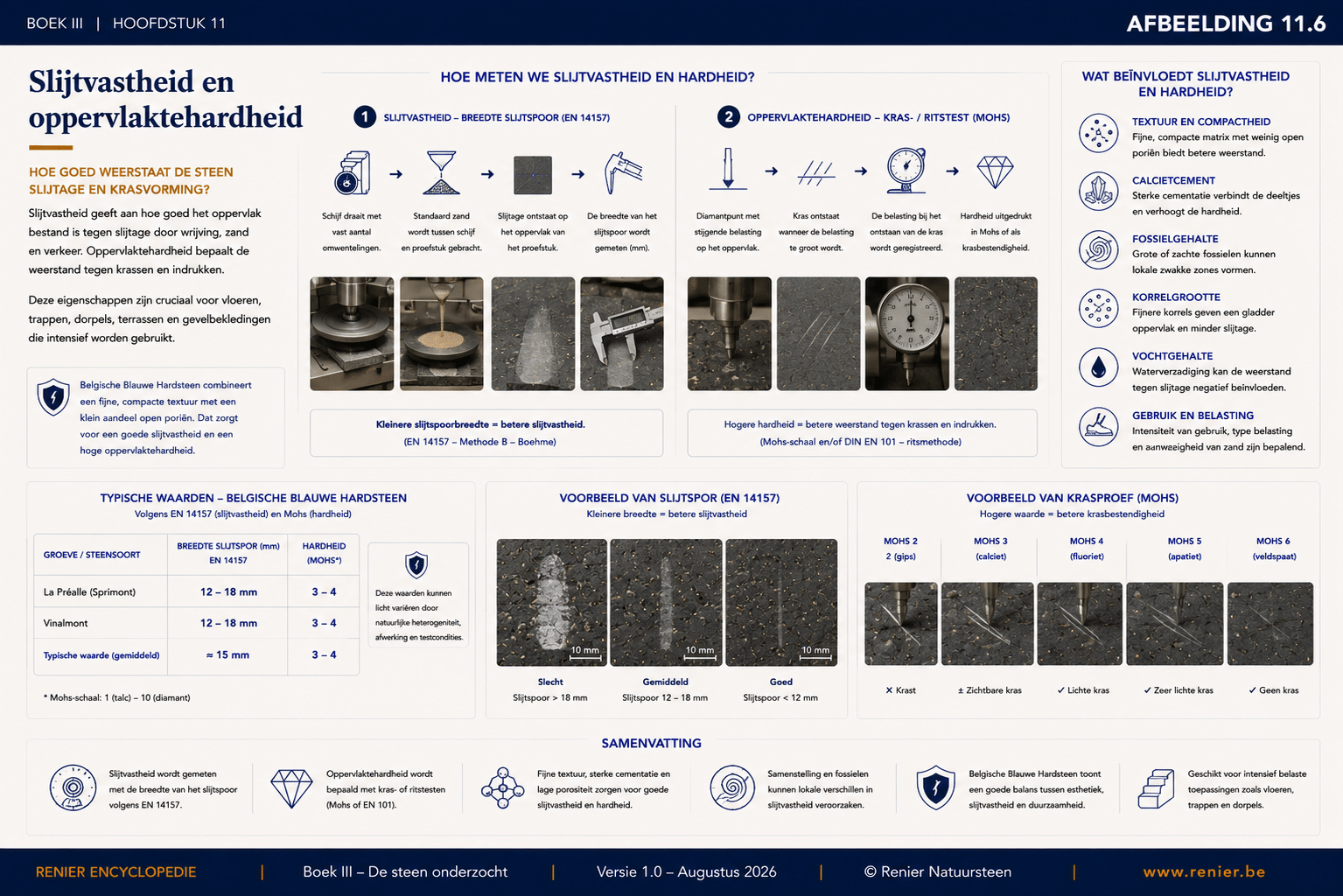
Wear Resistance and Surface Hardness
In the case of floors, stairs, and outdoor paving, the stone surface is constantly subjected to mechanical stress. Wear resistance describes how well the stone resists material loss due to friction and use, while surface hardness relates to the surface’s resistance to localized damage.
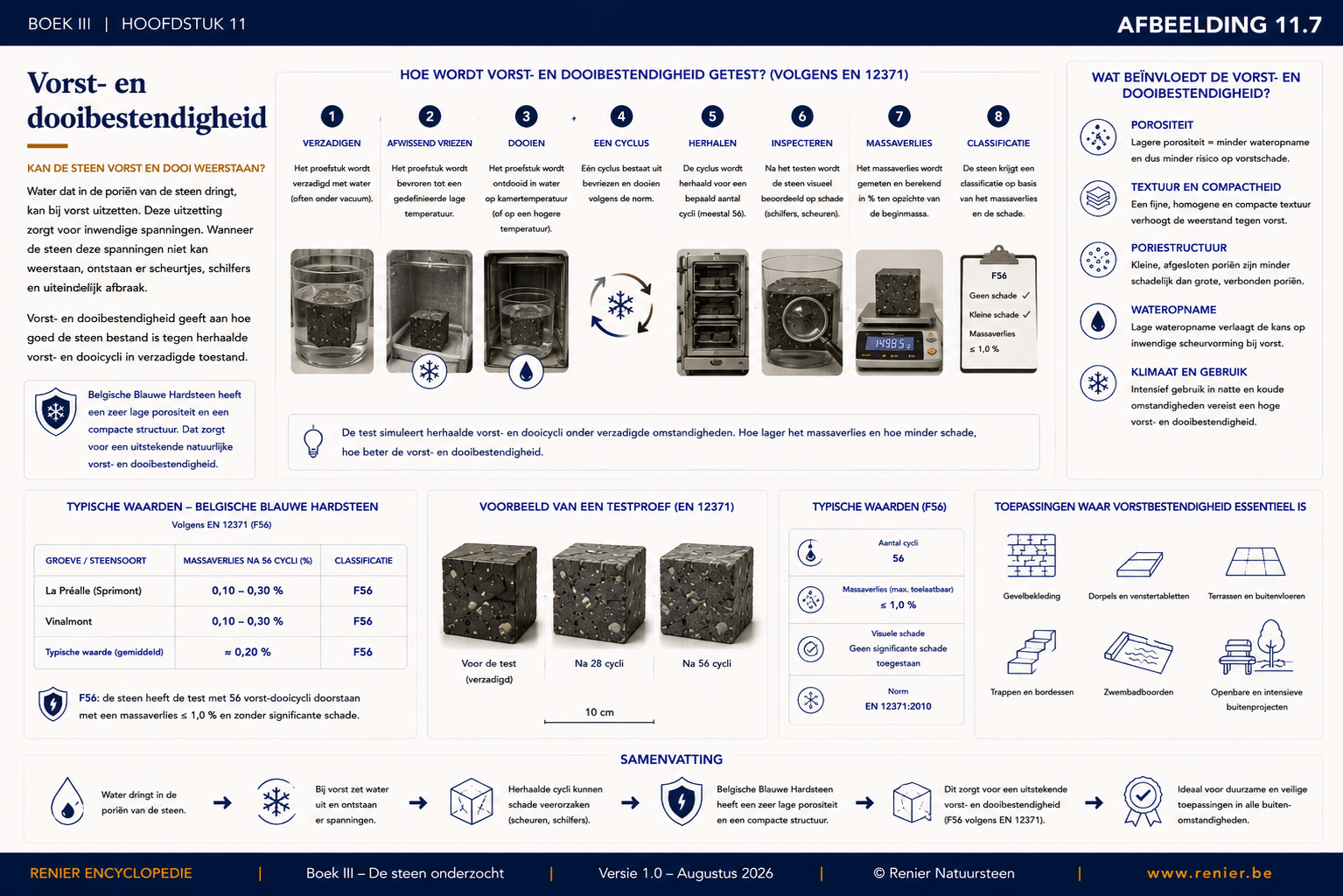
Frost and Thaw Resistance
For outdoor applications, natural stone must be able to withstand repeated cycles of freezing and thawing. In this context, the combination of water in the pores and low temperatures is particularly important. Freeze-thaw tests examine how the material retains its properties after successive cycles.
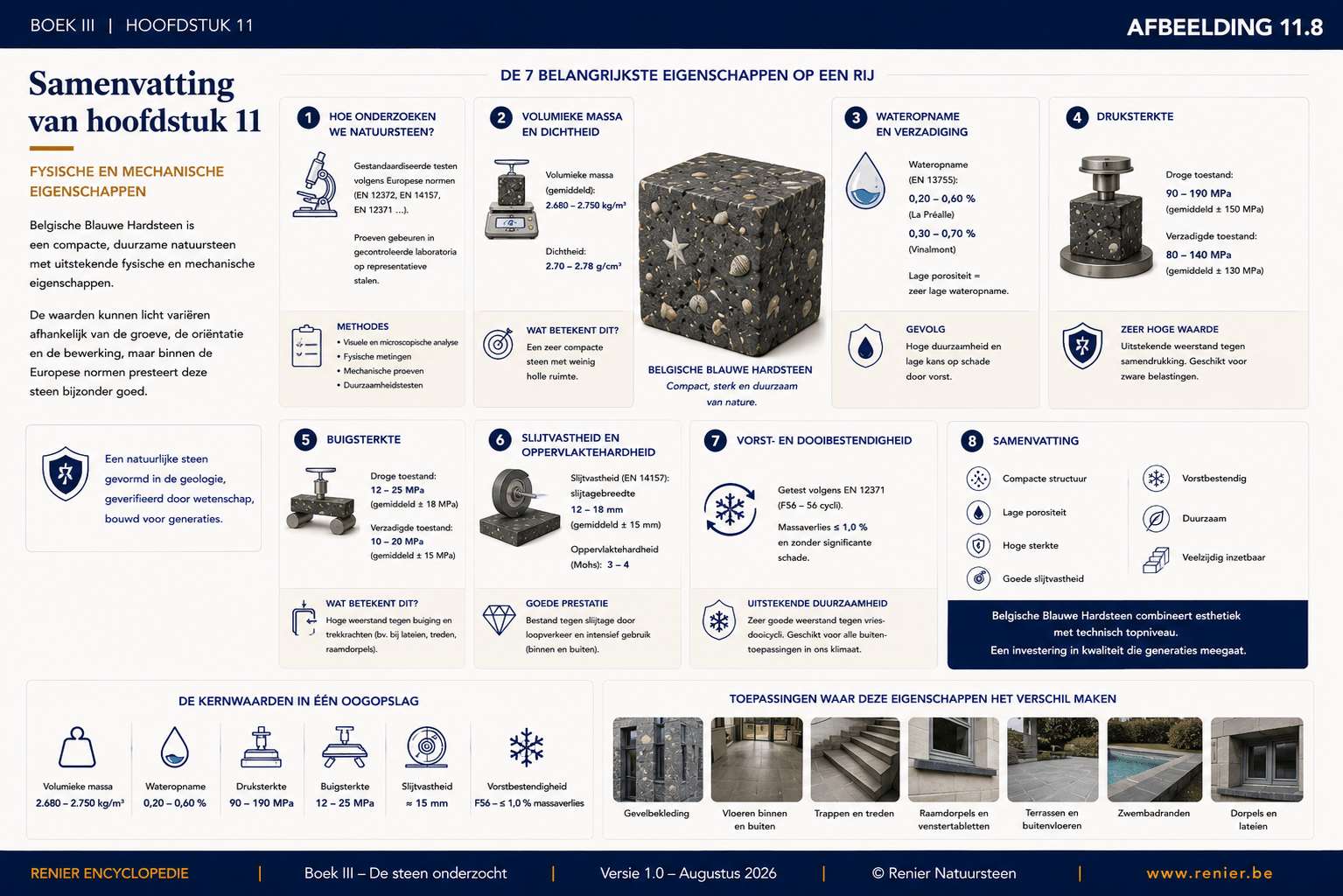
Summary: Physical and Mechanical Properties
The technical performance of Belgian Blue Stone is described based on various properties. Density, water absorption, strength, wear resistance, and frost-thaw resistance collectively provide a picture of how the stone performs under various loads and conditions.
From Test Results to Application
Technical specifications are only truly useful when we understand what they mean in practice. In Chapter 12, we therefore link the test results to specific applications and examine how technical data sheets, standards, CE marking, and DoP help to correctly assess and apply Belgian Blue Stone.