

You can remove rust stains from natural stone using an acid-free rust remover such as Lithofin Rost-Ex, never use traditional rust removers based on citric acid or phosphoric acid: these etch calcareous stone, such as blue stone, leaving it permanently dull. The stain usually comes from metal garden furniture, flower pots, or iron-containing fertilizer, and in the case of imported blue stone, sometimes from the stone itself. Here’s how to safely remove it and prevent the stain from returning.
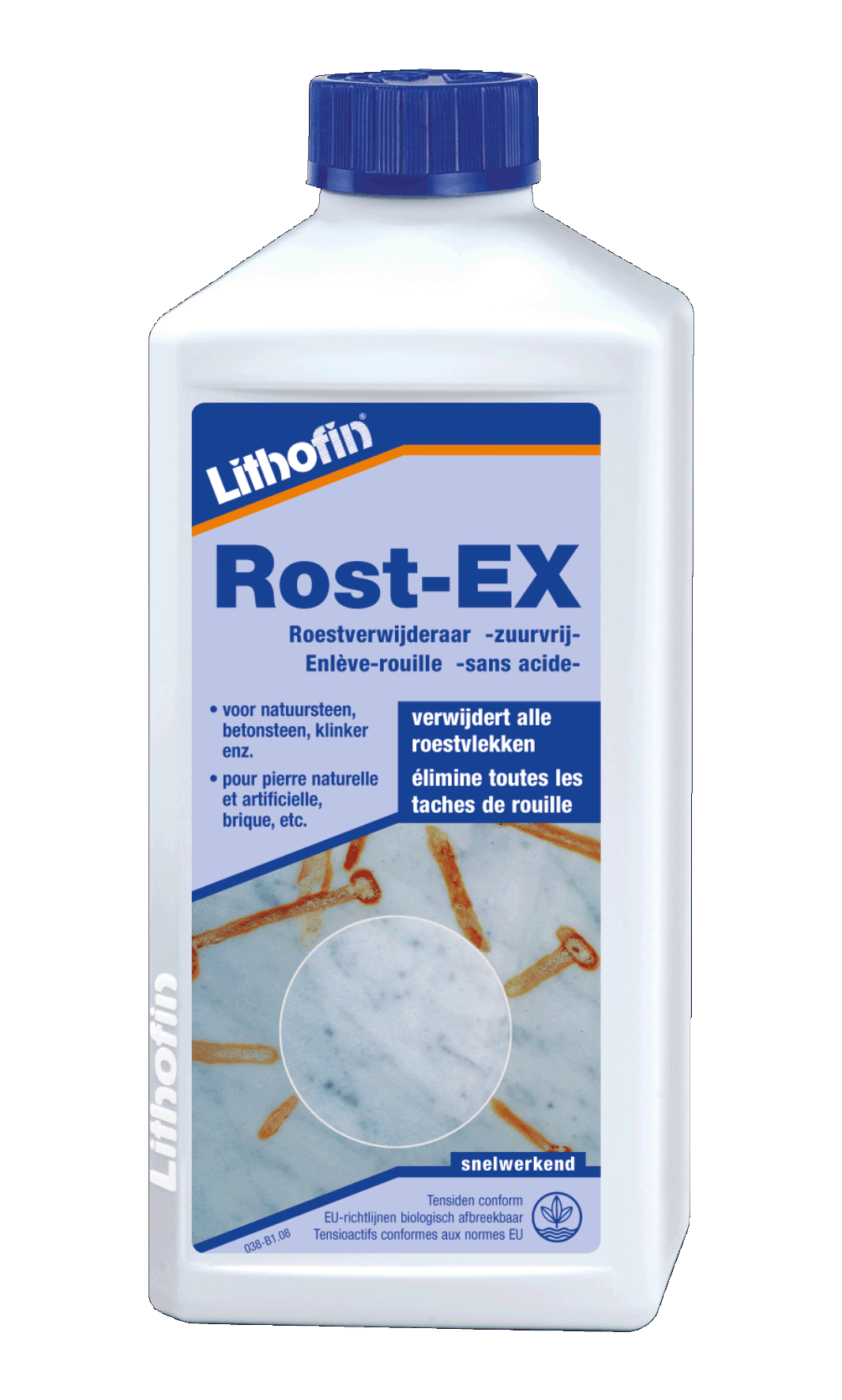
Work on a dry stone. Apply the acid-free rust remover undiluted to the stain and let it sit according to the label instructions; the product typically turns purple as it dissolves the rust. Gently brush the area, rinse thoroughly with clean water, and repeat for deep stains. As always, test first on an inconspicuous area, especially on honed or polished finishes.
Cola, vinegar, lemon juice, and traditional rust removers all contain acid. This usually won’t damage granite, but bluestone, Maas limestone, and marble are composed of calcium carbonate: the acid not only dissolves the rust but also the stone’s surface, leaving a dull, etched stain that looks worse than the rust itself. If you’re unsure what type of stone you have, treat it as if it were calcareous and choose an acid-free cleaner.
Place metal patio furniture and flower pots on felt pads or feet so that no rusting metal comes into contact with wet stone. Choose coated or stainless steel accessories for the patio, and avoid spreading iron-containing lawn fertilizer right up to the edge of the pavers. Impregnating the surface once a year makes it less susceptible to rust water seeping in; read how to do it in Impregnating Natural Stone.
If you see small rust spots scattered across the entire surface, with no metal objects nearby, the iron is likely present in the stone itself. This occurs with some imported types of blue stone that contain iron inclusions, which oxidize in our humid climate. Belgian blue stone isn’t affected by this; to learn how to tell the difference, read How to Recognize Genuine Belgian Blue Stone.
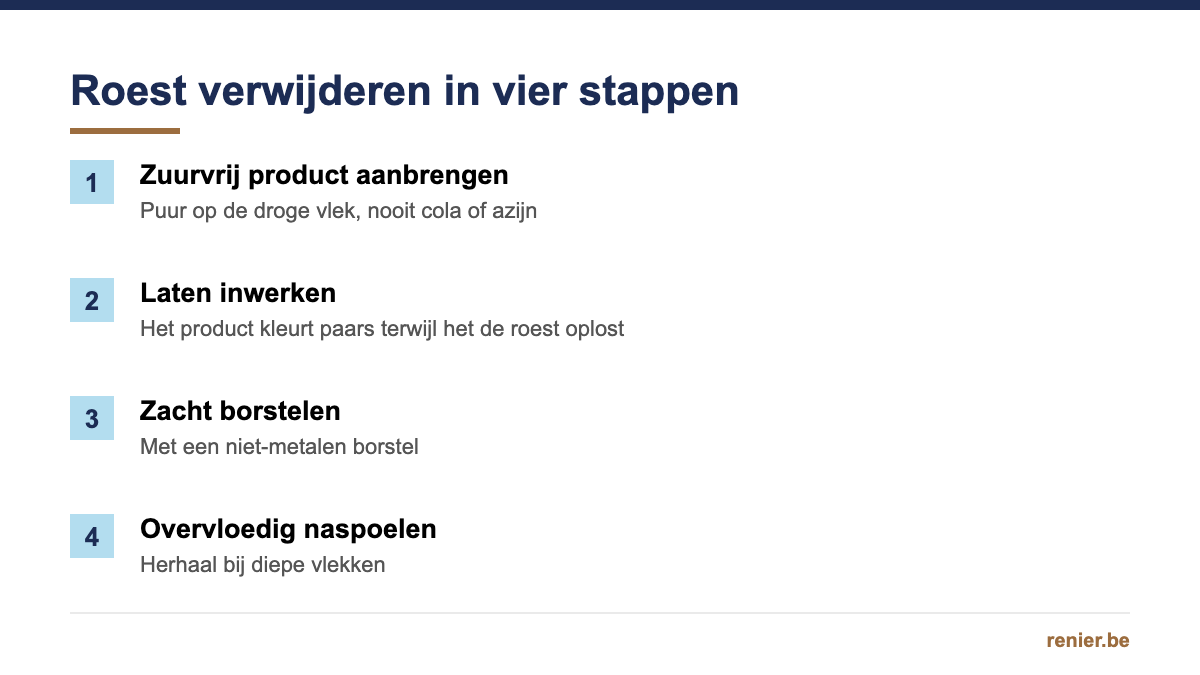
How do you remove rust stains from blue stone? Use an acid-free rust remover for natural stone, such as Lithofin Rost-Ex: apply, let it soak in, brush gently, and rinse thoroughly. Never use cola, vinegar, or traditional acidic rust removers.
Why does the rust remover turn purple? That is the normal reaction between the acid-free cleaner and the iron in the stain: a sign that the product is working.
Can I use cola or vinegar on granite? You can do that on acid-resistant granite, but never on blue stone, marble, or Meuse limestone. If you’re unsure about the type of stone, always use acid-free products.
The stain is gone, but there's still a shadow—what now? Repeat the treatment; deep rust sometimes requires two or three rounds. If an etching mark or shadow remains, please send a photo to our Technical Department for advice on sanding or polishing.