

You should choose a capstone based on water drainage: a flat capstone for a sleek look, or a sloped capstone (with an inclined top surface) where the wall needs maximum protection against water penetration. Belgian blue stone is the standard material: frost-resistant, with low water absorption, and available in standard sizes from stock or custom-cut in our own workshop. Below is the selection and installation guide for coping stones on garden walls.
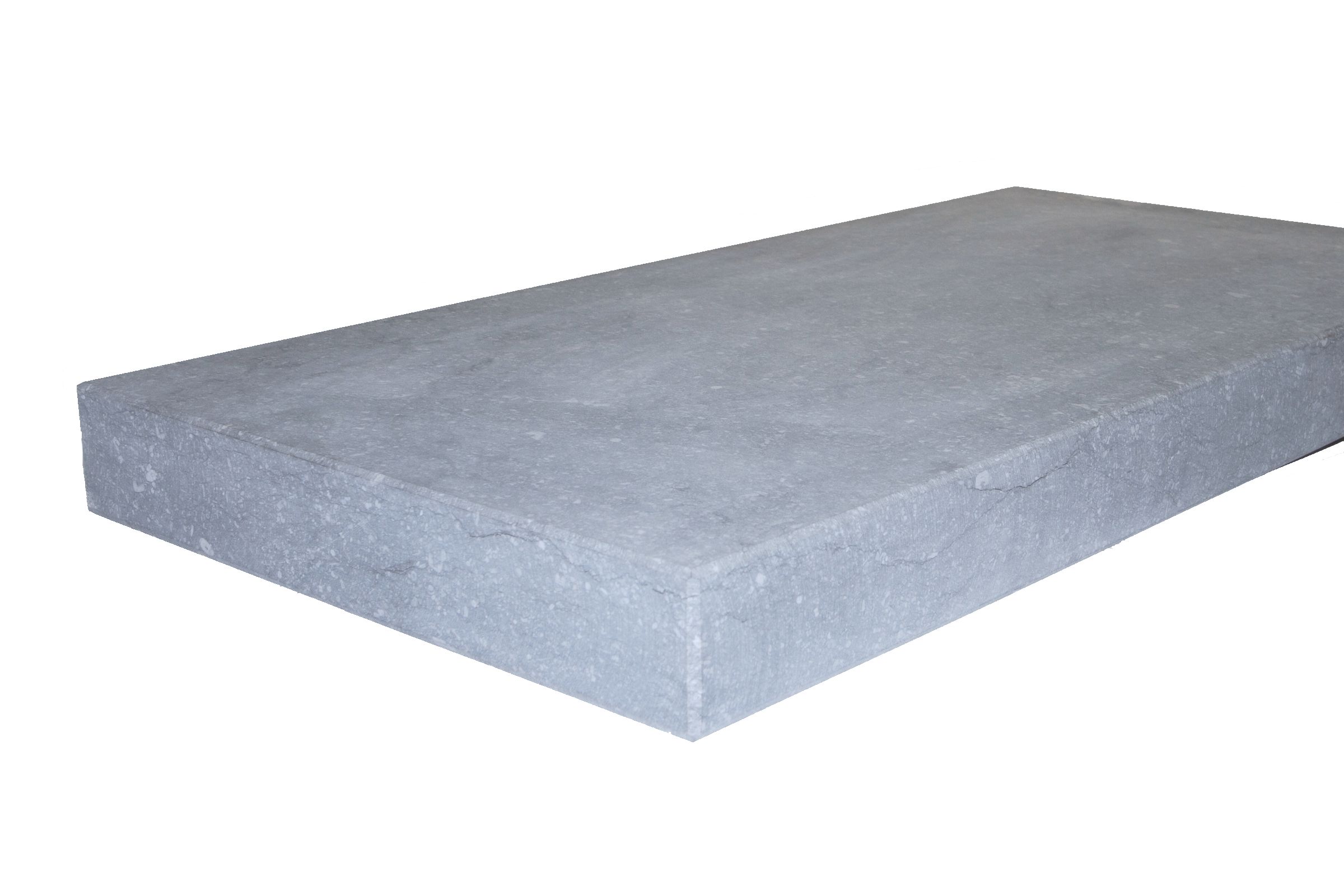
A masonry wall absorbs water from above. That moisture seeps into the masonry, causing frost damage and white efflorescence, and shortens the wall’s lifespan. A coping stone caps off the wall and directs rainwater away from the masonry. It’s a small element with a big impact on the lifespan of your wall, and it also determines the final appearance.
| Type | Form | Stay strong | When to Choose |
|---|---|---|---|
| Flat capstone | Straight top surface | Sleek, modern look | Landscaped gardens, low walls, seating walls |
| Drainage capstone | Sloped top surface | Maximum water drainage | Exposed walls, above masonry that must remain dry |
Choose a capstone that is slightly wider than the wall so that it overhangs on both sides: this way, water will run off next to the wall instead of along it. A drip groove on the underside of the overhang keeps runoff water away from the masonry.
Place the capstones in a solid bed of mortar, without any voids, and seal the butt joints between the stones to make them watertight: every open joint is a gateway for water—exactly what you want to avoid with capstones. For long walls, provide expansion joints. You can find the general installation guidelines in our Installation FAQ.
You can find the standard widths in the online store category capping stones and on the overview page structural concrete blocks. We cut custom-sized pieces—such as non-standard widths, corner pieces, pillar caps, or coping stones with specific finishes—in Aarschot; please include your measurements with an Request for Quote.

What is the difference between a flat coping stone and a drainage coping stone? A flat capstone has a straight top surface and creates a clean, sleek look. A sloped capstone has a sloped top surface that actively drains rainwater, providing the best protection for exposed walls.
How wide should a coping stone be? Slightly wider than the wall, so that it overhangs on both sides and the water drips down next to the wall instead of running along it.
Which stone is best for roof tiles? Belgian blue stone: low water absorption, frost-resistant, and available in flat and sloped varieties, in standard sizes and custom sizes.
Can you custom-cut coping stones for pillars and corners? Yes, we cut pillar covers, corner pieces, and custom widths to size in our own workshop. Request a quote with your measurements.