

From Test Results to Application
Technical data is only useful when we understand what it means for a specific application. In this chapter, we translate test results, technical data sheets, and standards into practical applications: from interior floors and patios to facades, thresholds, stairs, and custom work.
What do technical specifications mean for the application?
In Chapter 11, we examined how properties such as water absorption, compressive strength, flexural strength, abrasion resistance, and frost resistance are tested.
But a technical specification never tells the whole story. It must always be interpreted in light of the application, the dimensions of the element, the chosen finish, and the way the stone is installed.
That is why, in this chapter, we link the technical data directly to real-world applications.
In this chapter
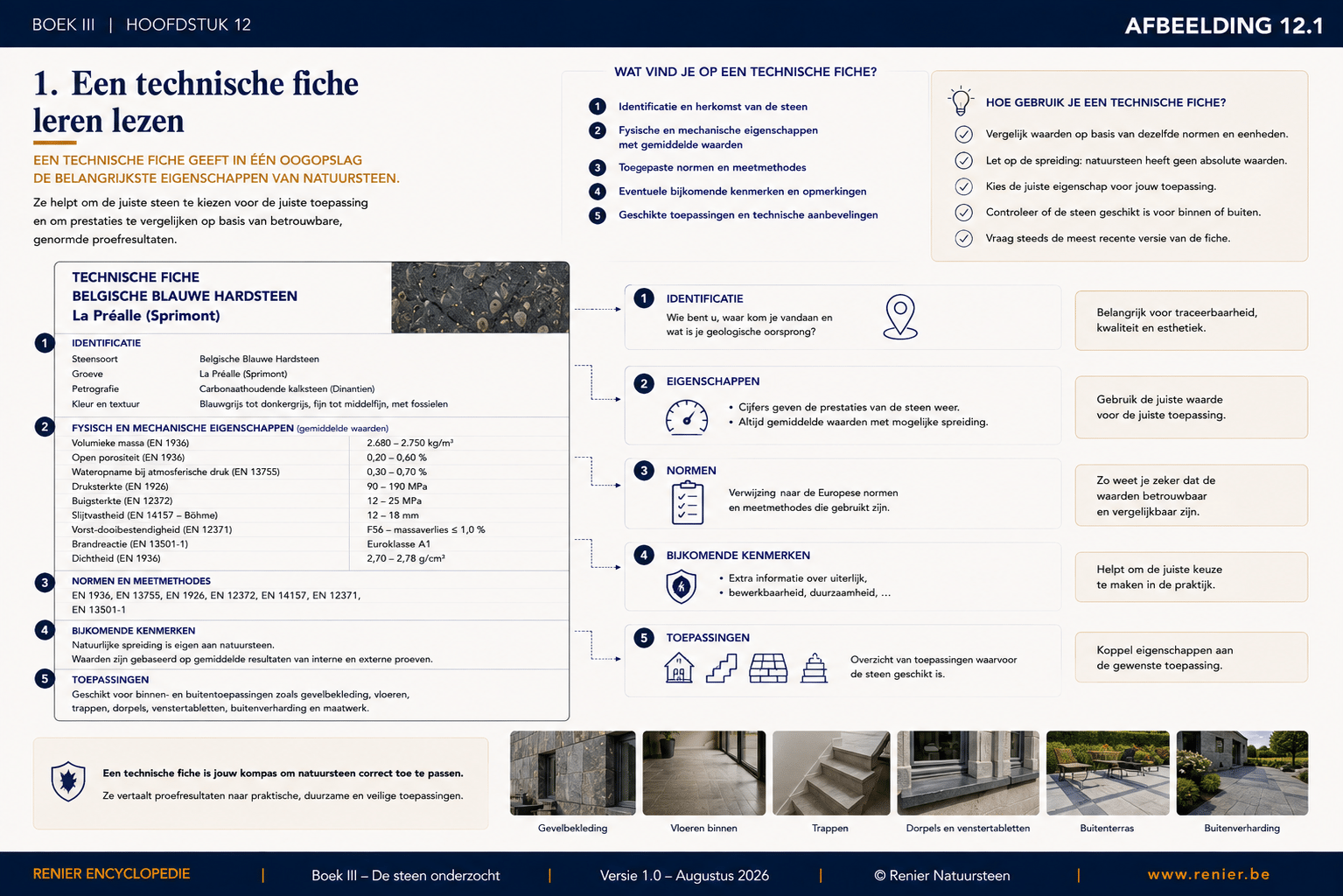
How to Read a Technical Specification Sheet
A technical data sheet summarizes the key properties of a natural stone. In addition to identifying the material, it includes test results, applicable standards, and often information about potential applications.
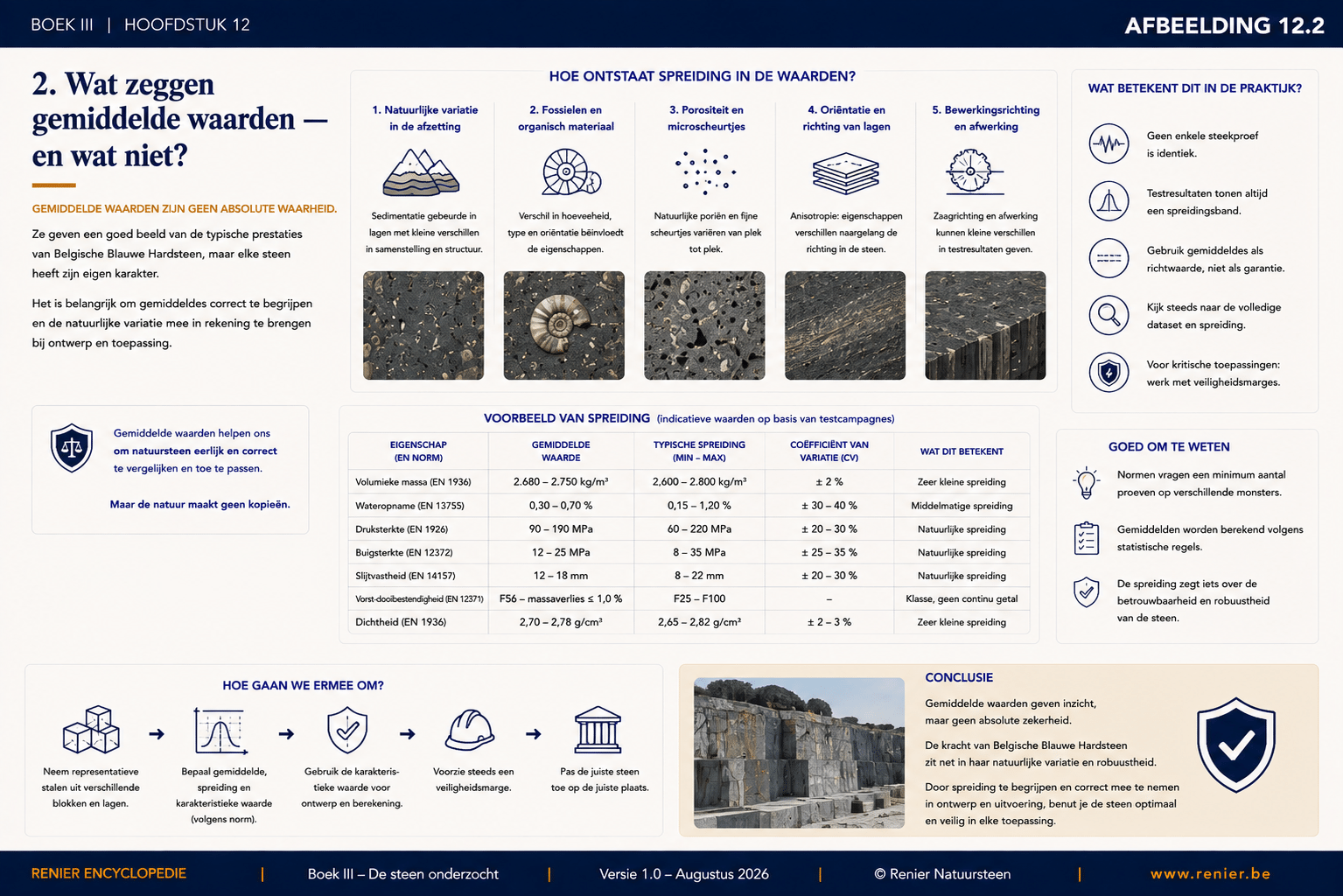
What do average values tell us—and what don't they?
Test results are often reported as an average value. That average is representative of the material being tested, but does not mean that every individual piece of natural stone will have exactly the same value.
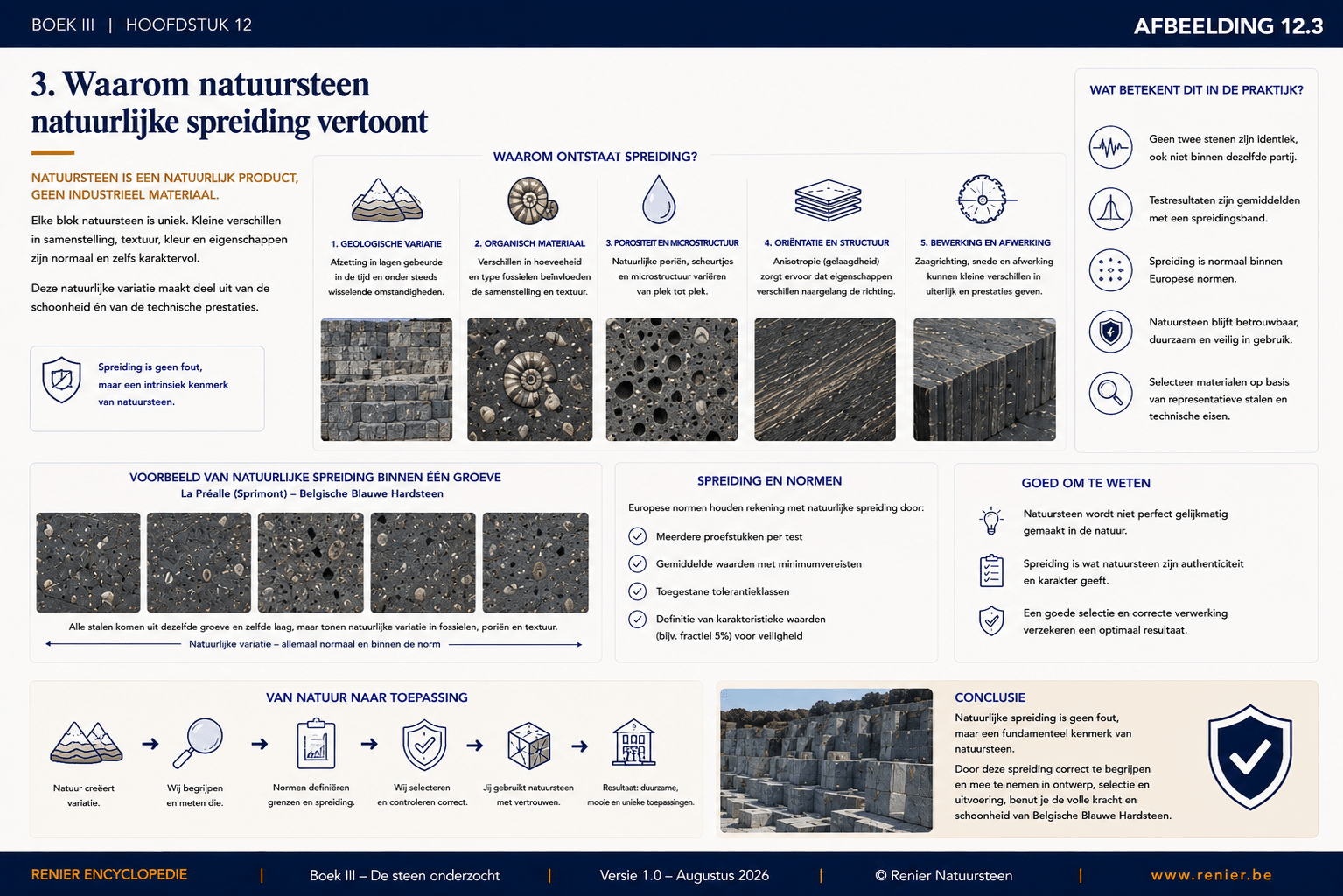
Why Natural Stone Exhibits Natural Variation
Natural stone is a naturally formed material and not an industrially produced homogeneous product. Differences in fossils, matrix, grain size distribution, pores, and local structure can therefore result in a natural variation in technical measurements.
Which property is important for which application?
Not every technical property is equally important for every application. Different criteria apply to a floor than to a facade, a threshold, a staircase, or a custom-made element subjected to heavy loads. The correct choice of material is therefore always based on the specific application.
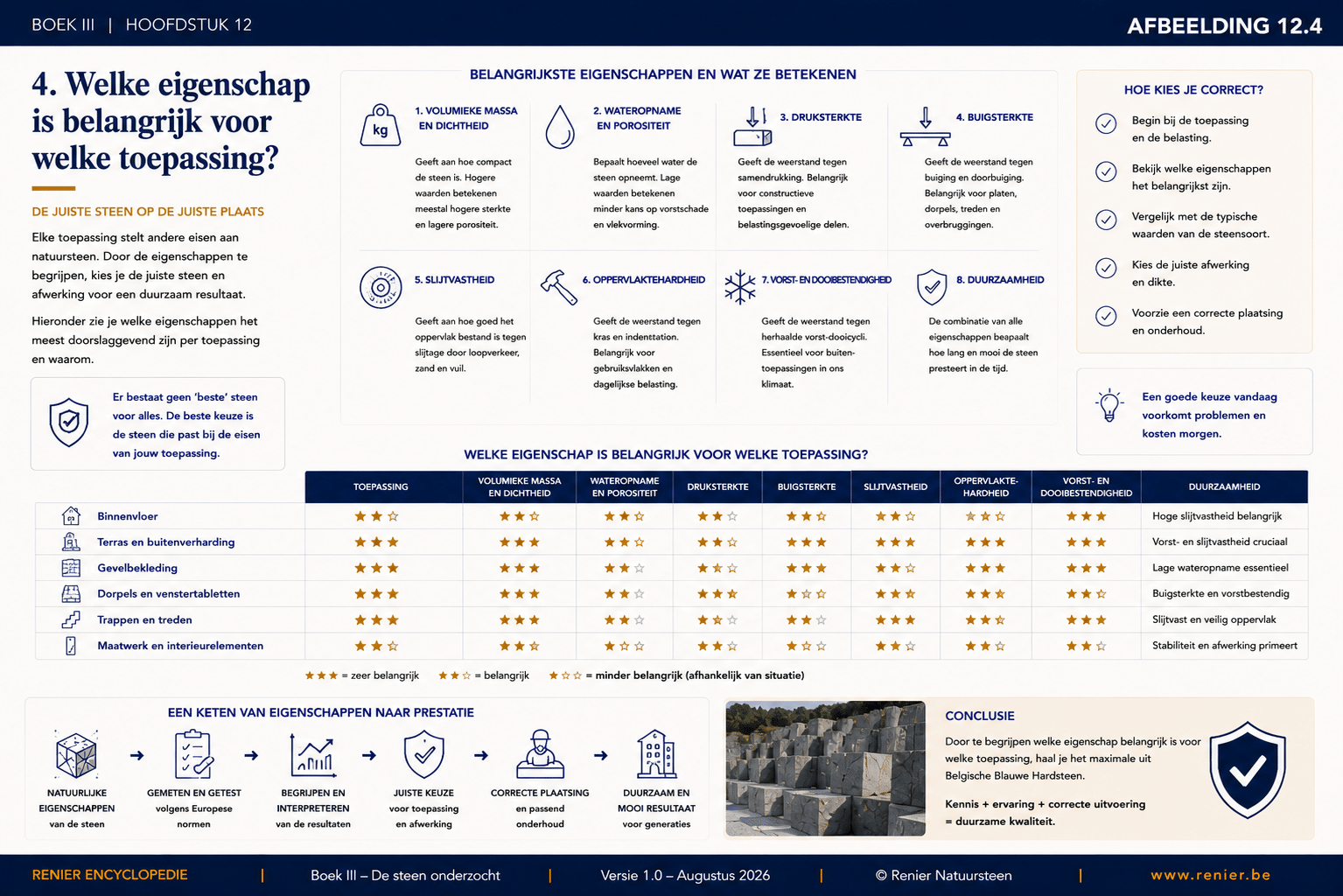
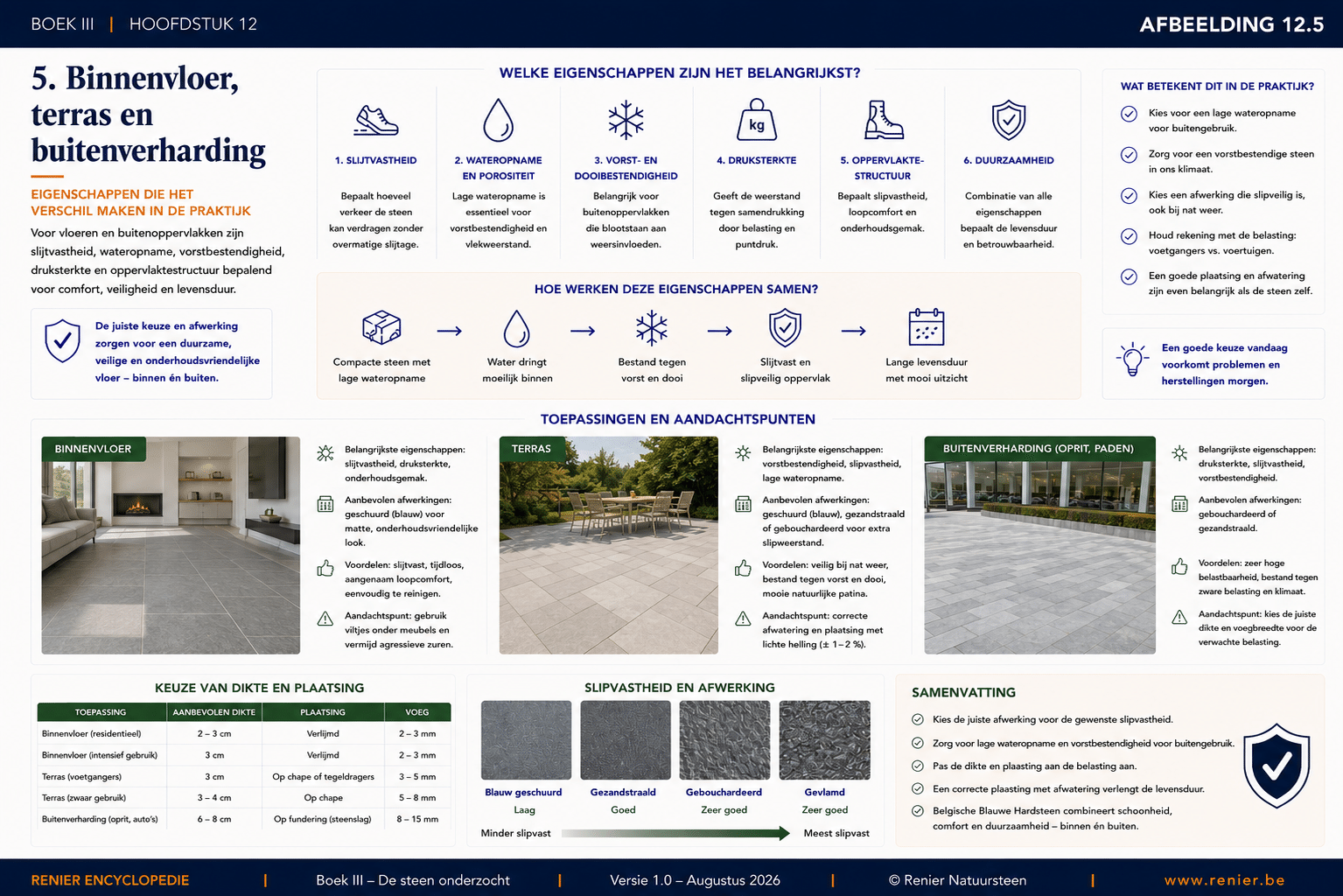
Indoor flooring, patio, and outdoor paving
For flooring and outdoor applications, factors such as wear resistance, water absorption, frost resistance, load-bearing capacity, and slip resistance play an important role. The chosen surface finish also has a direct impact on comfort and slip resistance.
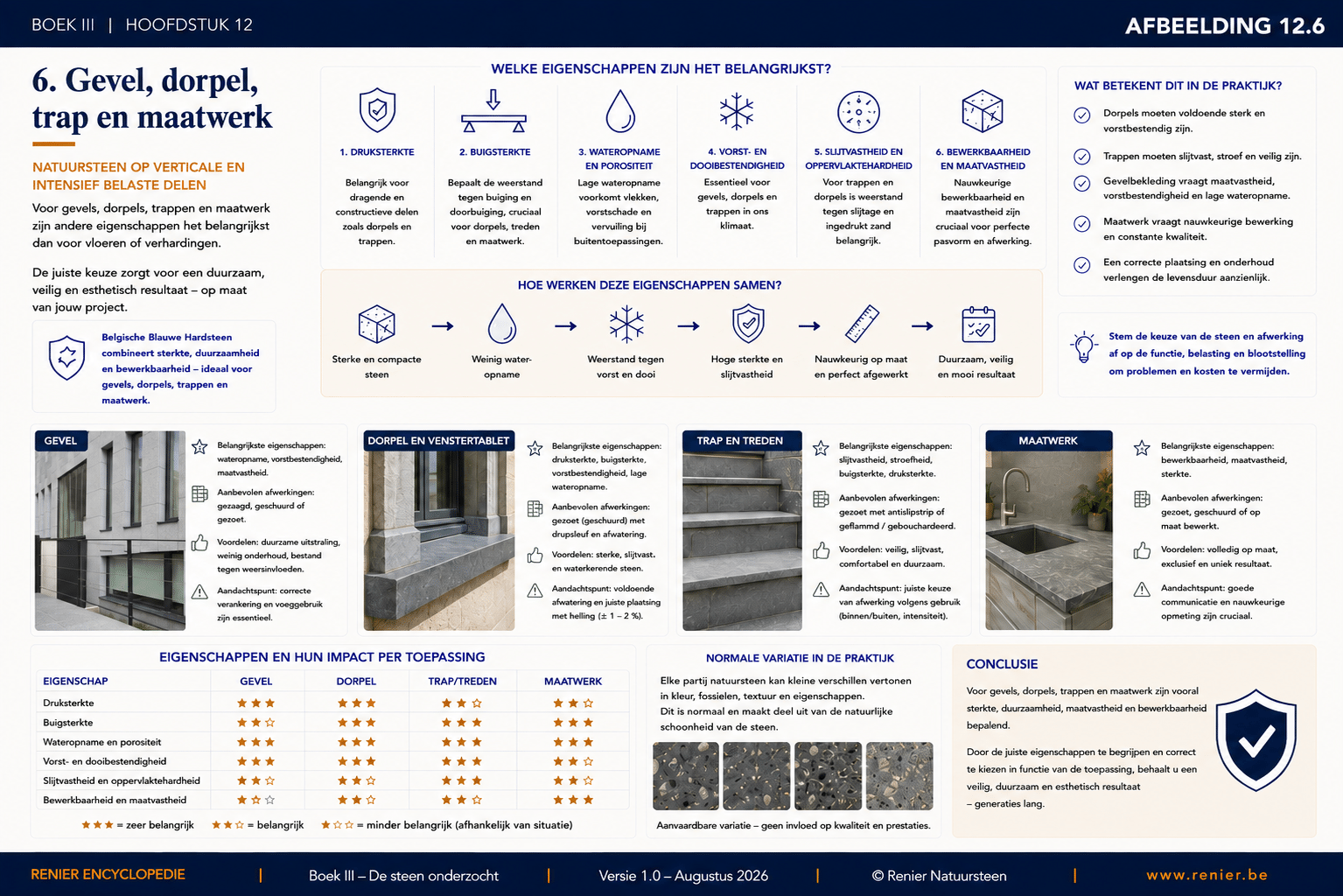
Facade, window sill, stairs, and custom work
For facades, sills, stairs, and custom work, different requirements are combined. Strength, frost resistance, dimensional stability, detailing, and workability must be evaluated together based on the element’s geometry and load.
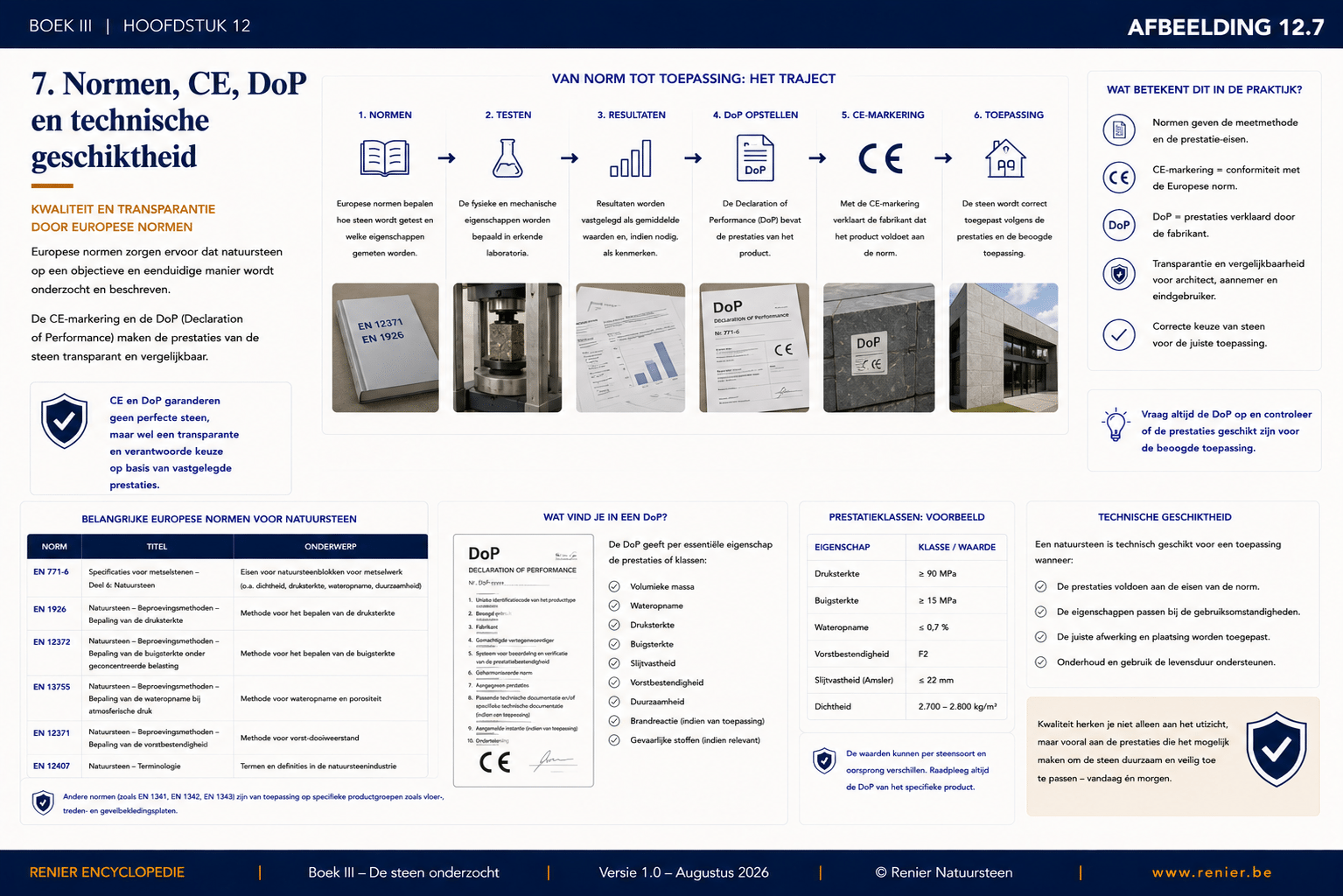
Standards, CE, DoP, and Technical Suitability
European standards specify how performance is determined and declared. The results of relevant tests are included in the Declaration of Performance (DoP) and, where applicable, form the basis for the CE marking. However, the ultimate technical suitability must always be assessed in light of the specific application.
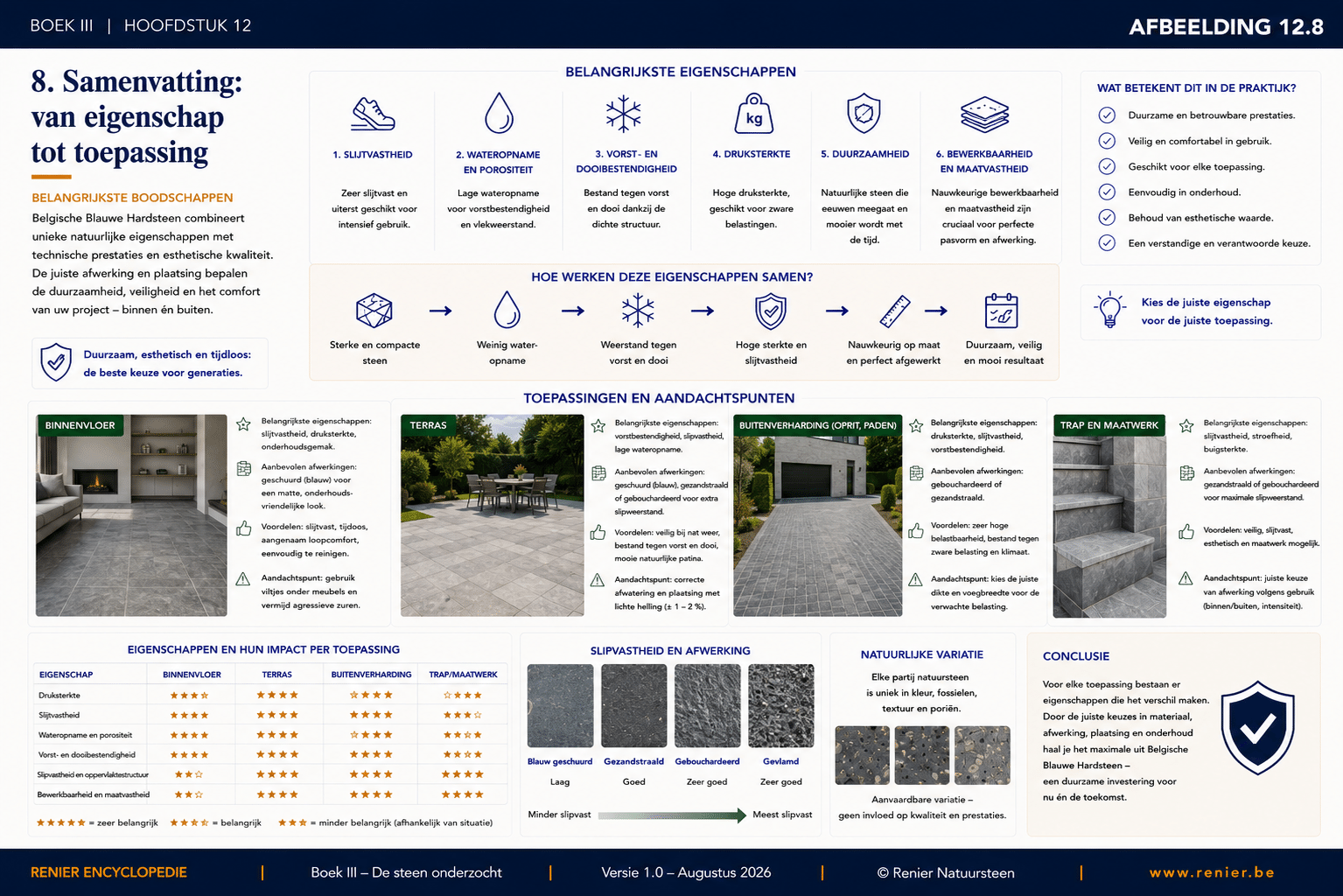
Summary: From Property to Application
Technical properties form the basis for a responsible choice of materials, but must always be considered in context. A sustainable result stems from the combination of the right stone, an appropriate finish, correct sizing, good detailing, installation, and maintenance.
From Origin to Application
Chapter 12 concludes Book III. We have examined Belgian Blue Stone, from its mineralogical composition and microscopic structure to its technical performance and practical applications. This has established the connection between geology, material behavior, and its use in construction and architecture.