

Polished blue stone, also commonly known as “sweetened blue stone,” is Belgian blue stone with a smooth, even, and matte surface. The polishing process gives the stone a deep, dark color, almost black. It is the finish of choice for those seeking a sleek, elegant look, especially for thresholds, countertops, and interior applications. “Verzoeten” and “zoeten” mean the same thing: the technical term is “gezoet.”.
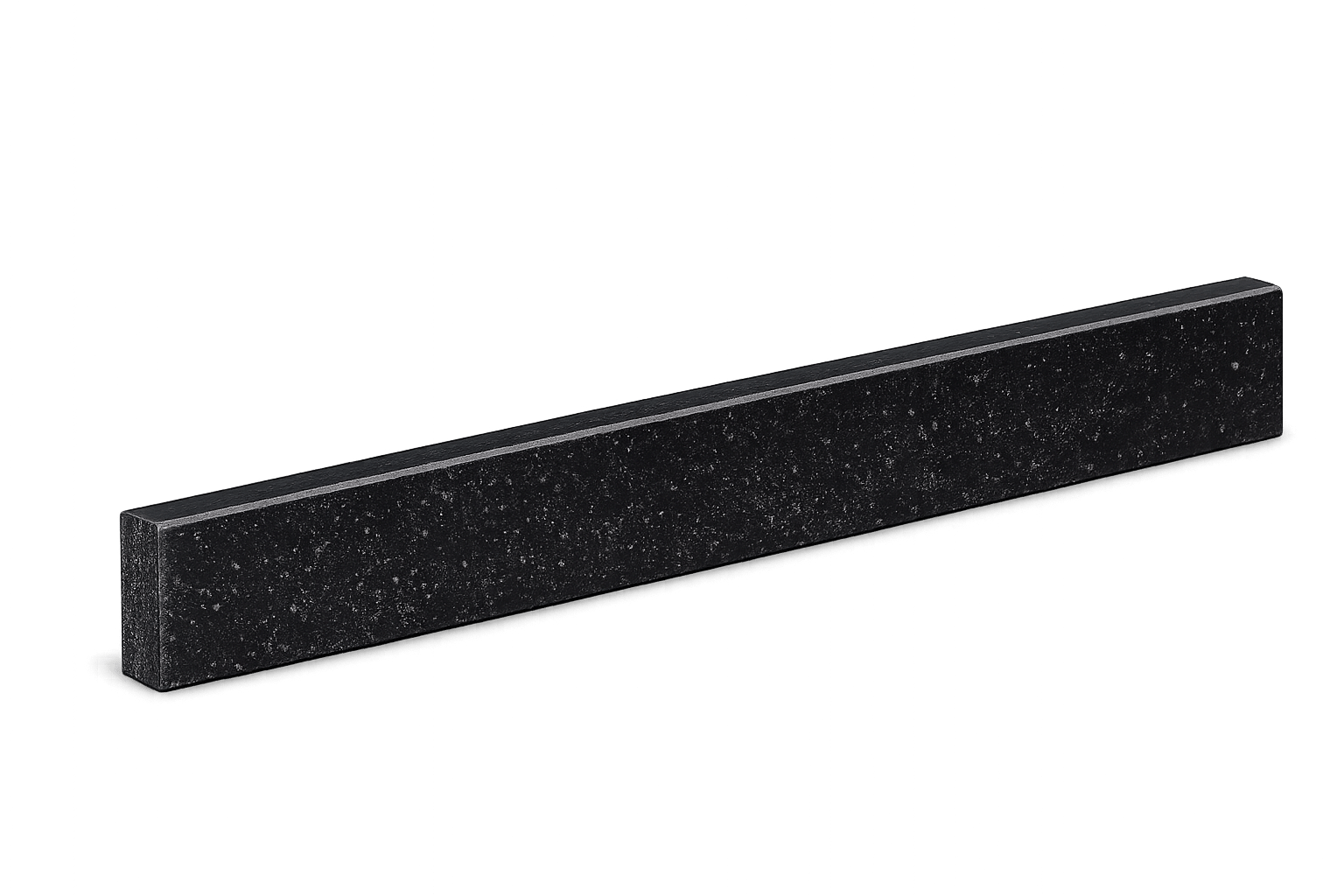
During the honing process, the cut surface of the stone is sanded more and more finely in successive passes until a smooth, matte surface is achieved, free of sawing or sanding marks. The stone does not shine like polished marble, but takes on a silky-matte finish in which the dark color of the Belgian blue stone rises all the way to the top. The finishing touches are applied in the workshop before installation.
| Finishing | View | Typical Application |
|---|---|---|
| Sawed | Smooth light gray, fading saw marks | All applications, indoor and outdoor |
| Sanded to a gray finish | Smooth and uniform light gray, with slight signs of wear | Indoors and outdoors |
| Sanded blue | Smooth and solid blue | Sills, baseboards, patios |
| Sweetened | Smooth, matte, and deep dark | Sills, shelves, sleek interior finishes |
| Flamed | Rough surface with non-slip coating | Wet areas, pool decks, patios |
| Chamfered | Regular parallel cuts, non-slip | Front of thresholds, exterior applications |
You can find the complete gallery of photos on the page Natural Stone Finishes. The Technical Specifications of Blue Stone remain the same for every finish: it's all about the surface treatment.
Choose a polished finish if you want a sleek, dark, and timeless look: transoms, window sills, stairs, or baseboards. The smooth finish is easy to maintain and scratch-resistant. For outdoor areas that can get wet and slippery, such as a patio or pool deck, a slip-resistant finish—such as flamed or chiseled—is the safer choice.
An example from the product line: the transom made of honed Belgian blue stone From our own quarry, with the long sides finished with a scalloped edge.
Yes. In Flanders, people often say “sweetened blue stone,” but the correct technical term is “honed.” Both refer to the same smooth, matte finish.
Yes. The polishing process compacts the surface, giving the stone a deep, dark, almost black hue. That contrast with the lighter, sanded finish is the most noticeable visual difference.
That's possible, but for wet areas such as patios and pool decks, it's better to choose a slip-resistant finish, such as flamed or chiseled. Honed stone looks best on thresholds, countertops, and indoor applications.
Polishing is a workshop finish achieved through sanding with grits of varying fineness. For a stone that has already been installed, our technical department will be happy to assess the options.
Clean with water and a pH-neutral natural stone soap, and protect the surface with a sealant. Avoid acidic products such as vinegar or descaler.
Arduin or blue stone: is there a difference?
Impregnating Natural Stone: When, With What, and How
FAQ: Natural Stone Care