

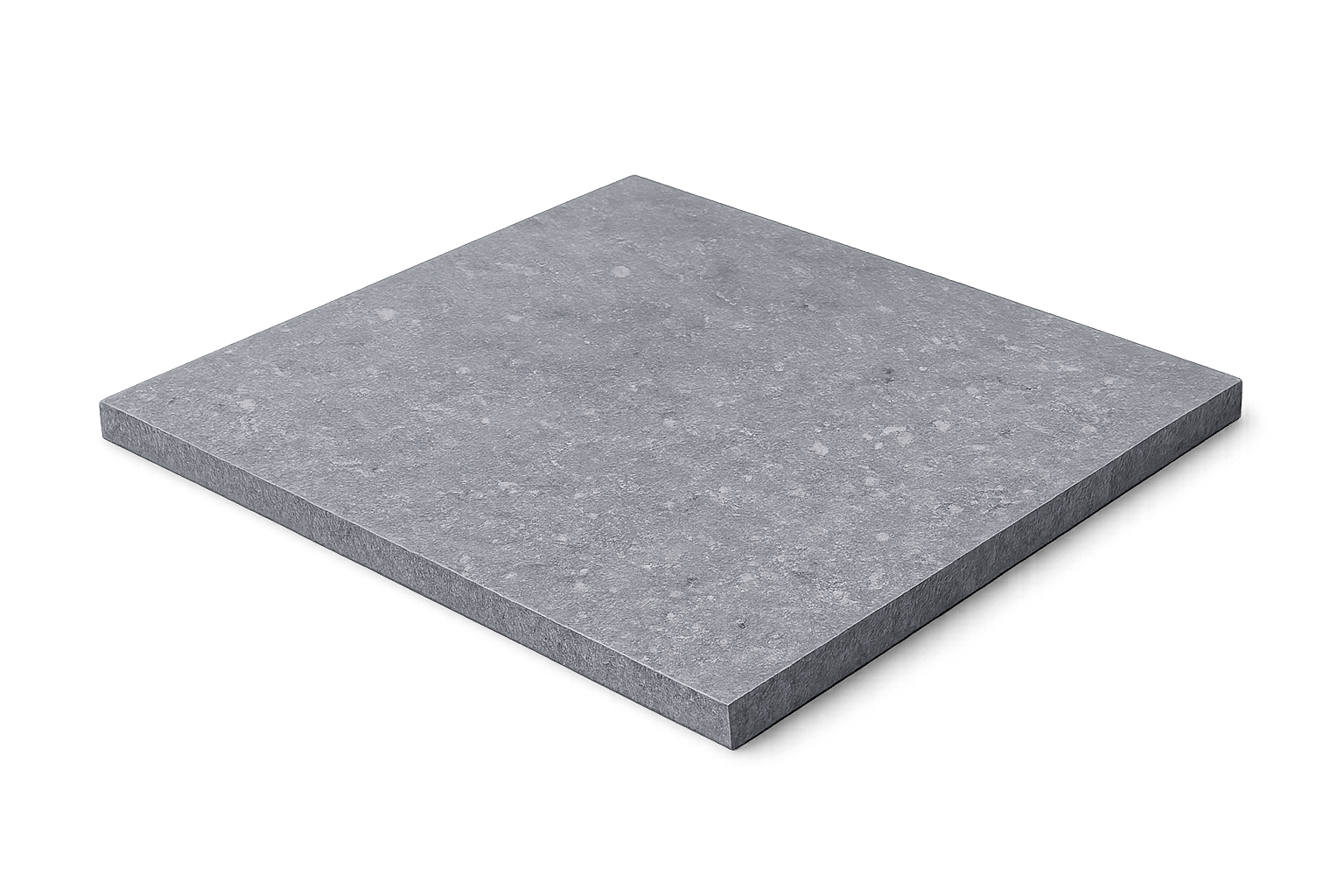
A floor made of Belgian blue stone is durable, timeless, and suitable for both indoor and outdoor use. Indoors, you’ll typically choose 40×40 or 60×60 cm tiles with a honed or sanded finish, or you can have your tiles custom-made to your exact specifications. The stone comes from our own quarry and is processed in our own workshops.
| Format | Finishing and Use |
|---|---|
| 40×40 cm, 2 cm thick | Blue-sanded, classic size for smaller spaces |
| 60×60 cm, 2 cm thick | Blue-sanded, calm, and airy floor pattern |
| Custom-made | Customizable in thickness, length, and width |
The finish determines the character of the floor. A sweetened finish It’s smooth, matte, and deep dark: the perfect choice for a sleek, elegant interior. A blue or gray sanded finish looks lighter and more natural. You can find the complete overview on the page Natural Stone Finishes.
Blue stone is scratch-resistant and easy to maintain. Clean it with water and a pH-neutral natural stone soap from the maintenance product line and avoid acidic products. Let the floor dry after installation impregnate to remove stains, and remove the white film from the grout with a cement residue remover.
A blue stone floor pairs beautifully with stair treads made of the same stone, baseboards, and crossbeams. This way, the material serves as a unifying element throughout the home.
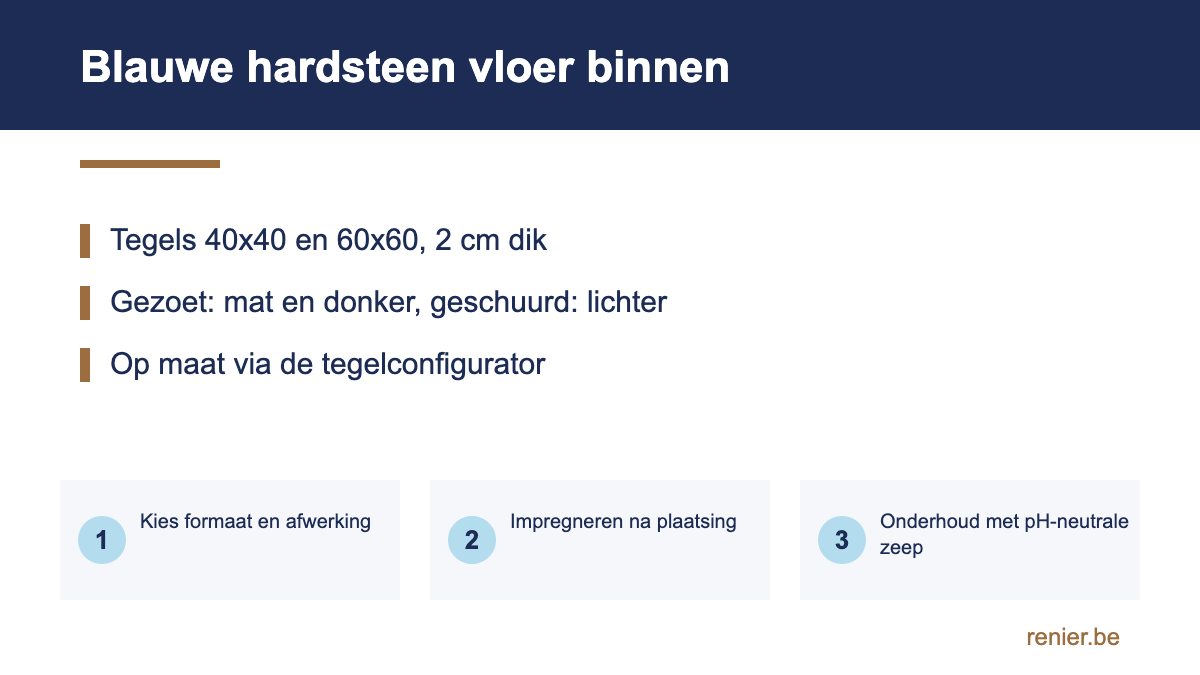
Sanded finishes create a smooth, matte, and dark surface for a sleek look. Blue or gray sanded finishes appear lighter and show signs of wear less easily. Both are suitable for indoor use.
The floor tiles are available in standard sizes of 40×40 and 60×60 cm, with a thickness of 2 cm. You can customize other sizes using the tile configurator.
Natural stone conducts heat well. However, the proper installation method and adhesive are crucial; ask our technical department for advice tailored to your situation.
For daily cleaning, simply use water with a pH-neutral natural stone soap. Never use vinegar or a descaler. Applying a sealant after installation protects against stains.
That white film is usually cement residue. Remove it with a special cement residue remover designed for calcareous stone; never use ordinary acids.
Polished blue limestone: What is polishing?
Natural Stone Indoor Stairs: Types and Finishes
FAQ: Natural Stone Care